

Pet Travel Accessories: Buying Guide | JustForPetStore
Stock pet travel accessories as a small, problem-led range, not a seasonal display: one carrier in three sizes, a seat cover, a crash-tested restraint, collapsible bowls, wipes and a waste kit. Open with 12 to 18 SKUs, price them good/better/best, and reorder on sell-through. Per Grand View Research, the global travel accessories segment is estimated at $892.3 million in 2025 and is forecast to reach $1,525.7 million by 2033.
How big is the pet travel accessories market in 2026?
Grand View Research estimates the global travel accessories line of the pet accessories market — carriers, bags and on-the-move gear — at $892.3 million in 2025, and forecasts $1,525.7 million by 2033, a 7.0% CAGR across 2026 to 2033. North America was the largest regional market in 2025. Set that against the same firm’s estimate for the pet accessories market as a whole, at $7,146.9 million in 2025 and $12,338.3 million in 2033, a 7.1% CAGR, and the picture is clear: travel is roughly one-eighth of the accessories category and is growing at very close to the category rate.
Read those numbers for what they are. They are research-house estimates on a global basis, produced from a model rather than from your register tape. They are useful for one decision — whether travel deserves shelf space ahead of some other category you could add — and they are useless for another, which is how many units to buy. No independent store should size an opening order off a CAGR. Let your own sell-through answer the depth question after thirty days.
Why should an independent store carry pet travel accessories?
Because the demand sits in your customer’s ordinary week, not only in their holiday. Per the American Pet Products Association (APPA), its 2025 Dog & Cat Report found that more than half of dog owners walk with their dog when running daily errands, and 49% want more pet-friendly workplaces. APPA’s reading of that shift points directly at lightweight and collapsible bowls and crates, travel-ready carriers, travel wipes and hydration solutions — which is, almost line for line, a travel accessories aisle.
APPA’s 2026 Dog Report adds the pricing caution: roughly 71 million U.S. households own a dog, and those owners describe themselves as more value-oriented and more deliberate about what they buy. That supports a value and multi-use message rather than a novelty message. A bowl that folds flat into a daypack reads as a sensible purchase to a careful spender; a single-purpose gadget does not.
Independence is the actual edge here. Travel gear is the category where the customer’s real question is “will this fit my dog, in my car, on my route,” and a product listing cannot answer it. Fit, sizing and a thirty-second demonstration are things a shop can do and a marketplace cannot.
One more reason to run this as a standing aisle rather than a holiday endcap: the buying trigger is a change in routine — a new puppy, a new commute, a first long drive, a dog that now rides along — and those triggers arrive in every month of the year. A seasonal display asks the customer to want travel gear in July. A small, permanent, clearly signed range simply waits for the week they need it.
Which pet travel accessories should an independent store stock first?
Seven roles, one or two SKUs each. Carriers come first: a soft-sided cabin-style carrier in two sizes, plus a structured or hard-sided option for car travel. Carrier questions come from both dog and cat owners, so build the range across dog walking and travel and cat rather than stocking only dog-focused designs. Record the pet type on carrier sales and returns so your next purchase order reflects your own customer mix.
Second, seat protection: a hammock-style seat cover and a cargo or boot liner. Third, restraint: a harness tether that clips into a seatbelt, sold by weight band. Fourth, hydration and feeding on the move — collapsible bowls and travel bottles. Fifth, wipes: travel-size grooming wipes for paws, coat and a muddy car. Sixth, a waste kit: dispenser, refill rolls and a sealed bag holder. Seventh, portable bedding: a fold-flat mat or crate pad that packs inside the carrier.
Seven roles at one or two SKUs each lands you at 12 to 18 SKUs. Treat that figure as a suggested starting point for a small floor, not an industry benchmark; your square footage, customer mix and reorder speed all move it.
What to leave out of the opening order: battery-powered travel gadgets with a single purpose, oversized hard crates that will not turn twice a year, and app-connected trackers that put you in the middle of a software problem you cannot support. Each ties up cash and shelf space, and none of them produces a repeat purchase. Add a second carrier size before you add a gadget.
What does a good/better/best price ladder look like for travel gear?
Three lanes, each with a job. Good is your opening price point: one function done adequately, simple packaging, no spare parts. Its job is to keep the price-checker in the store and to capture the first-trip buyer who does not yet know whether they travel with the dog often. Better sits at roughly two to two and a half times that price and is your default recommendation: better fabric, a wider sizing range, washable covers, replaceable straps. Best sits at roughly four to five times the opening price and carries structured carriers with rigid bases and real ventilation panels, documented crash-tested restraints, and a multi-year warranty.
On margin, a suggested starting point is a landed-cost multiple near 2.2x to 2.5x on good, 2.4x to 2.8x on better, and 2.0x to 2.4x on best, where the absolute dollar margin per unit matters more than the percentage. These are operating starting points for a small shop, not industry figures; recalculate them against your own freight, duty, packaging and return rate before you commit.
Then present the ladder as a ladder rather than as a wall. Three carriers side by side, each with a one-line reason to step up — fits under the seat in front of you, liner comes out and goes in the wash, rigid base and a padded strap — outsells three carriers grouped by brand. The customer is really choosing a price, and your job is to make every step up feel explained instead of pushed.
How should you handle carrier sizing, safety claims and airline rules?
There is no single universal certification behind the phrase “airline-approved.” Airlines set their own dimensional and construction rules, and those rules change, so the honest shelf talk is: check current carrier-specific dimensional and construction rules before you fly, and carry the measurements with you. Put interior length, height and the weight band on the shelf tag, because that is the information the customer actually needs and the reason they came in.
For restraints, treat “crash-tested” as a claim that must arrive with a named standard and a test report you can look at. Ask the supplier for both and keep them in a folder. Do not restate a safety outcome you cannot document, and never let a safety claim do the selling work that a proper fit should be doing. Sizing can become a costly return trigger in this category, so measure your own return reason codes; a two-minute fit check at the counter is usually cheaper than processing a preventable exchange.
What packaging and labeling decisions protect margin here?
Judge packaging by the cube, not by the look. Travel gear is bulky and light, which is the worst possible combination: it eats shelf space and shipper space while carrying a modest unit price. Compare pack dimensions against your shelf depth and your inbound freight before you fall in love with a product.
Labelling does the rest. Put weight bands and interior dimensions on the front of the pack, not only on a hangtag. State clearly whether the cover is machine washable and whether the pad is removable. Keep every claim descriptive — water-resistant, washable, fold-flat, ventilated — and avoid therapeutic or calming promises, which invite both regulatory trouble and disappointed customers. Photograph the product open and in use, because a packed carrier tells a customer nothing about whether their dog will fit.
How do you test a pet travel range in 30 days?
Start with bundles. Travel gear becomes easier to understand when it is merchandised as a trip rather than as a disconnected aisle: carrier plus bowl plus wipes, or seat cover plus restraint plus waste kit. Cross-category bundles pull from feeding, grooming and cat at the same time, which can lift ticket size without discounting a single item; measure the attach rate in your own POS before treating that as proven.
Then buy small. Start every unproven SKU at low minimum order quantities and give it thirty days on the shelf with a real position, not a bottom shelf corner. At day thirty, read three numbers. Sell-through of roughly a quarter to a third of your opening units says expand; below about one in seven says cut and do not reorder. Hold four to eight weeks of supply on proven SKUs and set a reorder point that triggers before you hit zero. Add one bundle attach rate — how often a travel purchase also pulls a consumable — because that is the number that decides whether this aisle earns its square footage.
Give the range a fixed home on the floor and one named staff owner. A single person who can tell you what sold, what came back and what customers asked for that you did not stock is worth more than any dashboard. Keep a written log of the questions you could not answer — a size you did not carry, a breed that did not fit your largest carrier — because that log is your second purchase order, written by your customers rather than by a supplier catalogue.
Those thresholds are a suggested starting point for a small shop, not an observed industry standard. Adjust them after two cycles and write down what you changed.
Sources: Grand View Research, pet accessories market — travel accessories (carriers, etc.) segment and total pet accessories outlook, 2026–2033; American Pet Products Association (APPA), “Dogs as Lifestyle Companions” (2025 Dog & Cat Report) and APPA 2026 Dog Report (americanpetproducts.org/news/americas-dog-owners-are-becoming-smarter-spenders). All figures cited are research-house estimates on a global basis and are not forecasts of any single store’s sales.
Ready to stock these ideas? Browse wholesale pet KITs →
Shop these pet categories
Wholesale pricing, no minimum order.
Related wholesale collections
Products mentioned here
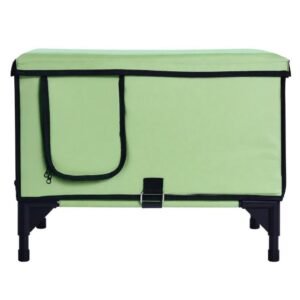 Elevated Heated Outdoor Cat House with 30W Waterproof Heating PadMSRP $128.99Login for wholesale pricing
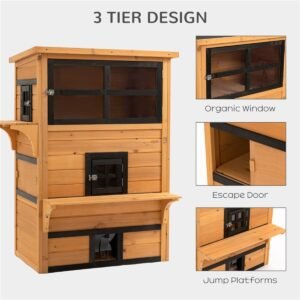 Three-Tier Outdoor Cat Condo with Asphalt Roof and Five Access DoorsMSRP $284.99Login for wholesale pricing
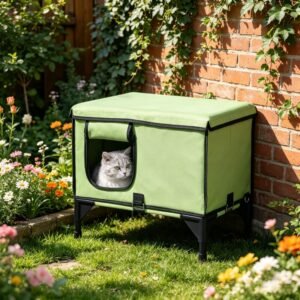 Large Elevated Heated Cat House with Waterproof Pad and Insulated LiningMSRP $124.99Login for wholesale pricing
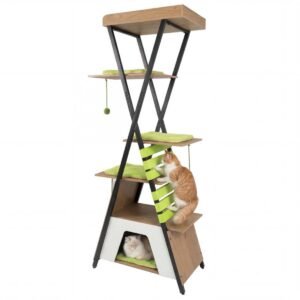 73″ Multi-Level Cat Tree with Condo, Top Perch and Scratching PadMSRP $228.99Login for wholesale pricing
Stock it as a wholesale KIT
Pre-bundled assortments built from this guide’s categories — one PO, one shipment, wholesale pricing.