

Pet Wholesale Marketplace USA: What a 100-Basis-Point Margin Cut Means for Your Shelf
Tractor Supply just published a number every independent pet store should read twice: USD 3.91B net sales in Q3 FY2026, up 5.1% year over year, with its pet business up 5% — while companion-animal comps were down 4% in Q1 and gross margin fell 100 basis points to 36.4% (Tractor Supply Q3 FY2026, as indexed by GlobalPetIndex). Three figures, one story: the largest farm-and-pet chain in the United States is buying pet traffic with margin. Product gross profit is being spent to keep the customer, because the services attached to that customer — vet clinics, grooming, prescription diets — are worth more than the bag of food that brought them in.
If you run 1,800 square feet and buy in case packs, you cannot win that trade. You also do not have to. The store that survives the next two years is not the one with the lowest shelf price; it is the one whose inventory dollars turn fastest. That is the whole argument for a pet wholesale marketplace USA account where you can order in mixed cases: you give up three to four points of unit margin and buy back two and a half turns, and the shelf ends up earning more per dollar tied up in stock.
What the Q3 report actually says
Strip the headline and four facts remain, each with a different consequence for a buyer:
- The 5% is not organic product growth. Tractor Supply’s own framing puts the gain on services plus acquired assets (Allivet, VIP Petcare) and new stores, against a Q1 in which companion-animal comps ran at −4%. Consumers did not suddenly buy more dog food. They bought it somewhere, and the somewhere is consolidating.
- Margin is the pressure valve. Gross margin moving from 37.4% to 36.4% in a single quarter is roughly USD 39M of gross profit given back on that revenue base. A chain can absorb that for a few quarters because it is buying traffic and services attach; a 1,800 sq ft store cannot absorb it for one.
- Assortment breadth is not the battlefield any more. GlobalPetIndex now indexes 111,409 pet companies across 156 countries — 23,866 manufacturers, 3,780 distributors, 4,740 retailers and 1,096 chain stores. Everyone can list the same 400 SKUs. What differs is what each SKU costs you in cash and shelf.
- Origin is diversifying. Brazil’s pet industry exports reached BRL 3.3B (about USD 611M) in 2025, up 12% year on year (Abempet), and Thailand approved THB 80.19B of agri-food investment across 218 projects in January–September 2026, up 59%. More factories quoting means more room to negotiate a mixed-case minimum.
If your buying is still case-pack only, that is the cheapest thing to change this quarter — a pet wholesale marketplace USA account costs a credit application, not a container. The calendar backs that up. Canton Fair on 31 October and CIPS on 12 November put hardware, textiles and accessories in two buildings a fortnight apart — the cheapest two weeks of the year to fix a supply base.
Why a pet wholesale marketplace USA model beats a distributor case pack
A distributor sells you a case because a case is what fits his pallet, not because it is what fits your shelf. That single sentence explains most dead stock in independent retail. A twelve-unit case of slow-feed bowls is fine if you sell twelve a quarter. If you sell three, you have just financed nine units of somebody else’s inventory for eleven months.
A pet wholesale marketplace USA account inverts the unit of purchase. You order 40 units in total across three or four SKUs, mixed sizes and colours, and the pick fee is the price of not carrying the other 32. The unit cost lands 5–12% above case pricing, which sounds like a loss until you price the cash: the same shelf slot now carries a quarter of the inventory and replenishes monthly instead of annually.
There is a second, quieter benefit. Mixed-case buying forces you to look at a SKU as a slot with a rate of return rather than a product you like. Once you can buy six instead of twenty-four, the question stops being “is this a good product?” and becomes “what does this slot earn per dollar of stock?” That is the only question a chain asks, and it is the reason they can run 36.4% blended margin across 2,000 stores while an independent with better service runs 42% on the shelf and 19% on the bank statement.
The margin calculator: GMROI per shelf slot
Gross margin percentage is a vanity metric. Gross margin return on inventory investment (GMROI) is the one that pays rent: annual gross profit divided by average inventory at cost, which equals GM% ÷ (1 − GM%) × annual turns. Six realistic accessory SKUs, priced both ways at the same retail, show what the buying structure does on its own — mixed-case unit cost assumed 10% higher, case turns 2.4 and mixed-case turns 6.2:
| Product | Case pack | Cash per case | Retail | GM% (case) | GMROI (case) | GMROI (mixed) |
|---|---|---|---|---|---|---|
| Sisal cat scratcher, 18 in | 12 | $73.20 | $17.99 | 66% | 4.68 | 10.42 |
| Ceramic slow-feed bowl | 6 | $41.40 | $12.99 | 47% | 2.12 | 4.41 |
| Rope tug toy, 3-pack | 24 | $86.40 | $9.99 | 64% | 4.26 | 9.44 |
| Memory-foam pet bed, M | 4 | $112.00 | $49.99 | 44% | 1.88 | 3.86 |
| Stainless fountain, 2 L | 6 | $96.00 | $34.99 | 54% | 2.85 | 6.13 |
| Calming soft chew, 30 ct | 12 | $54.00 | $14.99 | 70% | 5.59 | 12.58 |
Every row loses 3–4 points of margin and gains 2.2× the return on the dollar. The bed is the instructive one: 44% margin looks healthy and 1.88 GMROI is a cash trap, because a bed that sells four times a year cannot justify USD 112 sitting in the back. The chew is the opposite — it turns, so even 67% margin on a mixed buy beats 70% on a case.
The break-even is worth memorising: if mixed-case unit cost is c percent higher, you need turns to rise by roughly 2×c/GM% to come out level. At an 8% cost premium and 50% margin, a 32% rise in turns pays for it. Almost any SKU you would buy in sixes clears that bar; almost none of the ones you buy in twenty-fours do.
Import compliance checklist, EU and US
Cheaper stock is only cheaper if it clears entry. Confirm each line in writing before the deposit leaves, and keep the paperwork per SKU:
- HTS classification in writing. Pet toys and accessories land in 9503, 3924 or 6307 depending on material and function; the difference is duty rate and Section 301 exposure. An informal classification from your broker beats a guess on the invoice.
- Entry mechanics (US). ISF 10+2 filed 24 hours before loading, continuous bond, CBP Form 7501, and a manufacturer ID that matches the factory, not the trading company.
- FDA rules for anything edible. Pet food and treats are animal food: foreign facility registration, US agent, prior notice for each shipment, plus state feed registration and AAFCO-style labelling. Non-food chews still need species and origin declared.
- GPSR (EU) 2023/988. In force since 13 December 2024. An EU-established responsible economic operator must be named on the product or listing, with traceability back to the manufacturer. No operator, no sale.
- REACH Annex XVII. Azo dyes (entry 43), nickel release on metal hardware (entry 27), phthalates in soft PVC (entries 51 and 52). Above 0.1% w/w of an SVHC, a SCIP notification is also due.
- Electrical and wireless goods. Mains fountains and cameras need CE under LVD/EMC (and RED if wireless), UKCA for Great Britain, and FCC Part 15 authorisation in the US. Ask for the test report, not the certificate thumbnail.
- Prop 65 (California). Lead in zipper pulls, DEHP in PVC trim. Decide now whether you reformulate or label; a warning sticker is legal, a surprise lawsuit is not cheap.
- Origin marking. 19 CFR 134 requires a legible, permanent country-of-origin mark for US imports — for textiles that means a sewn label, not a sticker. The EU does not mandate it, but customs will ask.
- Plant and animal materials. Cat trees, bamboo and sisal fall under the Lacey Act; rawhide, feathers and wool add US Fish & Wildlife and USDA layers. Keep supplier declarations and, for Chinese inputs, UFLPA documentation on file.
How to start at 40 units, not a pallet
- List twelve slots, not forty SKUs. Twelve is what a small store can actually manage on a weekly review, and it is enough to see a pattern.
- Price each slot both ways. Ask for the case pack and the mixed-case price on the same SKU, then run the GMROI formula. The answer is often uncomfortable and always useful.
- Open the account and order 40 units across three or four SKUs. Use the wholesale inquiry desk for terms and landed cost before you commit to a quantity.
- Measure on arrival. Carton dimensions decide whether a product fits your shelf at all; a 2 cm overhang kills a planogram faster than a bad price.
- Set reorder triggers in weeks of supply, not gut feel. Four weeks left is the signal; two weeks left is an emergency you caused.
- Promote winners into bundles. A scratcher plus a chew in one wholesale kit raises basket value without adding a slot, and shipping terms usually improve once you consolidate cartons.
This week’s action list
- Pull 90 days of POS data and rank every slot by GMROI. The bottom 20% is your cash leak, and it is usually accessories, not food.
- Ask your three largest distributors for case pack, mixed-case price and drop-ship terms in writing — the same request, three times, is a benchmark.
- Recalculate five SKUs at a 10% higher unit cost and 2.5× turns. If GMROI still rises, the case pack was never the deal you thought.
- Freeze new case-pack orders on any SKU under two turns for the next quarter. Nothing else you do this month will free more cash.
- Photograph your shelf against the chain’s on your next store visit; the gap you can close is usually facings and price clarity, not assortment.
FAQ
Is a wholesale marketplace more expensive than a distributor?
On unit cost, yes — expect 5–12% above case pricing, because somebody is picking six instead of shipping twenty-four. On return on inventory it usually wins by a wide margin, as the table above shows. The distributor still wins when a SKU turns more than six times a year, is heavy or bulky, or is a staple you would stock regardless of margin.
What is the real minimum order for a small store?
Forty units in total across several SKUs, not forty of one item. That is enough for a factory or a marketplace to build a pick, and small enough that a wrong call costs a week of margin rather than a quarter of cash.
Can I mix brands, sizes and colours in one order?
That is the point of the model. Mixed cartons cost slightly more per unit and save far more in dead stock; the only rule is to keep the total above the pick minimum so the freight is not subsidised by the supplier.
How do I calculate GMROI without a proper inventory report?
Take annual gross profit for the SKU and divide by the average cost of stock held. If you only know turns, use GM% ÷ (1 − GM%) × turns — the same number, and accurate enough to rank a shelf.
This article’s industry signals are cited from GlobalPetIndex public industry data, for procurement decision reference only; specific compliance is subject to the latest regulations of the destination country.
Ready to stock these ideas? Browse wholesale pet KITs →
Shop these pet categories
Wholesale pricing, no minimum order.
Related wholesale collections
Products mentioned here
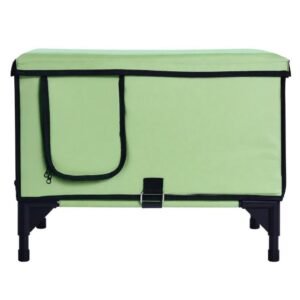 Elevated Heated Outdoor Cat House with 30W Waterproof Heating PadMSRP $128.99Login for wholesale pricing
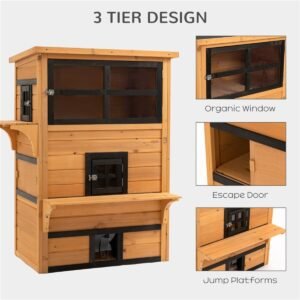 Three-Tier Outdoor Cat Condo with Asphalt Roof and Five Access DoorsMSRP $284.99Login for wholesale pricing
 Large Elevated Heated Cat House with Waterproof Pad and Insulated LiningMSRP $124.99Login for wholesale pricing
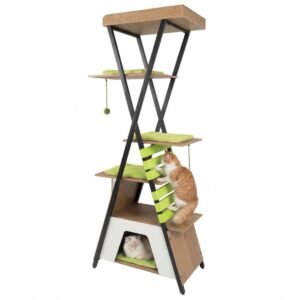 73″ Multi-Level Cat Tree with Condo, Top Perch and Scratching PadMSRP $228.99Login for wholesale pricing
Stock it as a wholesale KIT
Pre-bundled assortments built from this guide’s categories — one PO, one shipment, wholesale pricing.