

Why She Quit Corporate to Open a Pet Shop — and What She’d Tell Her Younger Self
Priya spent eleven years climbing a corporate ladder she no longer believed in. As a supply-chain director at a Fortune 500 retailer, she managed billion-dollar budgets but couldn’t name a single customer she’d helped. At 38, she walked away to open a neighborhood pet shop. Three years later, the store clears $30K a month and she’s the happiest she’s ever been. This pet shop owner story is her candid account — the panic, the surprises, and the starter-kit strategy that made the leap survivable.
The Breaking Point
“It wasn’t one dramatic moment,” Priya says. “It was a thousand small ones. Another reorg. Another quarter of optimizing a metric nobody outside the building cared about.” She had the title, the salary, the stock options — and a creeping certainty that her skills were being spent on things that didn’t matter to her.
The catalyst was her own dog, a rescue named Milo. “I spent weekends driving to three stores to find food he could eat,” she recalls. “I kept thinking: why is this so hard for someone who runs supply chains for a living? That question became the business.”
She gave herself a hard constraint: bootstrap with $25,000, no investors, and a 12-month runway to profitability. “If I’d taken outside money, I’d have built someone else’s store,” she says. “The whole point was to build mine.”
The First 90 Days: Terror and Triage
Priya’s corporate instincts nearly sank her. “I wrote a 40-page business plan,” she laughs. “Then I opened the door and realized the plan was fiction.” The real first lessons were humbling:
- Foot traffic is not a strategy. A good location helped, but she still had to earn the second visit.
- Pricing is emotional. She underpriced at launch, assuming customers wanted cheap. They wanted confidence, and cheap read as low-quality.
- She didn’t know products. Corporate taught her spreadsheets, not schnauzers. She spent month one genuinely learning the catalog.
The turning point came when she abandoned the “big store” fantasy and embraced a narrow, confident shelf built around a retail starter kit. “I stopped pretending to be a supermarket and became a specialist,” she says. That single reframe changed everything.
How She Used Her Supply-Chain Background
Priya’s old career became her unfair advantage — just not in the way she expected. She didn’t negotiate like a giant; she sourced like a smart one:
- She bought in curated bundles via a best-sellers kit, getting proven SKUs without guessing.
- She timed seasonal buys using a seasonal kit, avoiding the overstock trap that bankrupted her first quarter projections.
- She treated cash flow as product. Her corporate discipline meant she never ran a negative inventory position — a mistake that kills most new shops.
“People think supply chain is about scale,” she reflects. “It’s actually about not running out of the thing people want. That translates perfectly to a 900-square-foot shop.”
The Unexpected Parts
Three things surprised her most:
- The emotional labor. “I thought retail was transactional. It’s deeply relational. People cry in here about their pets. You have to be present.”
- The speed of feedback. In corporate, a decision took a quarter to show results. In the shop, she knew within a day if a display worked. “I got addicted to that loop,” she says.
- The community. Regulars became friends. The store became a third place. “I never had that in an office tower.”
She also discovered the power of a gift kit during the holidays — pre-wrapped bundles that turned stressed shoppers into grateful regulars. “People don’t want more choices in December. They want someone to have already chosen well.”
The Numbers (Honest Version)
Priya is clear that year one was not pretty:
| Period | Monthly revenue | Profit |
|---|---|---|
| Month 1–3 | $4,800 | −$2,100/mo |
| Month 4–6 | $9,500 | −$400/mo |
| Month 7–9 | $16,200 | +$1,800/mo |
| Month 10–12 | $22,000 | +$4,300/mo |
| Year 3 (now) | $30,000 | +$8,500/mo |
“Anyone who tells you it’s easy is selling a course,” she says. “But the curve is real. If you survive the first nine months, the leverage kicks in.” Her display kits let her rotate fresh merchandising monthly, which she credits for the year-two acceleration.
What She’d Tell Her Younger Self
If Priya could send a note back to launch-day Priya, it would say:
- Start smaller. “I rented too much space. A tight, perfect shop beats a big, empty one.”
- Price for value, not fear. “Cheap signals cheap. Confident pricing builds trust.”
- Ask for help. “I pretended to know retail. I didn’t. The retailers who shared playbooks with me saved me a year.”
- Protect one day off. “I burned out at month five. The store didn’t need me 80 hours a week; my anxiety did.”
- Use kits. “Don’t reinvent the shelf. Stand on proven bundles and add your voice.”
For those inspired but hesitant, Priya recommends starting with a custom retail kit that matches your neighborhood’s actual needs — “it’s the closest thing to a head start I never had.”
The Deeper Lesson
Priya’s pet shop owner story isn’t really about pets. “It’s about agency,” she says. “Corporate taught me to manage someone else’s priorities. This taught me to own my own.” The store is profitable, but the real return was psychological: work that feels like hers.
She’s now mentoring two other corporate escapees and plans a second location within two years. “I’m not anti-corporate,” she clarifies. “I’m pro-fit. If the ladder fits you, climb it. If it doesn’t, know that a 900-square-foot shop can be a perfectly good mountain.”
About the Author
This founder story was compiled by Scott, Founder of JustForPetStore, from interviews with independent retailers who left other careers to open pet shops. We share honest operator journeys so the next leap is a little less lonely.
Ready to stock these ideas? Browse wholesale pet KITs →
Shop these pet categories
Wholesale pricing, no minimum order.
Related wholesale collections
Products mentioned here
 19.6 ft Outdoor Nylon Automatic Retractable Dog Leash – Heavy-Duty Pet Leash for Large and Small DogsMSRP $8.99Login for wholesale pricing
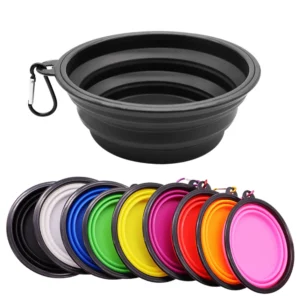 2 Pack Collapsible Silicone Dog Bowls – Portable Pet Food & Water Travel Bowl with CarabinerMSRP $1.78Login for wholesale pricing
 2-in-1 Dog Training Whistle & Clicker – Outdoor Pet Training Device, Factory-Direct Wholesale (MOQ 50)MSRP $2.18Login for wholesale pricing
 2-in-1 Pet Grooming Comb Set – Dual-Sided Deshedding & Dematting Tools for Dogs and CatsMSRP $6.29Login for wholesale pricing