

Reptile Feeding Products Dropshipping: The Cricket Is the Real SKU
GlobalPetIndex now counts 113,450 pet businesses across 156 countries and 16 regions — 26,470 manufacturers and 3,942 brands selling against 4,734 retailers, with 3,776 distributors and 2,477 wholesalers moving stock between them. Its market board still reads USD 1.4B a month of US pet category sales in the twelve months to 11 August 2026, up 32.6% year on year, with Amazon third-party pet brands up 108% and more than 54M pet units a year moving on that platform (Source: GlobalPetIndex). Five and a half manufacturers for every retailer makes the box a buyer’s market. It does not make the animal any easier to keep alive.
That gap is the whole argument for treating reptile feeding products dropshipping as a husbandry business rather than a ceramics business. A feeding dish is a bowl that costs $2.30 and sells for $8.99, and all 26,470 factories will mould you one. A keeper that keeps crickets alive for three weeks, a dusting routine the customer can follow, and a soak dish that survives a 500 g bearded dragon — that is what turns a $9 bowl into a twelve-month relationship with a hobbyist who owns four animals.
What 5.6 manufacturers per retailer changes on this shelf
Three readings for your open-to-buy:
- The dish is free; the routine is not. Ceramic and resin dishes are quoted by the pallet from dozens of factories. No factory supplies the card that tells the buyer how to dust a cricket — and that card is the only reason the customer returns to you rather than a marketplace.
- 3,942 brands is a relabelling problem. Most of the shelf is five moulds wearing different logos; a brand name says nothing about wall smoothness or base weight.
- +108% third-party growth is a price floor falling. Anything describable in four words gets undercut inside a week. A feeding kit with a printed routine does not get undercut, because the competitor has to write the routine.
Why reptile feeding products dropshipping starts with the insect, not the bowl
The purchase a reptile keeper makes every single week is not equipment. It is live prey. That is the clock the whole aisle runs on, and it decides what belongs in a parcel and what belongs on your shelf.
- You cannot dropship the cricket. Live insects ship temperature-sensitive, arrive with a die-off rate set by the courier’s van, and cross borders only with a plant-protection permit. The insect stays with a live supplier in your own market.
- Everything around the insect ships perfectly. Keepers, dishes, tongs, dust and gut-load are dry, light and inert. That is exactly the profile a parcel feed handles well — which is why the feed should carry the accessories and never the livestock.
- The keeper is the retention device. A customer who buys a ventilated keeper with two tubes has committed to a weekly purchase. A customer who buys a bowl has bought a bowl. Sell the keeper first and the dust sells itself for the next two years.
- Husbandry sells at full margin; hardware does not. A customer whose bearded dragon stopped eating is not comparison-shopping. That conversation is the only moat a 4,734-retailer market leaves you.
Three purchases, three clocks
Reptile feeding products dropshipping splits into three baskets that reorder at completely different speeds. One reorder point for all three hides the fastest one.
- Weekly — live prey and gut-load. One adult bearded dragon eats 30–50 crickets a week, gut-loaded 24–48 hours before feeding, so a 500 g tub turns monthly.
- Every 6–8 weeks — calcium and D3 dust. A 100 g tub lasts about two months for a two-animal household. This is the highest-frequency dry SKU in the aisle and the one most often out of stock, because it looks like a one-off purchase on the shelf.
- Every 12–24 months — the hardware. Keepers crack at the lid hinge, tongs lose their rubber tips, resin dishes get scratched and stop being cleanable. Slow, but it never goes to zero, and it is nearly pure margin.
The shelf is a subscription in the costume of a hardware category. Price it that way.
Margin math per peg
Peg space is decided by GMROI — annual gross profit over average stock at cost, or GM% ÷ (1 − GM%) × turns. Six SKUs, same retail either way, carton turns 2.8, mixed-carton dropship 6.5, dropship cost 10% higher:
| Product | Case qty | Unit cost (case) | Unit cost (dropship) | Retail | GM% (dropship) | GMROI (case) | GMROI (dropship) |
|---|---|---|---|---|---|---|---|
| Cricket keeper, ventilated tub | 24 | $3.40 | $3.74 | $12.99 | 71% | 7.90 | 16.08 |
| Escape-proof feeding dish | 36 | $2.30 | $2.53 | $8.99 | 72% | 8.14 | 16.60 |
| Calcium + D3 dust, 100 g | 48 | $2.50 | $2.75 | $9.99 | 72% | 8.39 | 17.11 |
| Feeding tongs, rubber-tipped | 36 | $1.35 | $1.49 | $6.99 | 79% | 11.70 | 24.10 |
| Resin soak dish, heavy base | 15 | $3.20 | $3.52 | $11.99 | 71% | 7.69 | 15.64 |
| Gut-load insect diet, 500 g | 24 | $4.10 | $4.51 | $13.99 | 68% | 6.75 | 13.66 |
The dropship premium costs two to three points of gross margin, and two and a half extra turns erase it. Tongs are the best peg in the aisle — 79% margin, 24 GMROI on the feed, and the only SKU that gets replaced because it was lost rather than because it broke. Gut-load is the worst at 6.75 on the carton, and also the one that must never be out of stock: it is the item that makes the weekly insect purchase repeat.
A keeper, dust tub, tongs and dish together are a USD 38.96 sale at about 73% blended margin — and three of the four come back on a clock.
The freight test: dense wins, air pays
One ratio decides what enters a dropship feed: volumetric weight ÷ actual weight, at the 1:5,000 divisor most parcel carriers use (1 m³ = 200 kg).
- Calcium dust, 100 g: 0.0003 m³, 0.14 kg, 0.06 kg — 0.4. Dense is free.
- Gut-load, 500 g: 0.0015 m³, 0.55 kg, 0.30 kg — 0.5. Ships anywhere.
- Resin soak dish: 0.0025 m³, 0.75 kg, 0.50 kg — 0.7. Built for parcel.
- Tongs: 0.0005 m³, 0.09 kg, 0.10 kg — 1.1. Never ship alone; margin is too thin to carry a label.
- Cricket keeper: 0.0040 m³, 0.22 kg, 0.80 kg — 3.6. Fails alone by any 3.0 line. Ride it in a mixed carton with a dust order.
The pattern inverts what buyers assume: the heavy resin dish is the cheapest thing on the shelf to send, and the light plastic keeper is the expensive one, because it is mostly air. Consolidate keepers into cartons already carrying dust or gut-load, or the $12.99 ticket pays freight twice.
Import compliance checklist, US and EU
Confirm each line in writing before the deposit:
- HTS in writing. Tweezers-type tongs usually land in 8203.20, bent steel in 7326.90; ceramic dishes in 6912.00 (porcelain 6911.10); resin dishes and keepers in 3924.90 or 3926.90; calcium and vitamin preparations for animal feeding in 2309.90, pure calcium carbonate in 2836.50. A keeper boxed with a dust tub can be reclassified as a set — get the ten-digit line from your broker, not the factory.
- The supplement is feed, not a product. In the US, a calcium and D3 tub sold for animal feeding needs state feed registration and a guaranteed analysis (calcium %, phosphorus %, vitamin D3 IU/kg). In the EU it falls under feed labelling Regulation (EC) 767/2009, feed hygiene 183/2005 and the additive authorisation in 1831/2003. A tub with no analysis panel is not a labelling problem, it is an unregistered feed.
- Never write a veterinary claim. “Prevents metabolic bone disease” and “cures MBD” turn a feed into an unapproved animal drug in the US and a veterinary medicine in the EU under Regulation 2019/6. Describe the calcium level and let the keeper’s vet do the diagnosis.
- Do not put live insects in the feed. Moving live plant-feeding insects across borders requires a plant-protection permit, and several states restrict species outright. The keeper is a parcel item; the cricket is a local-supply item.
- Prop 65. Two recurring findings on this shelf: lead in plated or brass tongs, and DEHP in soft PVC tubing and dusting bulbs. Ask for a material declaration per part, not per carton.
- GPSR 2023/988. Since 13 December 2024 an EU-established responsible operator must be named on the product or listing, with traceability to the manufacturer. A parcel with no EU address is a compliance failure even when the goods are perfect.
- Section 301 and origin marking. China-origin plastics and steel carry a moving duty stack; confirm the current rate before you price the peg. 19 CFR 134 requires origin marking on the retail carton, not only the master.
- Drop test. Every carton should survive 1.2 m. Resin soak dishes crack at the base corner, which is exactly where the weight sits.
How to start at 150 units, not a pallet
- Build the carton around the routine. Twenty keepers, thirty feeding dishes, thirty pairs of tongs, forty dust tubs, fifteen soak dishes, fifteen gut-load tubs.
- Specify the boring numbers. Keeper wall 1.5 mm with a hinged lid and two 25 mm tubes; dish rim 8 mm with a smooth glazed interior; tongs 25 cm with replaceable rubber tips; dust tub with a shaker lid and a batch code; soak dish base at least 40% of total weight.
- Test the three failures that cause returns. Can a cricket climb the wall? Does the keeper lid survive 200 openings? Does the soak dish tip when a 500 g animal steps on the rim?
- Print the routine. One A6 card per kit: gut-load 24–48 hours, dust frequency by species, fresh water daily, replace the keeper when the hinge cracks. That card is the product.
- Attach the part to the animal. Every keeper sold should leave with the dust tub named on the receipt. It is the cheapest attach-rate mechanic in the store.
- Book the reorder before the season. CIPS opens in Guangzhou on 12 November and Chinese factories close for Lunar New Year in February: the container you book now covers Q1. The wholesale inquiry form prices this range at unit level, and becoming a reseller opens the local-stock side of the same list.
This week’s action list
- Count how many reptile customers bought a keeper and never came back for dust. That number is your attach rate.
- Put a three-line species card next to the dishes — soak dish diameter, dust frequency, prey size.
- Pull every listing that promises to prevent or cure a disease. It is the fastest way to lose the category.
- Ask two suppliers for FOB and DDP on 150 mixed units. The gap sits in the keeper carton, not the dust tub.
- Split the reorder points: dust and gut-load monthly, hardware twice a year. One number hides both.
FAQ
Can I dropship live feeder insects with the rest of the order?
No. Live prey is temperature-sensitive, arrives with a die-off rate you cannot control, and needs a plant-protection permit to cross a border. Keep live supply local and dropship everything around it — keepers, dishes, tongs, dust and gut-load.
What margin should reptile feeding accessories carry?
Plan on 70–80% gross margin at retail, with 71–79% after a 10% dropship premium on cost. The volume line is dust and gut-load; the margin line is tongs and keepers.
Do calcium and vitamin supplements need registration?
In the US, yes in most states — feed registration plus a guaranteed analysis. In the EU, feed labelling and additive authorisation apply. A tub with no analysis panel is an unregistered feed, not a labelling oversight.
The reseller programme covers the accessory half of this shelf, wholesale kits bundle it at the carton level, and shipping terms explain how a mixed carton is consolidated. Behind it, 26,470 manufacturers indexed on GlobalPetIndex — with leaderboards on the rankings hub — is why a 150-unit order is negotiable at all. Sourcing windows are close: CIPS on 12 November, London Vet Show on 19 November, MEGAZOO Autumn on 20 November.
This article’s industry signals are cited from GlobalPetIndex public industry data, for procurement decision reference only; specific compliance is subject to the latest regulations of the destination country.
Ready to stock these ideas? Browse wholesale pet KITs →
Shop these pet categories
Wholesale pricing, no minimum order.
Related wholesale collections
Products mentioned here
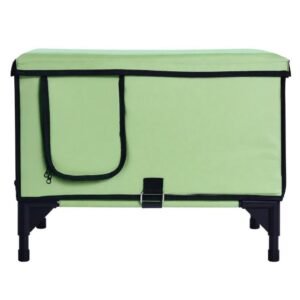 Elevated Heated Outdoor Cat House with 30W Waterproof Heating PadMSRP $128.99Apply for wholesale pricing
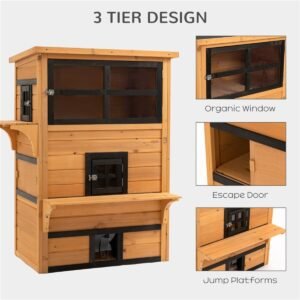 Three-Tier Outdoor Cat Condo with Asphalt Roof and Five Access DoorsMSRP $284.99Apply for wholesale pricing
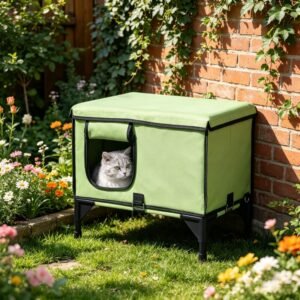 Large Elevated Heated Cat House with Waterproof Pad and Insulated LiningMSRP $124.99Apply for wholesale pricing
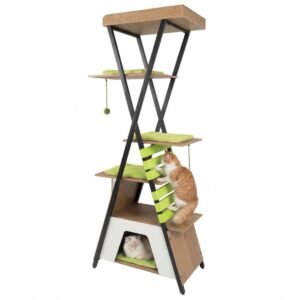 73″ Multi-Level Cat Tree with Condo, Top Perch and Scratching PadMSRP $228.99Apply for wholesale pricing
Stock it as a wholesale KIT
Pre-bundled assortments built from this guide’s categories — one PO, one shipment, wholesale pricing.