

Reptile Heat Lamps Dropship Supplier: Stocking the Always-On Niche Aisle in 2026
Why Consolidation Is Quietly Handing Independent Stores a Niche Aisle
GlobalPetIndex now tracks 111,020 pet companies across 185 countries and 23,511 manufacturers, and the loudest item in its market intelligence feed is consolidation. On 2026-10-09, Umios closed a JPY 11.4B (US$77.5M) deal for a 51% stake in Pet World International, while chain retailers keep pushing store counts into the thousands and centralising their buying. Every one of those moves funnels capital toward dog and cat food, high-velocity branded SKUs and shelf-ready planograms. That leaves a set of categories too small for a 3,000-store program but too essential for a dedicated hobbyist to skip — and reptile heating is the clearest example. Becoming a reptile heat lamps dropship supplier for your store is how a small shop adds that aisle without a warehouse, a forecast and a seasonal cash commitment. Source: GlobalPetIndex.
The Industry Signal Behind the Niche Aisle
Two facts sit side by side in the GPI data, and the tension between them is the opportunity.
Supply depth is enormous. The directory’s manufacturer index lists 23,511 factories, and the sourcing shortcuts break that into 1,665 pet-food manufacturers, 1,528 dog-product manufacturers and 1,234 cat-product manufacturers. If you need a supplier for almost any accessory, one exists two clicks away.
Buying attention, however, is narrow. Consolidation rewards volume, so merchandising energy goes where units move fast: food, treats, litter, and a handful of high-turnover accessory categories. A regional chain that has just absorbed a competitor has to justify every new SKU against a central planogram — and a category that sells a few units per store per month never survives that review.
Reptile keepers sit outside that pattern. A bearded dragon or a leopard gecko does not buy food on a weekly grocery rhythm, but its enclosure needs heat every single day of the year, and the hardware that delivers it wears out on a clock. Basking bulbs dim and fail, ceramic emitters crack, thermostats drift out of calibration. A chain that stocks one generic 60W bulb “somewhere in pet” cannot serve a keeper who needs a 100W emitter, a deep dome and a dimming thermostat in the same afternoon. That gap — a small, obsessive, underserved audience with a hard technical requirement — is where an independent store wins.
Reptile Heat Lamps: A Fixed-Infrastructure Consumable
Most accessories are discretionary: a new toy, a prettier bowl, a seasonal bed. Heating is not. It is fixed infrastructure with a consumable clock attached, and that combination behaves far more like a subscription than a one-off purchase.
Three sub-categories carry the shelf:
- The emitter or bulb — the consumable. It produces the heat your customer cannot live without, and it fails on a predictable schedule.
- The fixture or reflector — semi-durable. Deep domes, clamp lamps and ceramic sockets last years, but keepers buy a second one for a second enclosure.
- The controller or thermostat — semi-durable and the highest ticket on the shelf. Anyone serious about animal welfare ends up buying one.
Sizing is inherently species- and tank-specific, which creates natural upsell. A keeper who sets up a 40-gallon terrestrial enclosure with a 100W emitter will return for the same wattage within 6–12 months, and most thoughtful keepers buy a spare so they are never left without heat during a bulb failure. That spare-bulb habit is precisely the repeat revenue a food-led store never captures on the hardware side.
Logistics reinforce the fit. Heat lamps are light, non-refrigerated, effectively non-perishable and low-damage in transit. They carry none of the cold-chain or expiry risk that makes food hard to dropship, and a single carton can hold dozens of SKUs. This is why a dropship model — no stock, no forecast, no capital tied up — suits the category better than a classic wholesale buy.
Margin Calculator: What a Reptile Heating Shelf Actually Earns
The table below uses low-MOQ landed costs typical of a small first order — a few hundred units spread across two or three SKUs — against mainstream online retail prices. The numbers are illustrative; your landed cost depends on freight, duty and how hard you negotiate. What stays stable is the shape of the margin: heating hardware is a comfortably high-margin category, and the “reorder clock” column is the real asset.
| SKU | Landed cost (low MOQ) | Typical retail | Gross margin | Reorder clock |
|---|---|---|---|---|
| Ceramic heat emitter, 60W | $6.40 | $19.99 | 68% | 6–12 months |
| Ceramic heat emitter, 100W (2-pack) | $11.20 | $34.99 | 68% | 6–12 months |
| Deep-dome clamp lamp, 8.5″ | $9.10 | $27.99 | 67% | 24+ months |
| Adjustable dimming thermostat | $12.50 | $39.99 | 69% | 12–24 months |
| Basking halogen, 50W (4-pack) | $8.60 | $26.99 | 68% | 3–6 months |
| Digital hygrometer + thermometer | $5.30 | $16.99 | 69% | 12–18 months |
Read that last column as a schedule of return visits. The 50W halogen four-pack and the ceramic emitters are razor-blade SKUs: your customer replaces them on a cycle you can predict, which means you can predict your own restocking. Bundle an emitter, a fixture and a thermostat into one “basking starter kit” and you raise the initial basket while creating a documented reorder path that keeps the keepers coming back long after the setup is done.
Vetting a Reptile Heat Lamps Dropship Supplier Before You Commit
Heat lamps are electrical goods, so the supplier relationship is really a compliance relationship with a margin attached. Before you list anything, ask six questions and refuse to move forward until you have written answers:
- Can you send the actual test reports — LVD and EMC for mains-powered items, plus RoHS — not just logos on a brochure?
- What is the exact wattage tolerance on each emitter, and do you test for output after burn-in?
- Is the cable insulation phthalate- and lead-compliant to REACH and Prop 65 limits?
- What are your MOQ per SKU and per carton, and will you let me mix SKUs within a single carton?
- Who is the manufacturer of record, and can you supply country-of-origin and HS code documentation?
- What is the realistic restock lead time, and do you hold buffer stock of the fastest-moving wattages?
Import Compliance Checklist for Heat Lamps (EU & US)
Use this as a gate, not a formality. If a supplier cannot produce paperwork for the column that matches your market, treat that as a no.
- EU — CE marking: Low Voltage Directive 2014/35/EU for mains lamps and controllers, plus EMC Directive 2014/30/EU for anything with electronics.
- EU — RoHS 2011/65/EU: restriction of hazardous substances in the lamp, socket and control electronics.
- EU — WEEE: you carry producer responsibility for electrical goods; register in each member state you sell into.
- EU — REACH: phthalates and lead limits for cable insulation and any flexible plastic parts.
- EU — GPSR: the General Product Safety Regulation requires an EU responsible person and traceable labelling on every unit.
- US — UL or ETL listing: mains heating equipment and thermostats are expected to carry a recognised safety listing; buyers and insurers ask for it.
- US — FCC Part 15: applies to any controller or digital thermostat with electronics.
- US — California Prop 65: cords and solder can trigger warnings; confirm limits with your supplier before listing.
- Both — honest claims: never advertise a fixed “safe temperature.” Heat output depends on the enclosure, ambient room and fixture, so describe wattage and intended use, not guarantees.
How to Start a Low-MOQ Private-Label Line
You do not need a container, a mould or a design agency to put your own name on a heat-lamp shelf. Start small and let the reorder clock fund the rest.
- Pick two hero SKUs. A 100W ceramic emitter and a deep-dome clamp lamp cover the widest range of enclosures.
- Confirm MOQ and carton terms. Ask for the smallest possible per-carton order and mixed-SKU cases so your first buy stays light.
- Collect the gated reports first. LVD, EMC and RoHS for the EU, plus a US test-lab report, before you pay any deposit.
- Brand with labels, not tooling. Use a compliant self-adhesive label and a printed box rather than a custom mould — zero tooling cost, fast turnaround.
- Shoot the two SKUs yourself. A simple lighting rig gives you clean, honest product images and a habitat-specific sizing guide.
- Bundle into a starter kit. Emitter plus fixture plus thermostat lifts average order value and locks in the reorder path.
This Week’s Action List
- Pull the reptile-heating keywords you currently rank for, and list which wattages you cannot yet fulfil.
- Request quotes for a 100W ceramic emitter and a deep-dome clamp lamp from two suppliers on the GlobalPetIndex manufacturer index.
- Ask both for LVD, EMC, RoHS and a US test-lab report — and note who answers within 48 hours.
- Draft one “basking starter kit” bundle with a bundle price and a stated reorder interval.
- Write a short habitat-sizing guide so keepers pick the right wattage the first time.
- Apply to a dropship program so the shelf goes live with no cash tied up in stock.
Ready to add the aisle? Apply to our dropship program, send a wholesale inquiry for mixed-SKU cartons, and review the top wholesale products to see what else pairs with a heating shelf.
FAQ
Are reptile heat lamps a good dropshipping product?
Yes — for the right store. They are light, non-perishable and high-margin (roughly 67–69% at low MOQ), and they generate predictable repeat purchases because bulbs and emitters fail on a clock. The category rewards a store that already serves reptile keepers or that wants a compact, technical niche a large chain will not stock deeply.
What wattage should I stock first?
Start with 100W ceramic emitters plus a deep-dome clamp lamp, then add 50–60W options and a dimming thermostat. Most terrestrial setups for bearded dragons, leopard geckos and similar species cluster around those wattages, and they cover the widest range of enclosure sizes without forcing you to hold a long tail of rare SKUs on day one.
Do I need certification to sell heat lamps in the EU or US?
Yes. In the EU you need CE marking backed by LVD and EMC test reports, RoHS compliance, WEEE registration and REACH-conform insulation, plus GPSR labelling with an EU responsible person. In the US, mains heating equipment should carry a UL or ETL listing, controllers may fall under FCC Part 15, and Prop 65 limits apply to cords and solder. Ask for the reports before you pay a deposit.
How many SKUs should a small store launch with?
Two to four. Launch with a hero emitter, a hero fixture and one thermostat, bundle them into a single starter kit, then let actual reorder data tell you which additional wattages to add. A narrow, deep shelf outsells a shallow, wide one in a category where getting the specifications right matters more than offering endless choice.
This article’s industry signals are cited from GlobalPetIndex public industry data, for procurement decision reference only; specific compliance is subject to the latest regulations of the destination country.
Ready to stock these ideas? Browse wholesale pet KITs →
Shop these pet categories
Wholesale pricing, no minimum order.
Related wholesale collections
Products mentioned here
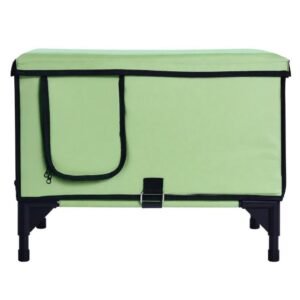 Elevated Heated Outdoor Cat House with 30W Waterproof Heating PadMSRP $128.99Login for wholesale pricing
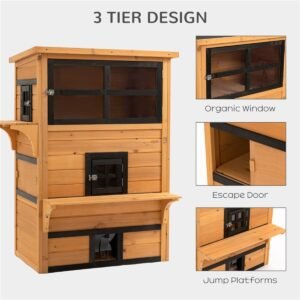 Three-Tier Outdoor Cat Condo with Asphalt Roof and Five Access DoorsMSRP $284.99Login for wholesale pricing
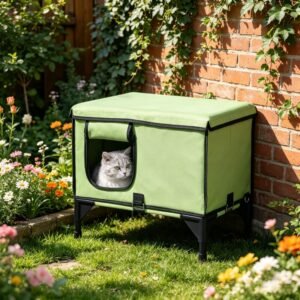 Large Elevated Heated Cat House with Waterproof Pad and Insulated LiningMSRP $124.99Login for wholesale pricing
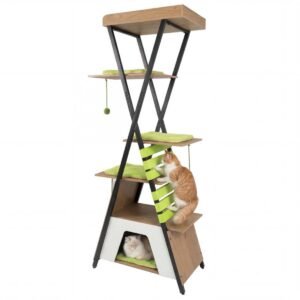 73″ Multi-Level Cat Tree with Condo, Top Perch and Scratching PadMSRP $228.99Login for wholesale pricing
Stock it as a wholesale KIT
Pre-bundled assortments built from this guide’s categories — one PO, one shipment, wholesale pricing.