

Reptile Humidity Products Dropshipping: The 55% Line
GlobalPetIndex now indexes 113,448 pet businesses across 156 countries and 16 regions — 26,469 manufacturers selling against 4,734 retailers, with 3,941 brands and 2,476 wholesalers stacked behind them. Its market intelligence board still reads USD 1.4B a month of US pet category sales in the twelve months to 11 August 2026, up 32.6% year on year, with Amazon third-party pet brands up 108% and more than 54M pet units a year moving on that platform (Source: GlobalPetIndex). At 5.6 suppliers per shelf, nobody is short of product. What is still short is a number the shopper can trust.
Reptile keeping runs on two invisible variables: temperature and humidity. The first one has an entire wall of lamps, domes and thermostats. The second has a $9 dial hygrometer hanging off a suction cup, reading whatever it feels like. That gap is where reptile humidity products dropshipping earns its place in an independent store — not because foggers are exciting, but because a keeper who cannot measure humidity will pay someone who can tell her what 55% looks like in her own enclosure.
What the 26,469-to-4,734 ratio changes on this shelf
Three readings for your open-to-buy:
- Supply is not scarce; credibility is. Roughly 160 suppliers sit in GPI’s reptile habitat category alone. You can ask any of them for a 120-unit mixed carton and get a quote by Friday. Spend that leverage on tolerance specs, not on price.
- 3,941 brands is a labelling problem. Most of them slap a name on the same Shenzhen hygrometer. The shopper cannot tell which one drifts 20 points in a month, and neither can you until you test.
- +108% third-party brand growth is a price floor falling. Anything describable in four words — “digital hygrometer reptile” — gets undercut within a week. Anything requiring a conversation about species and calibration does not.
Why reptile humidity products dropshipping beats a glass terrarium
The instinct is to dropship the tank, because the tank is the expensive thing. It is also the worst possible parcel: a 60 × 45 × 45 cm enclosure is 0.12 m³ for 9 kg — about 24 kg of volumetric weight at the 1:5,000 divisor most carriers use — and it arrives either intact or in pieces, with no middle outcome. Glass is a local-stock decision, full stop.
The line around it is different:
- Light, dense, low-breakage. A two-probe hygro-thermometer is 0.18 kg in a 0.0012 m³ carton.
- It answers a question the shopper already has. “Why is my gecko’s shed patchy?” is a humidity question. Nobody types that into a marketplace search bar; they ask the person behind the counter.
- Repeat purchase is built in. Moss is consumed, sprayer seals fail, cheap probes drift. The meter is the annuity, the consumables are the rent.
The 55% line: what you are actually selling
Species need different numbers — leopard geckos sit near 35–45%, crested geckos at 60–80%, most tropical snakes at 60–70%. No packaging communicates that; a laminated card taped to the shelf does.
So the retail unit is not “a fogger”. It is a stated target plus a way to verify it. That is the whole argument for reptile humidity products dropshipping: the meter is the reason a shopper drives to you instead of ordering a listing.
- Calibration you can perform. Salt and a sealed bag gives 75% relative humidity at 20 °C. Ninety seconds, no tools. A store that does this in front of a customer has just proved every other number on the shelf is a guess.
- A tolerance claim you will defend. ±5% RH is a real spec. ±2% at $14.99 is a return waiting to happen — and reptile keepers do compare two units side by side, in the shop, out loud.
Margin math per peg
Gross margin percentage flatters this shelf. The question is how much cash sits behind each size, so use GMROI — annual gross profit over average stock at cost, which is GM% ÷ (1 − GM%) × turns. Six SKUs, same retail either way, carton turns 2.6, mixed-carton dropship 6.0, dropship unit cost 10% higher:
| Product | Carton qty | Unit cost (carton) | Unit cost (dropship) | Retail | GM% (dropship) | GMROI (carton) | GMROI (dropship) |
|---|---|---|---|---|---|---|---|
| Digital hygro-thermometer, 2-probe | 24 | $3.10 | $3.41 | $14.99 | 77% | 8.85 | 20.43 |
| Pressure sprayer, 1.5 L, manual | 12 | $2.85 | $3.14 | $12.99 | 76% | 8.14 | 18.79 |
| Ultrasonic fogger, 4 L, with hygrostat | 6 | $13.40 | $14.74 | $54.99 | 73% | 7.10 | 16.39 |
| Misting nozzle kit, 4 heads + pump | 20 | $5.60 | $6.16 | $24.99 | 75% | 7.97 | 18.39 |
| Sphagnum moss block, 150 g | 40 | $1.55 | $1.71 | $7.99 | 79% | 9.55 | 22.04 |
| Plug-in hygrostat controller | 12 | $6.90 | $7.59 | $29.99 | 75% | 7.68 | 17.72 |
Three conclusions. First, the dropship premium costs about two points of gross margin and two and a half extra turns wipe it out — the money is in not owning the inventory, not in the unit price. Second, the fogger carries the cash and the risk: highest ticket, only row with a water tank and a power cord, and the only one where a failure is a fire rather than a refund. Third, moss is the cheapest peg in the store and the best opener — buy it by the forty, price it at $7.99, and let it start the conversation.
The basket math is the point: meter, sprayer and moss together are a USD 36 sale at roughly 77% blended margin, off three pegs that occupy less than 40 cm of shelf.
The freight test: cube beats weight
One number decides what enters a dropship feed: volumetric weight ÷ actual weight, on the same 1:5,000 divisor.
- Hygro-thermometer: 0.0012 m³, 0.18 kg, 0.24 kg — 1.3. Built for parcel.
- Misting nozzle kit: 0.0030 m³, 0.45 kg, 0.60 kg — 1.3. Fine.
- Moss block: 0.0021 m³, 0.19 kg, 0.42 kg — 2.2. Borderline; best inside a mixed carton.
- 4 L fogger: 0.0145 m³, 1.65 kg, 2.90 kg — 1.8. Local stock, or dropship only at a price that absorbs oversize.
- 1.5 L sprayer: 0.0048 m³, 0.32 kg, 0.96 kg — 3.0. A hollow bottle is mostly air; keep it out of the feed or accept a freight line that eats the margin.
- 60 cm glass terrarium: 0.1215 m³, 9 kg, 24.3 kg — 2.7 plus breakage. Never.
Instruments and consumables become zero-inventory tests; the tank and the fogger stay on your shelf.
Import compliance checklist, EU and US
Confirm each line in writing before the deposit:
- HTS in writing. Hygrometers and thermometers usually land in 9025.80, ultrasonic foggers in 8479.89, trigger sprayers in 8424.89, plastic reservoirs in 3926.90, brass nozzles in 7412.20. Foggers get pushed around by description — confirm the ten-digit line with your broker, because a loosely described “misting device” can be reclassified into a higher duty band.
- Listed assembly, not a listed brick. A corded fogger or plug-in hygrostat needs a UL or ETL mark on the finished assembly, not only on the wall adapter. Ask for the certificate and check that the model number on it matches the carton.
- Water plus mains. Demand IPX1 minimum at the fogger base and IP44 at the plug, a tank that lifts off without exposing live parts, and no daisy-chaining of hygrostats into one outlet. In the US, tell the customer to use a GFCI circuit; in the EU, the LVD 2014/35/EU file has to exist before the CE mark does.
- EMC and RoHS, both sides. EMC 2014/30/EU for anything with a switching supply, RoHS 2011/65/EU for the lot. Foggers and controllers are also e-waste: WEEE registration sits on whoever imports under their own name, and it is annual, not one-time. A $14.99 probe with a lead-soldered board still needs the file.
- GPSR 2023/988. Since 13 December 2024 an EU-established responsible operator must be named on the product or the listing, with traceability back to the manufacturer.
- Prop 65 at the brass and the tubing. Two recurring findings on this category: lead in brass nozzles and DEHP in PVC hose. Ask for a material declaration per part, not a certificate for the finished good.
- Claims discipline. A fogger is not a medical device. “Prevents respiratory infection” is a veterinary claim you cannot support; “maintains 60–80% RH for tropical species” is a specification you can. Never print “sterile” or “purifies” — ultrasonic mist carries dissolved minerals, which is why the white dust on the glass is a support call, not a defect.
- Batteries and drop test. Rechargeable units need UN38.3; every carton should survive a 1.2 m drop with the tank empty.
How to start at 120 units, not a pallet
- Build the carton around the meter. Forty hygro-thermometers, twenty-four sprayers, twelve foggers, twenty misting kits, twenty-four moss blocks. Small enough to be a test, large enough for a factory to schedule.
- Specify tolerance, not features. ±5% RH at 25 °C, 0.1% resolution, two probes with 1 m leads. A supplier who cannot quote a tolerance is reselling, not making.
- Burn in every fogger for 24 hours. Fill, run, check the tank seam and the transducer for seep. This is the single highest-return failure in the category and it costs one day.
- Salt-test five units out of every twenty-four. Sealed bag, saturated salt, 20 °C, four hours. Anything outside 74–76% gets the whole carton rejected.
- Reorder by species group, not by SKU. Tropical keepers buy foggers in winter when the heating dries the room; arid-species keepers buy nothing but a meter. A shared reorder point hides both.
This week’s action list
- Take one hygrometer out of its box and let it read the shop floor; write today’s number on the shelf card.
- Bundle meter, sprayer and moss at $34.99 instead of selling three singles at $35.97. Same money, one decision.
- Move humidity stock forward to November–February. Heating season is humidity season, and it is the only seasonal curve this shelf has.
- Request FOB and DDP on 120 mixed units from two suppliers. The gap will sit in the fogger’s carton cube, not the unit price.
FAQ
Is a fogger or a hand sprayer the better first purchase for a new reptile keeper?
A sprayer, in almost every case. One or two enclosures can be held at target with a 1.5 L pressure sprayer and a meter, at a third of the cost, with no cord and no mineral dust. A fogger earns its place at four or more enclosures, or with a species needing constant 70%+ humidity through a dry winter.
Do reptile humidity products need UL certification to be sold in the US?
Anything that plugs into the wall does, and the mark has to be on the finished assembly, not only on the adapter. Retail buyers will ask for the certificate, and the model number on it must match the carton.
Can I dropship glass terrariums alongside the humidity line?
No. A 60 × 45 × 45 cm enclosure bills at about 24 kg of volumetric weight for 9 kg of glass, and the failure mode is breakage, not delay. Keep enclosures as local stock and let the parcel feed carry meters, nozzles, moss and controllers.
How do I compete with a marketplace on a $14.99 hygrometer?
Do not compete on the unit. Compete on the number: calibrate the demo unit in front of the customer, print the species target on the shelf card, and sell the meter with the sprayer and moss it needs. A keeper who has watched a salt test does not save four dollars on an unverified reading.
The wholesale inquiry line prices at unit level, reseller terms cover the first mixed carton, and shipping explains what moves as a parcel and what does not. Behind it, 26,469 manufacturers indexed on GlobalPetIndex — with country and category leaderboards on the rankings hub — is why a 120-unit mixed carton is negotiable at all. Sourcing windows are close: Saudi Pet & Vet on 9 November, CIPS on 12 November, London Vet Show on 19 November.
This article’s industry signals are cited from GlobalPetIndex public industry data, for procurement decision reference only; specific compliance is subject to the latest regulations of the destination country.
Ready to stock these ideas? Browse wholesale pet KITs →
Shop these pet categories
Wholesale pricing, no minimum order.
Products mentioned here
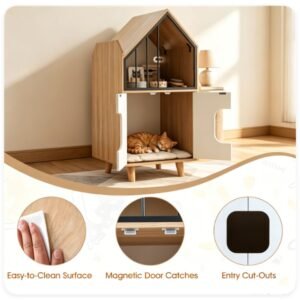 Hidden Cat Litter Box Cabinet with Elevated Cat Lounge, Natural and WhiteMSRP $137.99Apply for wholesale pricing
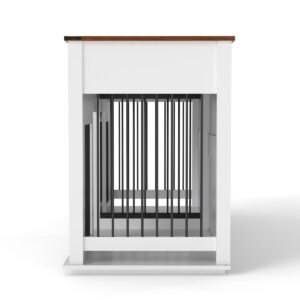 63″ Double Dog Crate Furniture with Two Drawers and Sliding DoorsMSRP $459.99Apply for wholesale pricing
 Woven Water Hyacinth Cat Pod Bed on Metal Tripod Base, BeigeMSRP $152.99Apply for wholesale pricing
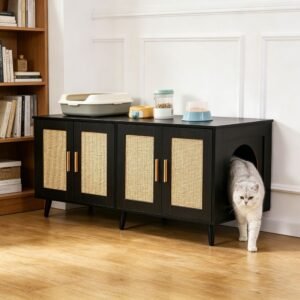 Rattan-Door Cat Litter Box Cabinet, 47″ Sideboard StyleMSRP $237.99Apply for wholesale pricing
Stock it as a wholesale KIT
Pre-bundled assortments built from this guide’s categories — one PO, one shipment, wholesale pricing.