

Sales Tax for Pet Stores: 2027 Nexus Rules | JustForPetStore
Sales tax for pet stores follows the customer’s address, not your storefront, since the Supreme Court’s 2018 Wayfair decision allowed states to tax remote sellers by economic nexus. If online orders, delivery routes, or marketplace listings push you past a state’s threshold, usually $100,000 in sales, you owe that state whether or not you own a building there. Test your exposure before January.
What did the Wayfair decision change for pet stores?
On June 21, 2018, the Supreme Court decided South Dakota v. Wayfair, Inc., No. 17-494, and overruled two earlier cases, National Bellas Hess (1967) and Quill (1992), that had barred states from requiring collection by sellers with no physical presence. Writing for the Court, Justice Kennedy applied the four-part Complete Auto test: a tax is valid if it applies to an activity with substantial nexus, is fairly apportioned, does not discriminate against interstate commerce, and is fairly related to services the state provides. The Court then held that economic activity alone can supply substantial nexus. South Dakota’s statute, which the Court examined, covers sellers that deliver more than $100,000 of goods or services into the state annually, or engage in 200 or more separate transactions, per the opinion. For a pet store, the practical meaning is blunt: a customer’s shipping address can create a filing obligation in a state where you have never set foot.
When does an out-of-state pet sale create a tax obligation?
Three separate triggers matter, and they stack. The first is economic: cross a state’s sales or transaction threshold and registration becomes mandatory, not optional. Most states copied South Dakota’s model, a dollar threshold near $100,000 measured over the previous or current calendar year, sometimes paired with a 200-transaction count that still traps small sellers with many low-ticket orders. The second is physical: a delivery van crossing a state line, a booth at a regional pet expo, a part-time employee living across the border, or inventory sitting in a third-party warehouse all count as presence and can create obligations with no threshold at all. The third is marketplace: sales made through a platform that collects on your behalf are usually covered by the platform, but the same revenue often still counts toward your own gross when you test a threshold for your website. A store that sells 40-pound bags of dog food locally, ships cat supplies nationwide, and runs a booth at three expos a year has three different exposure paths, and each needs its own answer.
How does a state actually calculate the threshold?
The arithmetic is where stores get caught, because the base is usually gross receipts, not taxable receipts. Texas is a clean example. Its Comptroller publishes a safe harbor for remote sellers with total Texas revenue under $500,000 in the preceding twelve calendar months, and the agency defines that revenue broadly: gross revenue from taxable and nontaxable sales of tangible personal property and services into Texas, including separately stated handling, transportation, and installation fees, and including sales for resale and sales to exempt entities, per the Texas Comptroller. Read that list again. A store that ships $420,000 of exempt-resale product to Texas wholesalers plus $90,000 of retail orders has crossed $500,000 even though almost none of it was taxable at retail. The same logic applies in states with $100,000 thresholds: measure everything delivered into the state, then decide what is taxable.
What happens the moment you cross a threshold?
Nothing automatic, which is the danger. Texas gives a defined start date: a remote seller that exceeds the safe harbor must obtain a permit and begin collecting state and local use tax no later than the first day of the fourth month after the month in which the threshold was exceeded. Cross in March and collection starts July 1. That gap is generous enough to plan around and short enough to forget, and the liability for the gap months does not disappear. Most states use a similar lag, often the first day of a specified month after the measuring period ends, and several require registration within a set number of days of crossing. The failure mode is consistent: a store crosses in the middle of Q4, is busy with holiday traffic, and discovers the obligation the following spring when a nexus questionnaire arrives. Diary the threshold date the week you cross it, not the week you file.
Do marketplace sales count toward your own threshold?
Usually yes, and this is the most common expensive misunderstanding. When you sell through a marketplace whose facilitator collects and remits tax, the platform carries the collection duty for those transactions. Texas recognizes this directly: a remote seller that sells only through marketplace providers which certify they are collecting and reporting is not required to obtain its own permit for that activity. But three things still bite. First, many states count marketplace sales in the seller’s own threshold math, so the revenue can push you over for your standalone website even though the platform handled the tax on its own sales. Second, if you also sell on your own site, the combined totals decide when your own registration starts. Third, the certification is not self-executing: you need the provider’s written confirmation on file, not an assumption. Stores that treat “the platform handles it” as a complete answer routinely owe tax on their own site orders for a year before anyone notices.
What creates physical presence besides a storefront?
More than most owners expect, and each one is a separate fact pattern. Inventory is the big one: placing seasonal dog apparel in a fulfillment center two states away is physical presence in that state, full stop, even if the center is a contractor. People are the second: a groomer who drives to a neighboring state for house calls, a driver who delivers to a border town, or a manager who moved and works remotely from another state can each create presence. Events are the third: a booth at a three-day expo is temporary, but several states treat any in-state selling activity as nexus, and repeat attendance over a season can be enough. Fixtures and installation run fourth: if you sell and install dog grooming equipment across a state line, your installers are your presence. Map your physical footprint honestly once, in writing, and the registration question mostly answers itself.
How do you register in a new state without a paperwork spiral?
Register where you have to, and use the shortcuts that exist. Twenty-three states are full members of the Streamlined Sales Tax Governing Board, with Tennessee as an associate member, and the compact offers a single registration that covers all member states plus free tax calculation and reporting services through certified service providers, per the Streamlined Sales Tax Governing Board. That matters for a store filing in three or four states: one application beats four portals, and the rate and boundary files remove the guesswork from local surtaxes. Where Streamlined does not apply, register directly with the state and expect to answer questions about your first sale date. If you are already late, ask about the state’s voluntary disclosure program before you register cold: many programs limit the lookback period and waive penalties in exchange for an honest filing, and several run scheduled disclosure windows. Never let a voluntary disclosure deadline pass because the paperwork felt intimidating; the penalty difference is usually larger than the accounting bill.
What records does a pet store need to defend a filing?
Enough to prove destination and exemption, for every transaction you did not tax. Keep the ship-to address, the transaction date, and the amount, because destination is what decides the rate. Keep exemption or resale certificates for every wholesale account, signed and dated, and re-collect them when a customer’s status changes. Keep marketplace provider reports, since those are your evidence that the platform collected. Keep freight invoices when you use a common carrier, because delivery method affects sourcing rules in some states. Retention periods vary, with most states in the three-to-four-year range and some longer for unclaimed credits, so hold the underlying data at least as long as your longest registration state requires. The test that matters: if an auditor asked you to prove why a $1,850 order to a kennel in another state was not taxed, could you produce a certificate and a delivery record in under five minutes?
How much does uncollected tax actually cost a small store?
Model it as a liability, not a rounding error. Suppose a store ships $60,000 of online orders into one state over a year without registering, and the blended state and local rate is 7 percent. That is $4,200 of tax the state was owed and the customer was never charged, and in most states the seller absorbs it: the tax plus interest plus a penalty tier that scales with how the failure is characterized. Recovering $4,200 out of gross margin means selling roughly $12,000 of product at a 35 percent margin, which for most independent stores is several weeks of ordinary profit. The problem compounds because the revenue that created the liability is often the fastest-growing part of the business: U.S. pet care sales reached $95.1 billion over the past year, up 5.5 percent, while in-store sales fell 1.4 percent and online grew 14.1 percent, per NielsenIQ. The channel that is growing is the channel that creates nexus, which is why this belongs on the same page as your assortment plan.
What mistakes cost pet stores the most?
Five recur in small retail. Testing the threshold on taxable sales only, when states usually measure gross receipts into the state. Assuming a marketplace handles everything, then owing tax on the store’s own website orders. Forgetting that local rates stack on top of state rates, so a 5.5 percent state rate becomes 8.2 percent at the register in a city with a surtax. Missing the 200-transaction states, where a store with modest dollars but many small orders crosses on count rather than value. And ignoring use tax on the store’s own purchases, from fixtures to office equipment to promotional signage bought from out-of-state vendors with no tax charged. Each of these is cheap to fix in December and expensive to fix in an audit, and none of them requires a lawyer to correct.
Where should a small pet store start this month?
Three steps, in order. First, pull twelve months of sales by ship-to state from your point-of-sale, website, and marketplace reports, and put one number next to each state. Second, compare each number against that state’s threshold using the gross-receipts definition, and mark every state where you are over, near, or clear. Third, fix the near-misses before Q1: register where you are over, ask about voluntary disclosure where you are late, and document the physical-presence facts you do have. Keep this separate from income tax work: sales tax is collected from customers and held in trust, which is why the bookkeeping calendar that handles deductions and quarterly estimates will not catch a missed registration. The cost side of the equation is worth the same attention as the compliance side, because a store buying through distributors pays for margin it could keep. Sourcing low-MOQ wholesale pet supplies directly from the manufacturer changes the gross margin that has to absorb a new tax line, and a buying plan built around your actual footprint is easier to defend than a shelf full of slow movers. When the state map is finished, contact the JustForPetStore team with your volume and we will help size the assortment to it.
Ready to stock these ideas? Browse wholesale pet KITs →
Shop these pet categories
Wholesale pricing, no minimum order.
Related wholesale collections
Products mentioned here
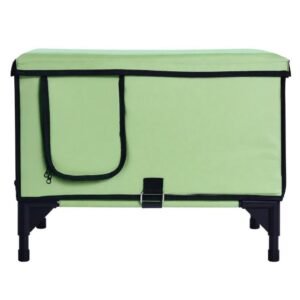 Elevated Heated Outdoor Cat House with 30W Waterproof Heating PadMSRP $128.99Apply for wholesale pricing
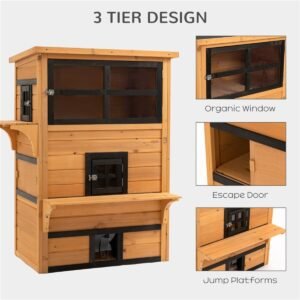 Three-Tier Outdoor Cat Condo with Asphalt Roof and Five Access DoorsMSRP $284.99Apply for wholesale pricing
 Large Elevated Heated Cat House with Waterproof Pad and Insulated LiningMSRP $124.99Apply for wholesale pricing
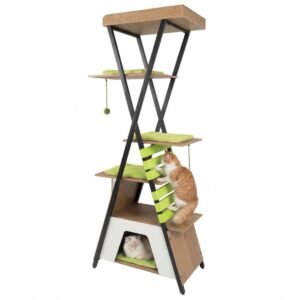 73″ Multi-Level Cat Tree with Condo, Top Perch and Scratching PadMSRP $228.99Apply for wholesale pricing
Stock it as a wholesale KIT
Pre-bundled assortments built from this guide’s categories — one PO, one shipment, wholesale pricing.