

Senior Pet Products: What to Stock 2026 | JustForPetStore
Senior pet products are no longer a niche endcap. Pets are living longer, owners are spending on comfort rather than novelty, and the categories that serve an aging dog or cat — orthopedic beds, mobility aids, gentle grooming tools, joint-focused supplements — are growing faster than the overall aisle. Stock a focused range, price it in tiers, and let staff advice do the selling.
What counts as a senior pet?
There is no universal birthday. The American Veterinary Medical Association frames senior status as the last quarter of an animal’s expected lifespan, which means a giant-breed dog can be senior at six while a small terrier is not until eleven or twelve. Cats generally cross the line later than dogs.
That definition matters commercially because owners rarely self-identify. A customer with an eight-year-old Labrador does not walk in asking for “senior” anything — she walks in saying her dog is slower on the stairs. Train staff to translate the symptom into the shelf: stiff mornings and hesitation on stairs point to mobility and beds; a duller coat and matting point to gentler grooming; skipping meals points to softer food formats and appetite variety.
Build your range around the milestone, not the label. The label sells to the owner who has accepted it; the symptom sells to everyone else, and that group is larger.
How big is the senior pet products opportunity?
The numbers are large enough to justify a permanent section rather than a seasonal display. Stratistics MRC sized the global senior pet care market at $124.0 billion in 2026, projecting $271.8 billion by 2034 at a 10.3 percent compound annual growth rate, with North America holding the largest share and dogs the largest species segment.
Hardware and mobility tell the same story. Per Grand View Research, the global pet mobility aids market was estimated at $1,831.0 million in 2023 and is projected to reach $2,886.5 million by 2030, growing at a 6.7 percent CAGR from 2024 to 2030, with wheelchairs, slings, ramps and steps, splints and braces as the tracked product lines.
Context matters on the demand side. Per the American Pet Products Association, U.S. pet industry spending reached $158 billion in 2025 with a 2026 forecast of $165 billion across roughly 95 million pet-owning households, while 22 percent of owners reported trimming pet spending. Senior products sit on the resilient side of that split: owners cut discretionary novelty before they cut comfort for an aging animal.
Independents are structurally better placed here than any online competitor. This is a category where the buyer needs to press her hand into foam, see the ramp angle against her own sofa height, and ask a human whether the cover actually survives a washing machine. Amazon cannot answer those questions, and a big-box pet chain rarely has staff with time to. That is the advantage to build the aisle around.
Which senior pet products should a small store stock first?
You cannot carry everything, and you should not try. The senior aisle works with about six to ten lines if each one solves a visible problem.
- Orthopedic and bolster beds. The anchor category. Look for lower entry height, removable washable covers, and shredded or layered foam. Carry two sizes of one good bed rather than five mediocre ones. See the pet beds range.
- Mobility aids. Ramps and steps for furniture and vehicles, lift harnesses, and non-slip floor runners. Ramps sell when a customer can see the angle — display one assembled.
- Joint-focused supplements. Soft chews are the format customers actually finish. Keep one established formula and one value tier.
- Comfort grooming tools. Softer pins and slicker brushes, quiet clippers, nail care for thicker senior nails. Merchandise beside your pet grooming supplies.
- Easy-entry feeding. Raised or shallow bowls, slow-feed inserts for dogs that now bolt food, and spill-resistant water solutions.
- Warmth and calming. Heated pads, lightweight calming wraps, and quiet beds for pets whose sleep has fragmented.
- Cat-specific senior items. Lower-sided litter boxes and step-in access for arthritic cats belong with your cat supplies, not hidden in a dog aisle.
Two categories to stay out of. The first is novelty: products that simply carry a senior label without solving a problem rarely convert, because this buyer is looking for relief, not celebration. The second is a deep supplement wall. Three joint SKUs and one calming SKU is plenty; twelve near-identical chews split your own sales and tie up cash for months. In this aisle clarity beats choice — the customer who came in worried about her dog’s stairs wants to be shown one good ramp, not four, and she wants someone to tell her why.
How should you price senior pet products?
Price in three visible tiers and say out loud why each exists. Most independents lose this category by stocking only the middle.
An entry tier around $25 to $40 catches the customer who is not yet convinced — a step, a raised bowl, a basic bolster. A core tier of $60 to $150 is where the bed does real volume, because that is the range owners accept once a vet or a staff member has explained why it matters. A premium tier of $180 and up should exist as a single demonstrator unit, not as inventory you hope to turn.
Do not discount senior products to make the sale. Discounting signals that comfort is optional, and this is the one aisle where customers are buying relief, not indulgence. Bundle instead: bed plus washable cover, ramp plus non-slip runner, supplement plus a 60-day reorder reminder. Bundles protect margin and create the follow-up visit.
How do you merchandise the senior aisle in a small footprint?
Four feet of shelving is enough if it is organized by problem instead of by product type. Use three vertical blocks — “harder to get around,” “harder to get comfortable,” “harder to eat and groom” — with shelf talkers written in the owner’s own words rather than category jargon.
Put the bed on the floor, assembled, and let customers press a hand into the foam. Put the ramp next to a chair at the height of a sofa. Touch is the entire conversion mechanism for this category, and online competitors cannot replicate it.
A staff script does more work than signage. Teach one opening question — “How is she getting around these days?” — and one follow-up, “What is she sleeping on right now?” Those two questions surface most senior needs without asking a customer to label her own pet as old. Keep a one-page card at the counter mapping the five most common answers to the specific SKUs you carry, so a newer employee can serve this aisle confidently.
Then operationalize the repeat. Every senior bed sale should trigger a cover reorder in six months; every supplement sale should trigger a 60-day check-in. Keep a plain notebook or a simple spreadsheet at the counter. The aisle’s economics come from the second and third purchase, not the first.
What can you legally say about senior pet products?
Keep claims to product features and observable comfort, not medical outcomes. You can say a bed has four inches of layered foam, a washable cover, and a low entry height. You should not say it treats arthritis, prevents joint disease, or replaces veterinary care. If a customer describes pain, limping, weight loss, or behavior change, the correct answer is a vet visit — and that referral builds more trust than any claim you could make.
The same rule applies to supplements: describe the ingredients and the format, point to the manufacturer’s label, and avoid promises. For anything making a therapeutic claim, the manufacturer carries the regulatory burden, and you should be able to produce their documentation on request.
How do you source senior pet products without overbuying?
Beds, ramps, and mobility aids are bulky, which makes them the worst possible category for a deep first buy. They eat warehouse space, they are awkward to ship, and a wrong spec — a ramp angle that is too steep, a bed that is too tall — leaves you stuck with an expensive mistake.
Use low minimum order quantities to buy three to six units, put one on the floor, and score it for 30 days: units sold, questions asked, returns, and whether customers came back for accessories. Reorder only what clears your threshold. Working from a wholesale catalog you can reorder from weekly beats committing to a container of beds you have to store for two quarters.
Landed cost deserves the same attention as unit cost in this aisle. Beds and ramps are volumetric: a bulky, low-value carton can cost more to ship than a denser case of smaller goods, and that difference stays invisible if your supplier quotes ex-works only. Ask for carton dimensions and a landed quote before you compare two suppliers, and check whether replacement covers and parts are stocked separately — a bed you cannot re-cover is a one-time sale, while a system with parts is a relationship that brings the customer back.
One caveat: for mobility aids, confirm the spec in writing before you buy — weight rating, step height, ramp angle, cover washability, and replacement-part availability. In this aisle, an unreturnable product is worse than a slightly higher unit cost.
Sources: Stratistics MRC, Senior Pet Care Market Forecasts to 2034 (published May 11, 2026); Grand View Research, Pet Mobility Aids Market Outlook; American Veterinary Medical Association senior pet guidance; American Pet Products Association 2026 industry spending data.
Ready to stock these ideas? Browse wholesale pet KITs →
Shop these pet categories
Wholesale pricing, no minimum order.
Related wholesale collections
Products mentioned here
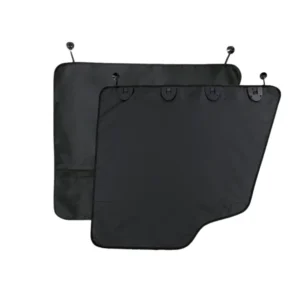 2 Pack Scratch-Proof Durable Oxford Car Door Cover for Dogs | Wholesale Dog Car Door ProtectorsMSRP $26.09Login for wholesale pricing
 Cat Wall Corner Self Groomer Brush – Easy Install Massage & Soft Comb Scratcher (Grey, Blue)MSRP $1.98Login for wholesale pricing
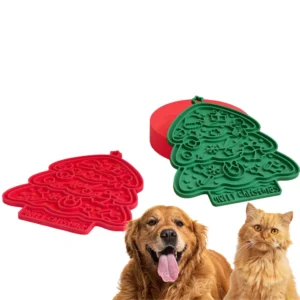 Christmas Tree-Shaped Slowly Non-Slip Silicone Pet Lick Mat | Wholesale Dog Lick MatsMSRP $10.99Login for wholesale pricing
 Dog Slow Feeder Palm Tree Silicone Food Divider with Suction 2 Colors Assorted | Wholesale Slow Feeder Dog BowlsMSRP $9.99 – $11.99Login for wholesale pricing