

Navigating Shipping & Logistics for Pet Product Imports
The Hidden Half of Sourcing
When new retailers think about importing pet products, they fixate on the factory price. The real education begins after the order is placed — in freight, customs, duties, and the long journey from a production line to your shelf. Mishandle logistics and a great deal becomes a late, over-budget nightmare. This guide covers the essentials of shipping and logistics for pet product imports, and shows how curated KITs let beginners skip most of this complexity until they are ready.
Choose Your Transport Mode
Three main options:
- Express courier (DHL, FedEx): fast (3–7 days), simple, but expensive per kilo. Best for samples and tiny trial orders.
- Air freight: faster than sea, costlier than sea, good for urgent mid-size orders.
- Sea freight: cheapest per unit for volume, but slow (30–60 days) and paperwork-heavy. The choice for recurring bulk.
A new store usually starts with express or air for tests, moving to sea only when volume justifies the wait and complexity.
Work With a Freight Forwarder
A freight forwarder is your logistics partner: they book cargo, handle documentation, arrange customs clearance, and deliver to your door. For a first-time importer, a good forwarder is worth every penny — they speak the language of bills of lading and HS codes so you do not have to learn by error. Get quotes from two or three and ask exactly what is included (destination fees, clearance, last-mile).
Understand Customs and Duties
Every country charges import duty on pet products, and rules differ by material (textile leashes vs plastic toys vs food-adjacent items). You need the correct Harmonized System (HS) code so the right rate applies — a wrong code can mean a hold or a surprise bill. Budget duty into your landed cost from day one; “the factory price” is never your real cost.
Learn the Incoterms
Incoterms define who pays and risks what, at which point. Common ones:
- EXW (Ex Works): you collect from the factory — you own everything after. Cheapest quote, most responsibility.
- FOB (Free On Board): seller delivers to the port of departure; you take over from there.
- DDP (Delivered Duty Paid): seller handles everything to your door, duties included. Simplest for you, higher price.
Beginners often prefer FOB or DDP to limit surprises, accepting a modest premium for clarity.
Packaging and Labeling Compliance
Pet products face material-safety and labeling rules. Ensure items meet your market’s standards (e.g., non-toxic materials, country-of-origin labels, care instructions). Non-compliant goods can be rejected at the border or recalled later — devastating for a small store. Confirm compliance before production, not at customs.
Plan Around Lead Times
Logistics is slow. A sea shipment ordered in August may arrive in October — missing a September trend. Build a calendar: supplier lead time + transit + clearance buffer. Order seasonally relevant goods 2–3 months ahead. KITs help here too: because they ship as a finished, small-batch assortment, you can restock a proven shelf in weeks rather than betting a season on one long ocean voyage.
How KITs Simplify Logistics for Beginners
Direct importing means owning all the above — freight, customs, codes, compliance, timing. Curated KITs remove that burden at the start: the assortment arrives as a managed, small-batch unit, often with logistics already handled, so you focus on selling rather than clearing cargo. Use KITs to open and learn your market; graduate to self-managed importing only for the specific winners your data proves. You control complexity when you are ready, not before.
A Logistics Slip That Cost a Season
A store ordered holiday pet attire by sea in early September, confident it would “arrive in time.” Factory delay, then a port backlog, then a customs question on materials pushed delivery to late December — after the season peaked. The inventory arrived for a holiday that had passed. Had they air-freighted a small test batch or opened with a Holiday KIT (already logistics-managed), they would have sold through the window instead of missing it. Logistics timing, not the product, lost that season.
Your First Import Checklist
Before any shipment moves: confirm the HS code and estimated duty; pick a mode matching the order size and urgency; engage a forwarder and clarify what is included; verify labeling compliance with your market; agree an incoterm in writing; and map lead time against your sales calendar with a buffer. Most new stores fail one of these — usually compliance or timing. Check all six and your first import arrives as planned, not as a lesson.
Ship Smart, Sell Sooner
Logistics is not a side task — it is half the import equation. Choose the right mode, partner with a forwarder, respect duties and compliance, and plan lead times against your seasons. And if managing ocean freight feels premature, open with a Retail Starter KIT and let the logistics be someone else’s problem until your volume earns the leap.
Ready to stock these ideas? Browse wholesale pet KITs →
Shop these pet categories
Wholesale pricing, no minimum order.
Related wholesale collections
Products mentioned here
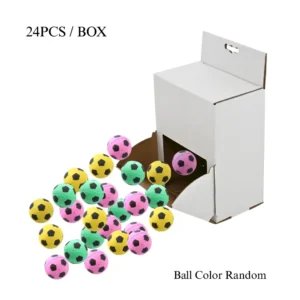 24-Pack Cat Toy Balls – Soft Latex Foam Soccer Ball Toys for Cats, Interactive Chase & Self-Play, Wholesale Pet SuppliesMSRP $8.89Login for wholesale pricing
 4-Pack Acrylic Parrot Toys with Mirror & Beak Grinding Accessories – Colorful Bird Cage Toys for Parrots and CockatielsMSRP $5.89Login for wholesale pricing
 5 Inch Durable Rugby Floating Dog Ball – Chew & Fetch Water Toy for DogsMSRP $4.29Login for wholesale pricing
 Berry-Shaped Silicone Dog Treat Dispensing Slow Feeder Toy – Durable Chew & Interactive Training Ball(MOQ 24)MSRP $3.56Login for wholesale pricing