Shopify Pet Products Dropshipping: A 2026 Launch Playbook for Indie Pet Stores
Introduction: Your Store’s Next Aisle Is Online
Here is a number worth pausing on this year. Industry estimates aggregated by GlobalPetIndex put online channels at roughly 48.5% of pet product retail in 2026 — the first time digital has crossed the halfway mark — while subscription pet supply services now reach an estimated 72 million households worldwide. Behind those shoppers sits a supply ecosystem GlobalPetIndex tracks at more than 91,000 companies across 185+ markets, with its Global Pet E-commerce Platforms ranking — led by Amazon — showing exactly where product discovery has moved. Source: GlobalPetIndex
For an independent pet store, the uncomfortable conclusion is that your customers are already shopping online; the only question is whether they are shopping from you. Renting shelf space in someone else’s marketplace means competing on price with every seller on the platform. Building your own storefront is different — and Shopify pet products dropshipping is the lowest-risk way to do it: you list products on your own domain, a supplier ships directly to your customer, and you never pre-buy a single unit. This guide walks through the signal behind the shift, the real unit economics, the compliance gates, and a concrete launch checklist you can start this week.
Industry Signal Interpretation: Why the Shopify Route Works in 2026
Dropshipping itself is not new. What makes the Shopify route specifically attractive right now is the combination of three forces that all matured at once:
- The demand side went digital-first. With online channels crossing half of pet retail and subscription boxes normalizing direct-to-door delivery, shoppers no longer expect every product to sit on a physical shelf. Your store’s website can now carry a catalog ten times wider than your floor space — and capture local searches your competitors ignore.
- The supply side became small-batch friendly. The OEM/ODM factories mapped in GlobalPetIndex’s China Manufacturing Index spent the last two years adding pick-pack-ship lines alongside bulk export operations. Suppliers who once demanded 3,000-unit orders now run no-MOQ programs to keep lines full between large contracts — and many integrate their feeds directly into Shopify fulfillment apps.
- Category economics reward testing. The fastest-moving 2026 categories — calming supplements, interactive toys, travel gear, small-animal and reptile habitats — are exactly the assortment bets a small store cannot afford to get wrong with a pallet of stock. On your own Shopify storefront, every new SKU is a cheap experiment instead of a capital commitment.
The strategic reading: your physical store remains the trust anchor — the place customers come for advice, grooming, and community. Your Shopify dropshipping storefront is the long-tail extension of it. Neither replaces the other; together they capture both kinds of shopping your customer now does.
The Margin Calculator: What a Shopify Dropship Unit Actually Earns
The honest trade-off is margin per unit. A dropship supplier charges more because they absorb picking, packing, and shipping. Here is a realistic comparison for the same mid-ticket product — a $42 specialty item:
| Line item | Shopify dropshipping | Traditional wholesale (MOQ 250) |
|---|---|---|
| Retail price (your storefront) | $42.00 | $42.00 |
| Supplier unit cost | $26.50 | $15.80 |
| Inbound freight per unit | $0.00 (supplier ships) | $2.20 |
| Payment processing (≈3%) | $1.26 | $1.26 |
| Gross margin per unit | $14.24 (≈34%) | $22.74 (≈54%) |
| Upfront cash per SKU | $0 — you pay after the customer pays | ≈$4,500 before the first sale |
| Inventory risk | None | You own 250 units until they sell |
| Unsold-stock exposure | Not applicable | ≈198 units of margin just to recover the outlay |
- Reading one: dropshipping gives up roughly 20 points of gross margin and, in exchange, removes essentially all per-SKU capital risk. For unproven assortment, that is a good trade.
- Reading two: the models are not rivals. The winning 2026 pattern is hybrid — dropship the long tail on Shopify, then bulk-buy only the 5–10 products that consistently reorder, and list them as “pick up in store today.”
- Reading three: a 34% margin on zero capital usually beats a 54% margin on $4,500 frozen per SKU once you price in deadstock markdowns, storage, and the cash you cannot deploy elsewhere.
Import Compliance Checklist: EU and US Lines
When a supplier ships directly to your customer across a border, you are still the seller of record. Compliance does not disappear just because you never touched the goods. Before you list a cross-border dropship product, clear these gates:
- European Union: the General Product Safety Regulation (GPSR) requires an EU-based responsible person and traceability details on your listing for consumer products. Pet food must meet the animal by-products hygiene rules of Regulation (EC) No 1069/2009 and (EU) No 142/2011; prepackaged food labels need ingredients, shelf life, batch number, and the producer’s registration number; food-contact packaging must comply with (EU) No 10/2011.
- United States: pet food and treats fall under FDA facility registration (21 CFR 507) with Prior Notice filed before entry; labels should follow AAFCO’s model pet food regulations; pet toys and accessories with child-appealing designs should carry small-parts and material safety documentation under CPSIA where relevant.
- Universal supplier gate: ask every candidate supplier for the “three documents” — business license and production permit, a third-party test report (SGS, BV, or Intertek), and the health certificate template needed for EU entry. A supplier who cannot produce these is a chargeback waiting to happen, no matter how attractive their no-MOQ terms look.
- Fastest compliant route: prefer suppliers with existing US or EU warehouses. Domestic fulfillment sidesteps per-order import paperwork, cuts delivery from three weeks to three days, and dramatically reduces refund risk — which protects the review score your new storefront depends on.
Low MOQ and Private Label: How to Start Without Inventory
One of the quiet advantages of building on your own Shopify storefront is the upgrade path. The disciplined sequence looks like this:
- Start with the supplier’s standard no-MOQ catalog. List 30–80 SKUs across two or three categories you actually understand, so your product descriptions carry genuine expertise rather than copied spec sheets.
- Watch for the reorder signal. Any product with steady sales for 8–10 weeks — especially one customers ask about in your physical store — is a private-label candidate.
- Negotiate a small branded batch. Most no-MOQ suppliers will produce 100–300 units with your logo and packaging at a 25–35% lower unit cost than their dropship rate. You now own a product nobody else can price-compare.
- Keep both listings live. The dropship version covers demand while your branded batch is in production; the branded version carries a higher margin and builds your store’s own brand equity.
- Repeat per winner. Two or three private-label winners per year is enough to transform the economics of a small store — and you risked almost nothing to find them.
Your Shopify Pet Products Dropshipping Launch Checklist
- Pick your niche wedge. Do not launch “pet supplies.” Launch “small-animal and reptile habitats,” or “travel gear for dogs” — a shelf you can dominate in local search within a quarter.
- Shortlist three suppliers and email each the same five questions: warehouse location, average pick-pack time, carrier accounts, defect policy, and private-label options. A real supplier answers in one email; a reseller goes quiet.
- Order one unit to your own address. Evaluate packaging, transit time, and quality exactly as your customer would. This $30 test saves more refunds than any contract clause.
- Verify compliance documents for your first two SKUs before they go live — and save them in one folder per supplier for when a marketplace or regulator asks.
- Write descriptions like a store owner, not a scraper. Two sentences of genuine usage advice per product outperforms a wall of copied specifications — and it is the one thing a marketplace listing can never copy from you.
If you would rather start from a curated supplier relationship than cold outreach, you can apply to our dropship program, browse a ready-made assortment through our top wholesale products, or review fulfillment terms on our shipping page to see the service levels your storefront should promise.
FAQ
Is Shopify pet products dropshipping still profitable in 2026?
Yes — if you treat it as a testing layer with a plan to promote winners. Expect 25–40% gross margins on dropshipped items versus 50%+ on bulk-bought stock. The point is that the dropship margin carries zero capital risk per SKU. Stores that use the storefront to discover what sells in their market, then renegotiate bulk pricing on proven products, typically end the year with better blended margins than stores that bought everything wholesale upfront and marked down the misses.
Do I need a business license before I launch my storefront?
You need whatever legal entity your country requires to collect payments and remit sales tax or VAT — in most US states a simple LLC or sole proprietorship with a sales tax permit is enough to start. What you do not need is import licenses on day one if you choose suppliers who already warehouse in your market. Set up tax collection in Shopify during setup, not after your first sale; retrofitting tax settings across fifty products is miserable work.
Who handles returns and damaged goods when the supplier ships directly?
Whoever your supplier agreement says — so get it in writing before you list. The standard split: the supplier covers defects, wrong items, and shipping damage when you provide photo evidence within a set window (usually 7–14 days); you handle customer-initiated returns for reasons like sizing or changed minds. Publish your returns policy on the storefront before launch. A supplier without a written defect policy is not a dropship partner, they are a liability generator.
Can I add my own branded products to the same storefront later?
That is exactly the recommended end state. Start every new SKU as a no-MOQ dropship listing; once a product shows a consistent reorder signal — steady sales for 8–10 weeks — commission a small private-label batch at a 25–35% lower unit cost and list it alongside the original. Your storefront keeps the long tail; your shelf and your brand capture the winners. Over a year, this hybrid beats either pure model on both cash flow and margin.
This article’s industry signals are cited from GlobalPetIndex public industry data, for procurement decision reference only; specific compliance is subject to the latest regulations of the destination country.
Ready to stock these ideas? Browse wholesale pet KITs →
Shop these pet categories
Wholesale pricing, no minimum order.
Related wholesale collections
Products mentioned here
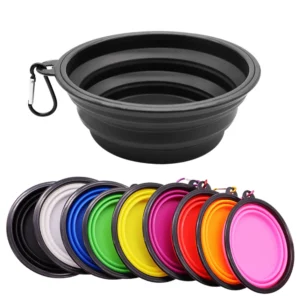 2 Pack Collapsible Silicone Dog Bowls – Portable Pet Food & Water Travel Bowl with CarabinerMSRP $1.78Login for wholesale pricing
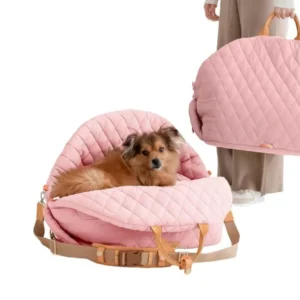 3-in-1 Small Pet Carrier Bag | Car Seat Booster, Travel Bed & Indoor Pet Bed for Dogs & CatsMSRP $21.89Login for wholesale pricing
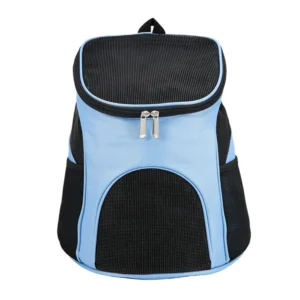 Breathable Mesh Pet Carrier Backpack for Cats & Dogs – Comfortable Travel Bag with VentilationMSRP $8.29 – $10.48Login for wholesale pricing
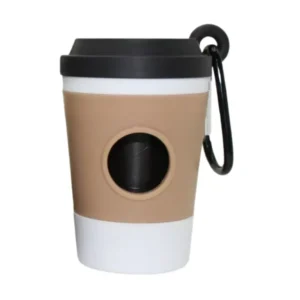 Coffee Cup Style Pet Waste Bag Dispenser – Portable Dog Poop Bag Holder with Clip for Walks & TravelMSRP $1.09Login for wholesale pricing