

Small Animal Cage Accessories Dropshipping: The 120-Unit Bay
GlobalPetIndex now indexes 113,442 pet businesses across 156 countries, and the ratio inside that number is the case for this shelf: 26,467 manufacturers and 3,940 brands selling into 4,734 retailers. Its market intelligence board also carries USD 1.4B a month of US pet category sales in the twelve months to 11 August 2026, up 32.6% year on year, with Amazon third-party pet brands up 108% and more than 54M pet units a year moving on the platform (Source: GlobalPetIndex). Supply is not the bottleneck. Attention is.
Dog and cat take the endcap, the freezer, the staff training and the loyalty email. Small animal — rabbits, guinea pigs, hamsters, rats, chinchillas — gets one bay, half of it bedding, and a hook of chews nobody on the floor can name. That bay is the last shelf in an independent store where a shopper cannot price-check you in four seconds, and it is where a small animal cage accessories dropshipping line earns its keep.
What the 5.6-to-1 ratio actually changes
26,467 manufacturers against 4,734 retailers is 5.6 to 1. Four readings for your open-to-buy:
- Supply is not scarce; shelf space is. You can ask for three sizes and a mixed carton without being laughed at. Spend that leverage where spec matters.
- 3,940 brands is a naming problem, not an assortment problem. The shopper does not want more choice. She wants to know which hideout fits the guinea pig she already owns.
- 32.6% is channel growth, not category growth. A shop at 4% did not underperform itself; it lost share to a channel growing eight times faster. The answer is fewer SKUs with a reason to exist on a shelf.
- +108% third-party brands is a re-pricing engine. Anything describable in four words gets price-checked within a week of you setting it. Anything she cannot describe goes to whoever can explain it.
Spend open-to-buy where species knowledge protects the price.
Why small animal cage accessories dropshipping beats a bedding bag
Every small-animal planogram starts with bedding, and for good reason: biggest consumable in the bay, repeats every two to three weeks. It is also the worst item to put in a dropship feed. A 56 L paper bedding bag is roughly 60 × 40 × 23 cm — 0.055 m³ for 2.5 kg. At the 1:5,000 volumetric divisor most parcel carriers use, you are paying freight on 11 kg. You cannot ship air profitably, and neither can a marketplace — which is why the bag stays a local-stock item and the accessories around it do not.
The ring around it is flat, rigid, light.
- It fails loudly when it is wrong. A 12 cm entrance is a hamster house; give it to a rabbit and you have sold a very expensive ornament. Nobody sizes that from a thumbnail.
- Species knowledge is the moat. A 500 ml bottle with a 12 mm spout suits a guinea pig; a hamster needs a shorter reach and a smaller ball; a rabbit drinks from a bowl and tips anything under 400 g. That is a ninety-second conversation a product page cannot have.
- The attachment chain is short. Hideout, liner, bottle, hay rack, chews. One fitting conversation, five units, one basket.
- Return risk is low. No sizing, no colour mismatch, no expiry. Breakage is the only exposure, and packing solves it.
Be honest about cadence: chews turn every three to six weeks, a bottle lasts two years, a liner eighteen months. That is why the two belong together — the liner and the hideout defend the bay, the bedding and the chews pay the rent.
The margin math per peg
Gross margin percentage flatters this shelf and hides the real question: how much cash sits behind each size. GMROI is annual gross profit over average stock at cost — GM% ÷ (1 − GM%) × turns. Six accessories, same retail either way, carton turns 2.4, mixed-carton dropship 5.6, dropship cost 10% higher:
| Product | Carton qty | Unit cost (carton) | Unit cost (dropship) | Retail | GM% (dropship) | GMROI (carton) | GMROI (dropship) |
|---|---|---|---|---|---|---|---|
| Fleece cage liner, 2-pack (47×70 cm) | 24 | $7.20 | $7.92 | $27.99 | 72% | 6.93 | 14.19 |
| Wooden hideout, medium | 18 | $4.90 | $5.39 | $18.99 | 72% | 6.90 | 14.13 |
| Ceramic food bowl, 300 ml | 36 | $2.30 | $2.53 | $9.99 | 75% | 8.02 | 16.51 |
| Water bottle, 500 ml, steel spout | 30 | $3.10 | $3.41 | $12.99 | 74% | 7.66 | 15.73 |
| Hay rack / feeder, metal | 24 | $3.80 | $4.18 | $14.99 | 72% | 7.07 | 14.48 |
| Willow chew sticks, 10-pack | 60 | $1.35 | $1.49 | $6.49 | 77% | 9.14 | 18.87 |
Three things fall out. First, the dropship premium is small: 10% more per unit costs about 2.5 points of gross margin, and two extra turns clears it on GMROI. Second, the liner defends the peg — highest ticket of the six, and the only row where a marketplace must charge real freight. Third, willow chews have the best GMROI on paper and the smallest basket: buy them by the sixty and use them as the opener.
The margin is made on the second visit: a customer back for the bottle and the liner is a USD 59 basket at about 73% blended margin.
The freight test: cube beats weight
Before any SKU enters a dropship feed, run one number: volumetric weight ÷ actual weight. Under 1.5, ship from anywhere. Between 1.5 and 3, ship from local stock. Over 3, keep it out of the feed, all on the same 1:5,000 divisor:
- 56 L paper bedding: 0.055 m³, 2.5 kg actual, 11 kg volumetric — 4.4. Fails; pallet to your own stock.
- Fleece liner 2-pack, folded: 0.006 m³, 0.55 kg, 1.19 kg — 2.2. Borderline; fine inside a mixed carton.
- Wooden hideout, medium: 0.007 m³, 0.62 kg, 1.38 kg — 2.2. Same treatment.
- Water bottle, 500 ml, with bracket: 0.0014 m³, 0.28 kg, 0.28 kg — 1.0. Made for parcel.
- Ceramic bowl, 300 ml: 0.0012 m³, 0.42 kg, 0.24 kg — 0.6. Dense, cheap, hard to break.
The test reorganises the bay: the bulky consumable is a local-stock call; the dense and the flat you can test with no inventory.
Import compliance checklist, EU and US
Confirm each line in writing before the deposit:
- HTS in writing. Wooden hideouts sit in 4421.99, textile liners in 6307.90 or 6302, plastic bowls and bottles in 3924.90, stainless hardware in 7323.93, willow chews in 4602.19. Confirm the ten-digit line with your broker; a multi-material item described loosely gets pushed to a higher duty line.
- Lacey Act declaration. Solid wood hideouts and willow chews are plant products and need a PPQ 505 naming genus, species and country of harvest. “Pine” with no species is a customs problem, not a paperwork problem.
- Cedar and pine, as a spec not a law. Aromatic softwood is widely linked to respiratory and liver damage in rodents, but nothing bans it. Specify kiln-dried aspen in the purchase order and say why in the listing.
- Prop 65 at the glaze and the braze. Two recurring findings: lead in ceramic glaze and brazed bottle caps, DEHP in PVC-coated wire guards. Ask for a glaze leach report against FDA CPG 7117.07 and a material declaration for every plastic part.
- REACH Annex XVII (EU). Azo dyes on liners (entry 43), phthalates in plasticised parts (51 and 52). Nickel release (27) is written for human skin contact — a retailer spec here, not a settled obligation.
- GPSR 2023/988 (EU). Since 13 December 2024: name an EU-established responsible operator on the product or listing, and keep traceability to the manufacturer.
- Flammability, only where it applies. 16 CFR 1610 covers wearing apparel, not cage liners. Do not buy a test the product does not need; do ask for fibre content and shrinkage, because the customer washes it at 40°C.
- Pull, gnaw and claims. Three times the loaded weight on brackets and rack hooks, a bar-tack or rivet at every stress point, untreated wood with no wire core and no string long enough to loop. “Chew-proof” and “vet approved” need substantiation; “chew-resistant under normal gnawing” survives.
How to start at 120 units, not a pallet
- Three hideout sizes, not five. Entrance diameters of 12 cm (hamster, mouse), 18 cm (guinea pig, rat) and 25 cm (rabbit, chinchilla) in 12 mm kiln-dried aspen. Depth matters more than width: a hideout the animal can turn in gets used.
- Specify materials. Aspen, not mixed hardwood; 304 stainless spouts; PP bowls; 280 gsm anti-pill fleece. Below that, a determined chewer finds the failure point inside a month and you pay twice.
- Negotiate a 120-unit mixed carton. Forty hideouts, thirty liners, twenty-five bottles, twenty-five bowls, chews as a sixth line at fifty packs. Small enough to be a test, large enough for a factory to schedule.
- Test the bottle before you approve. Fill, invert, hang, wait twelve hours. Check for seep at the cap and whether the ball reseats. Highest-return failure in the category.
- Skip retail packaging. Blank kraft sleeve, your SKU on a hangtag, a species-and-size chart on the reverse. Printed cartons add cost and compliance surface for no shelf benefit.
- Reorder by species, not by SKU. The hamster size runs dry first — most households, lowest ticket. A shared reorder point hides that and you end up out of the only size that sells daily.
This week’s action list
- Count small-animal households in loyalty data and multiply by 0.02–0.04. That is your annual accessory demand, usually larger than the bay you gave it.
- Move bedding to a floor stack and give the top 60 cm of the bay to accessories. The eye-level strip sells; the bag on the floor gets lifted.
- Say the liner math out loud: USD 27.99 over eighteen months is 36 cents a week against about USD 6.66 for a 56 L bag lasting three weeks in a guinea-pig cage.
- Request FOB and DDP on 120 mixed units from two suppliers. The gap sits in carton cube and bracket spec, not unit price.
- Cut any accessory that has not turned 1.5 times in 60 days and move that open-to-buy into the hamster and guinea-pig sizes.
FAQ
Is bedding a good dropship product for small animals?
Usually not. A 56 L paper bag is 0.055 m³ at 2.5 kg, which bills as roughly 11 kg of volumetric weight — a 4.4-to-1 ratio. Bedding belongs on a pallet into your own stock.
What sizes should a store stock for small animal hideouts?
Three entrance diameters cover the market: 12 cm for hamsters and mice, 18 cm for guinea pigs and rats, 25 cm for rabbits and chinchillas, all in 12 mm kiln-dried aspen. Stock the middle size deepest, because that is where the household count sits, and reorder the smallest size first because it sells fastest.
Do I need FDA approval to sell pet bowls and water bottles?
No. Pet feeding accessories are not FDA-approved products and there is no pre-market clearance. What still applies is Prop 65 lead limits on glaze and braze, honest food-contact claims, and the material declarations your retail customers will ask for. Ask for both before you reorder.
How do I compete with a marketplace on small animal accessories?
Do not match unit price; match the fit. Price the five-piece set, keep the species chart at the shelf, and let the online alternative carry the freight and the wrong-size return. A USD 59 set at 73% beats a USD 18.99 hideout at 72%, because nobody buys the set online without knowing their animal’s entrance size.
The dropship application opens a line at unit level, the starter essentials kit covers the first bay, and the top wholesale products list is where a 120-unit mixed carton gets priced. Behind it, 26,467 manufacturers indexed on GlobalPetIndex — with country and category leaderboards on the rankings hub — is why three hideout sizes are negotiable at 120 units. Sourcing windows are close: Saudi Pet & Vet on 9 November, CIPS on 12 November, London Vet Show on 19 November.
This article’s industry signals are cited from GlobalPetIndex public industry data, for procurement decision reference only; specific compliance is subject to the latest regulations of the destination country.
Ready to stock these ideas? Browse wholesale pet KITs →
Shop these pet categories
Wholesale pricing, no minimum order.
Related wholesale collections
Products mentioned here
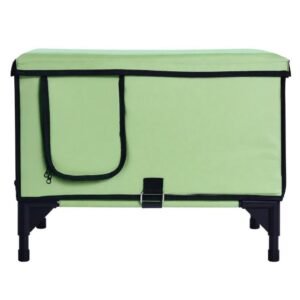 Elevated Heated Outdoor Cat House with 30W Waterproof Heating PadMSRP $128.99Apply for wholesale pricing
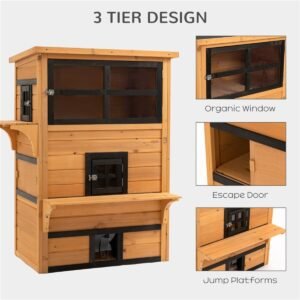 Three-Tier Outdoor Cat Condo with Asphalt Roof and Five Access DoorsMSRP $284.99Apply for wholesale pricing
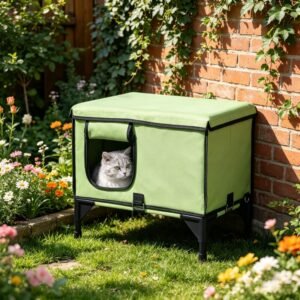 Large Elevated Heated Cat House with Waterproof Pad and Insulated LiningMSRP $124.99Apply for wholesale pricing
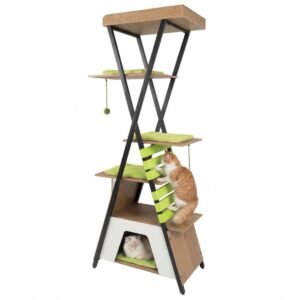 73″ Multi-Level Cat Tree with Condo, Top Perch and Scratching PadMSRP $228.99Apply for wholesale pricing
Stock it as a wholesale KIT
Pre-bundled assortments built from this guide’s categories — one PO, one shipment, wholesale pricing.