

TikTok Shop Pet Products Dropshipping: The 2026 Video-Commerce Playbook for Independent Pet Stores
Introduction: The Channel Your Competitors Have Not Priced In Yet
Two numbers should reorder your channel plan for next quarter. GlobalPetIndex, the global pet industry directory and intelligence layer, now maps 91,673 pet companies across 185 countries — and its marketplace signals track pet bestsellers across eight channels, from Amazon and Chewy to TEMU, AliExpress and SHEIN. Pet retail is no longer a shelf game played in one place. Source: GlobalPetIndex
Now add the channel that is not yet on that board. Industry tracker data compiled by Charm.io puts TikTok Shop pet supplies at roughly $780 million in global GMV in 2025, up 129% year over year from $341 million in 2024, with 2026 projections around $2 billion worldwide and the US market alone more than doubling from about $200 million to $389 million. Pet product searches inside TikTok grew an estimated 180% between 2023 and 2025. That is the fastest-compounding pet retail surface on the internet — and almost none of it is being supplied by independent pet stores yet.
This is exactly where TikTok Shop pet products dropshipping earns a place in your vendor strategy. The model is straightforward: open a TikTok Shop storefront, list products sourced from a dropshipping supplier who warehouses and ships for you, and let short video and live streams do the selling — with no inventory while you learn what your audience reacts to. This playbook covers the signal, the unit economics, the compliance gates, and a launch list for this week.
Industry Signal Interpretation: Why Video Commerce Rewards Small Stores
Most channel advice is written for brands with media budgets. Video commerce is different: it favours operators who move fast, show real products, and talk like a pet person rather than a catalogue. Four signals point the same direction:
- Growth is violent but the base is small. Pet products are estimated at only around 4% of total TikTok Shop GMV — yet growing at more than 50% year over year, making pet the fastest-growing niche category on the platform by percentage. Early movers in a small, fast category capture ranking momentum that late entrants pay heavily to buy back.
- Pet content is the platform’s native language. Dedicated pet creators average roughly 5% engagement — nearly double the platform median — and formats like deshedding before/after reveals, ASMR feeding and problem-solution demos convert viewers into buyers inside a single video. A store owner who knows the difference between a slicker brush and an undercoat rake has a content advantage no generic reseller can copy.
- Discovery and checkout have collapsed into one surface. The viewer sees the product work in-video and buys without leaving the feed. That collapses the funnel that used to separate a pet store’s Instagram from its cash register — and it means your listing quality and shipping speed, not your location, decide who wins the sale.
- The winning categories are repeat-purchase and problem-solving. Cat grooming and cleaning supplies have grown around 35%, cat furniture around 28%, pet hair-removal tools are the top-selling product type by units, and wellness supplements are the fastest-growing sub-category at roughly +44% quarter over quarter. These are consumable, demonstrable, demonstrably useful products — exactly the mix that keeps a basket coming back.
The strategic read: TikTok Shop will not replace your storefront — it replaces the cold-start problem. A physical store uses video commerce to find demand it could never see; a dropship catalogue lets it serve that demand without betting cash on shelf space. The GlobalPetIndex marketplace signals show where the mainstream channels are crowded; short video is where the queue has not formed yet.
Finding a TikTok Shop Pet Products Dropshipping Partner That Will Not Sink You
Your supplier choice matters more here than on a standard web store, because TikTok Shop enforces shipping and service levels against your seller account, not your supplier’s. Vet candidates on six points:
- Warehouse location and pick-pack time. TikTok Shop’s seller protections assume fast dispatch; a supplier shipping cross-border over three weeks will generate refunds and account penalties faster than you can refresh the queue.
- Carrier accounts and tracking integration. Ask whether tracking pushes automatically to your order system — manual entry is where dropshipped shops quietly die.
- Defect and damage policy with a written claim window. Grooming tools and cat furniture are exactly the product types that arrive damaged; get the claim process defined before your first order.
- API support for TikTok Shop order sync. If fulfilment data cannot flow automatically, budget for manual labour or move on.
- Private-label options and packaging quality. A supplier who can apply your branding becomes your private-label pipeline later. Ask now, even if you start unbranded.
- Does the product demo well on camera? A deshedding glove pulling a visible curtain of fur is a video; a bag of generic kibble is not. Choose lines with a visible before/after.
A real fulfilment partner answers all of this in one email; a reseller goes quiet — which is itself your answer.
The Margin Calculator: What a TikTok Shop Sale Actually Earns
The honest trade-off is the same as any dropshipping channel, with one addition: platform fees. TikTok Shop charges a referral fee (commonly around 6%) plus payment processing (roughly 1%), before shipping. Here is a realistic comparison for the same mid-ticket item — a pet hair-removal glove set retailing at $24, in the $10–$35 band where most conversions happen:
| Line item | Dropship via TikTok Shop | Bulk buy (MOQ 300) |
|---|---|---|
| Sale price in your shop | $24.00 | $24.00 |
| Supplier unit cost | $8.40 | $4.10 |
| Platform referral fee (≈6%) | $1.44 | $1.44 |
| Payment processing (≈1%) | $0.24 | $0.24 |
| Outbound shipping | $0.00 (supplier ships) | $1.90 |
| Contribution per unit | $13.92 (≈58%) | $16.32 (≈68%) |
| Upfront cash per SKU | $0 — you pay after the customer pays | ≈$1,230 plus freight before the first sale |
| Inventory risk | None | You own 300 units until they sell |
| Break-even exposure | Not applicable | ≈90 of 300 units just to recover the outlay |
- Reading one: the dropship penalty on a light, high-margin accessory is small — about ten points — because the product ships cheap and carries a healthy retail markup. On bulky, low-margin goods the gap widens; that is where bulk buying earns its keep later.
- Reading two: the platform fee is fixed either way — an argument not against dropshipping but for the $10–$35 band, where fees stay proportionate and impulse conversion is strongest.
- Reading three: bundling is the quiet multiplier. Sellers who offer a 2-pack or 3-pack at a small discount routinely see 20–30% higher average order value with almost no extra shipping cost — and a dropship supplier absorbs none of that risk while you test it.
Import Compliance Checklist: EU and US Lines
When a supplier ships directly to your customer across a border, you remain the seller of record. Clear these gates before your first cross-border listing goes live:
- European Union: the General Product Safety Regulation requires an EU-based responsible person and traceability information on consumer product listings. Electrical items — heated beds, automatic feeders, water fountains, grooming clippers — need CE marking plus WEEE take-back registration. Anything the pet licks or chews can pull in food-contact material rules.
- United States: treats, supplements and anything ingestible fall under FDA animal-food rules with facility registration and Prior Notice for imports; labels should follow AAFCO-style conventions. Small parts that children could handle should have CPSIA documentation, and wildlife-derived materials — certain chews and decor — can require a Lacey Act declaration or USFWS paperwork for CITES-listed species.
- Platform rules sit on top of customs rules. TikTok Shop runs its own product-approval queues for supplements and ingestible categories, and restricted listings get pulled without appeal. Read the category policy before you build content around a product.
- Universal supplier gate: require the same three documents from every candidate — business licence and production permit, a third-party test report (SGS, BV or Intertek), and the destination-market certificate your product class needs.
- Fastest compliant route: prioritise suppliers who already warehouse in your sales market. Domestic fulfilment removes per-order import paperwork, cuts delivery from weeks to days, and protects the shipping performance score your shop’s visibility depends on.
Low MOQ and Private Label: Building a Brand Inside the Feed
The dropship phase is not the destination — it is the cheapest market research you will ever run. The disciplined sequence looks like this:
- Launch with the supplier’s standard no-MOQ catalogue. List 30–60 SKUs across one or two demo-friendly categories — grooming tools and cat furniture are the proven openers — so every product you film has a visible result.
- Watch for the reorder signal. Any SKU with steady sales for eight to ten weeks, or one whose videos out-convert the catalogue average, is a private-label candidate. The feed tells you what your customers want before you spend a dollar on stock.
- Negotiate a small branded batch. Grooming consumables, hair-removal tools and simple accessories are the easiest wins: most suppliers will produce 100–300 branded units at 25–35% below their dropship unit cost — and video commerce does the rest, because your own product in your own videos is brand equity no reseller can strip out.
- Keep both listings live. The dropship version covers demand while your branded batch is in production; the branded version carries the higher margin and cannot be price-matched into oblivion.
- Repeat per winner. Two or three private-label winners a year changes the economics of a small store — and the whole discovery process cost you inventory risk on exactly zero units.
When you are ready to move beyond the feed, you can become a reseller with a curated wholesale assortment, or apply to our dropship programme to pair your TikTok Shop with a fulfilment partner who already understands pet retail — our shipping terms page lays out dispatch times and carrier coverage in plain language.
Your Action List for This Week
- Pick one demo-friendly wedge. Open with pet grooming tools or cat furniture — categories with proven TikTok Shop growth, visible before/after results, and $10–$35 price points.
- Shortlist three suppliers and send the same seven questions: warehouse location, pick-pack time, carrier accounts, defect policy, integration support, private-label options, and packaging quality.
- Order test units of your first five SKUs to your own address — and film with them. Your first twenty videos should come from products in your own hand; authentic demonstration is the entire conversion mechanism.
- Batch-film before you launch. Fifteen to twenty short clips covering unboxing, demonstration and problem/solution angles give your shop enough surface area for the algorithm to find your audience; one video per product never will.
- Verify compliance documents for your first two SKUs before they go live, filed per supplier for the day the platform’s category review asks.
FAQ
Is TikTok Shop worth it for a small independent pet store?
Yes — because the economics favour small sellers. Pet products sit around 4% of TikTok Shop GMV but are growing faster than 50% year over year, and most conversions happen in the $10–$35 impulse band where a single store’s curation and authentic demos compete evenly with national brands.
Can I run TikTok Shop pet products dropshipping without holding inventory?
Yes, provided your supplier can meet the platform’s dispatch and tracking service levels — usually a warehouse in your sales market plus automatic tracking integration, not a forwarder shipping cross-border over three weeks. Late dispatch penalties land on your seller account, so vet the chain first.
Which pet products sell best on TikTok Shop?
Products with a visible, filmable result: deshedding and hair-removal tools (the top category by units), cat grooming and cleaning supplies (+35%), cat furniture (+28%), and wellness supplements (roughly +44% quarter over quarter). Problem-solving gadgets — muddy-paw mats, puzzle feeders — consistently go viral because the before/after format does the selling for you.
How do TikTok Shop fees affect my margins?
Expect a referral fee around 6% plus roughly 1% payment processing, before shipping. On a $24 grooming tool dropshipped at $8.40, that still leaves a contribution near 58% — about ten points below bulk buying, in exchange for zero inventory risk. Price inside the $10–$35 band and use bundles to lift order value by 20–30%.
This article’s industry signals are cited from GlobalPetIndex public industry data, for procurement decision reference only; specific compliance is subject to the latest regulations of the destination country.
Ready to stock these ideas? Browse wholesale pet KITs →
Shop these pet categories
Wholesale pricing, no minimum order.
Related wholesale collections
Products mentioned here
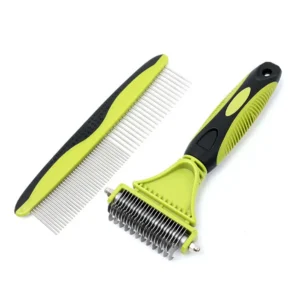 2-in-1 Pet Grooming Comb Set – Dual-Sided Deshedding & Dematting Tools for Dogs and CatsMSRP $6.29Login for wholesale pricing
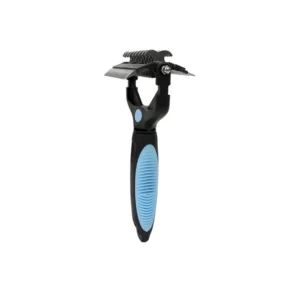 3-in-1 Pet Grooming Comb – Professional Detangling, Dematting & Deshedding Tool for Dogs & CatsMSRP $6.49Login for wholesale pricing
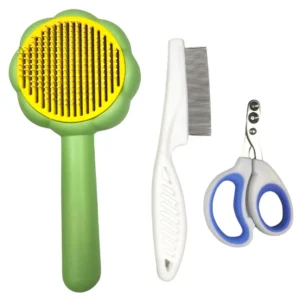 3-in-1 Pet Grooming Set with Comb, Brush & Nail Clipper – Wholesale for Pet Shops(MOQ 32)MSRP $5.59Login for wholesale pricing
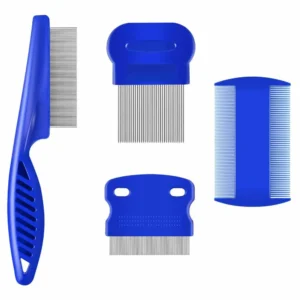 4 Pack Cat Flea Comb Set – Blue Grooming Tools for Long Hair Cats & Dogs | Wholesale Pet Grooming SuppliesMSRP $1.98Login for wholesale pricing