
UFLPA Compliance for Pet Product Imports | JustForPetStore
UFLPA compliance is now a line item in every pet product import from China, not a box you tick once. CBP applies a rebuttable presumption that goods made wholly or in part in Xinjiang, or by an entity on the UFLPA Entity List, are barred under 19 U.S.C. 1307. If a shipment is detained, you get a 30-day window to prove your supply chain, and storage costs are yours while you do it.
What is the UFLPA rebuttable presumption?
The Uyghur Forced Labor Prevention Act, signed as Public Law 117-78, directs CBP to enforce a presumption that goods mined, produced, or manufactured wholly or in part in the Xinjiang Uyghur Autonomous Region, or by an entity on the UFLPA Entity List, are prohibited from entering the United States. The underlying statute is 19 U.S.C. 1307, which has barred goods made with convict, forced, or indentured labor since 1930.
The word that matters for an importer is “partly.” A finished product assembled outside Xinjiang can still fall inside the presumption if an input came from there. That is why a pet bed sewing factory in Zhejiang cannot clear a shipment on its own paperwork if the polyester fill, the zipper, or the cotton shell traces back to a flagged region or supplier.
CBP’s UFLPA page frames the two review paths clearly. An applicability review asks whether the presumption applies at all, which is the route you take when there is no nexus to Xinjiang or to a listed entity. An exception asks CBP to allow goods that are covered, and it requires clear and convincing evidence that no forced labor entered the product. Those are different arguments, with different evidence and very different odds.
Which pet products carry the most exposure?
Textiles, plush, leather, and anything with a long chain of subcontracted inputs. Pet beds and mats are the obvious category: shell fabric, filling, zippers, and binding often come from four different suppliers, and the sewing factory rarely knows where the fill was polymerized. Plush toys carry the same problem one step further, because stuffing and squeakers are bought on the spot market.
Apparel is next. Pet coats, sweaters, and harnesses involve cut-and-sew work that is frequently subcontracted during peak season, and a subcontractor is exactly the party whose records your factory will not have. Anything with cotton deserves a specific question about yarn origin, because cotton is one of the inputs most closely associated with forced labor enforcement globally.
Hardgoods are lower risk but not zero. Ceramic bowls, metal crates, and rubber chews have short supply chains and fewer labor-intensive steps. The exposure there is less about raw materials and more about whether the factory itself appears on a list, which is a name-and-address check you can perform before you place an order.
What happens when CBP detains a pet product shipment?
CBP issues a detention notice, and under the UFLPA process that notice comes with an attachment describing the documentation an importer may submit to prove the goods are not made in whole or in part with forced labor. The shipment sits at the port while you assemble the evidence, and the importer is responsible for storage costs during that period.
The initial detention period is 30 days. If you need more time to gather records, you may request an extension from the Port Director or the applicable Center Director before the initial period expires, using the point of contact named on the detention notice. Asking late is the mistake that turns a recoverable detention into an exclusion.
If you do nothing, or if your submission does not meet the standard, the goods can be excluded. CBP’s enforcement FAQ is explicit that an exclusion does not automatically place your supplier on the Entity List, so a single failed shipment is not the end of the relationship. It is, however, a signal that the supply chain documentation you were relying on was not good enough.
What documentation should be ready before the container sails?
Build the file before you order, not after the notice arrives. The core set is a bill of materials down to the component level, purchase records linking each component to its supplier, production records showing which factory ran which step, and payment records that match the invoices. CBP wants a chain, not a certificate.
Transaction-level identifiers make the file usable. Every record should carry an invoice number, contract number, or purchase order number that ties back to the shipment in question, because that is what lets an officer match a factory record to a container. A folder of undated PDFs is not evidence; a folder indexed by PO number is.
CBP has published a notable efficiency finding in its own guidance: where an importer can show that a detained shipment comes from a supply chain identical to one CBP has already cleared, and supports it with a summary tracing report, the average detention period for those shipments has dropped to roughly ten to 14 days. The lesson is that repeatable documentation compounds. The first file is expensive, and every later shipment from the same chain gets cheaper.
How do you answer a detention notice inside 30 days?
Assign one owner the day the notice lands, and work backward from the deadline. Day one to day five: read the attachment, list exactly which documents CBP named, and confirm which of them you already hold. Day six to day twenty: collect, translate, and index. Day twenty to day twenty-five: have counsel or your broker review the package against the standard CBP applied. Leave the last days for submission and for a possible extension request.
Translate the commercial records into a narrative an officer can follow. A short cover memo that lists the finished good, each component, the supplier for each component, and the document number that proves it will do more than 300 pages of unlabeled invoices. CBP’s own best-practice guidance for applicability reviews points the same way: a prepared plan, supplier awareness of the rules, and documentation that can be submitted immediately.
Do not submit a supplier’s self-declaration as your primary evidence. A letter saying “we do not use Xinjiang cotton” is a statement, not a record, and it is the first thing an experienced reviewer discounts. Pair every declaration with the purchase record behind it.
Does a supplier’s exclusion mean they are on the Entity List?
No. The Entity List is maintained separately through the Forced Labor Enforcement Task Force, and CBP’s FAQ states that an exclusion following a detention does not automatically add the supplier to that list. A factory can be excluded on a documentation failure and still be absent from the list, and a listed entity is a different and much harder problem.
The practical consequence is that you should run two checks, not one. Check the name and address of every factory in your chain against the Entity List before you place an order, and separately assess whether any part of the chain touches Xinjiang. Passing the first check does not answer the second question.
Do the check again when a supplier changes ownership, moves production, or adds a subcontractor. Entity data changes on a schedule you do not control, and a factory that was clean at the sampling stage is not automatically clean at the production stage six months later.
How do you trace raw materials through a Chinese factory?
Ask for the purchase ledger, not the certificate. For a pet bed, that means asking the sewing factory who supplied the fill, who supplied the fabric, and what the invoice numbers were for the last three production runs. Then ask the fill supplier the same question about the polymer, and keep going until you reach a party that is either clean or unverifiable.
Most factories will answer the first layer and resist the second. That resistance is the finding. A supplier who can produce three months of purchase records for its main inputs is a supplier with a real procurement function; a supplier who can only produce a certificate of origin is a trading company wearing a factory’s name.
Record what you could not verify. A due-diligence file that states “fabric origin verified, filling origin unverified, substitution pending” is more defensible than one that claims full traceability it cannot support, because the first version is honest and the second collapses under a single document request.
What should you ask your importer or customs broker?
Ask three questions before the first shipment. Who is the importer of record, and do they carry the entry under their own bond or yours. Which postal codes will be transmitted for each Chinese manufacturer in the Cargo Release entry, since CBP requires a postal code for Chinese manufacturers and a missing one leaves the entry in reject status. And what happens, procedurally and financially, if the shipment is detained.
That postal code point is small and consequential. Xinjiang postal codes are flagged by the system, so a manufacturer whose address resolves to a XUAR code will trigger review whether or not the product has anything to do with Xinjiang. Confirm the address your broker files matches the address on the factory’s business license, not the address on a trading company’s website.
Ask for the detention playbook in writing, including who pays storage, who drafts the response, and how quickly the broker can turn around a document package. A broker who has never handled a UFLPA detention will learn on your shipment, and the 30-day clock does not pause for that education.
How do you keep a due-diligence file that actually works?
Make it boring and make it repeatable. One folder per supplier, one subfolder per shipment, and a one-page cover sheet listing the components, the suppliers, the document numbers, and the date each record was collected. Update the cover sheet when anything changes, and keep the last three years.
Review the file annually and after any supplier change. Rules, lists, and postal-code validations are administered by agencies that update them on their own schedule, so a file that was compliant in 2024 is a historical artifact, not a control.
Then build the sourcing decision around it. The pet beds and mats range is the category where documentation pays off fastest, because fabric and fill are the inputs CBP asks about first, and the plush toy range carries the same filing burden with a shorter product life. Apparel buyers should treat the dog apparel range as a category that needs its paperwork settled before the first sample is approved, not after. For stores testing a new supplier, the low-MOQ wholesale program keeps the first order small enough that a documentation problem does not become an inventory problem, and the contact page is the place to ask which components are traced before you commit.
Sources: U.S. Customs and Border Protection, Uyghur Forced Labor Prevention Act (cbp.gov); CBP, FAQs: UFLPA Enforcement (cbp.gov); 19 U.S.C. 1307, Cornell Legal Information Institute. This article is operational guidance, not legal advice; importers should confirm requirements with a licensed customs broker and counsel.
Ready to stock these ideas? Browse wholesale pet KITs →
Shop these pet categories
Wholesale pricing, no minimum order.
Related wholesale collections
Products mentioned here
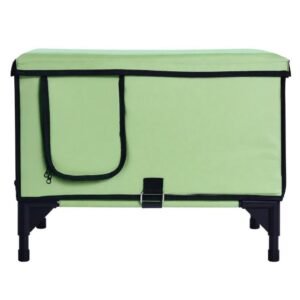 Elevated Heated Outdoor Cat House with 30W Waterproof Heating PadMSRP $128.99Login for wholesale pricing
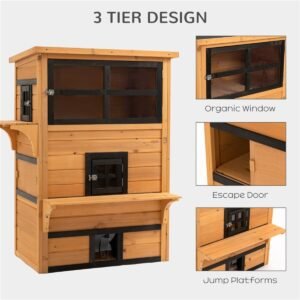 Three-Tier Outdoor Cat Condo with Asphalt Roof and Five Access DoorsMSRP $284.99Login for wholesale pricing
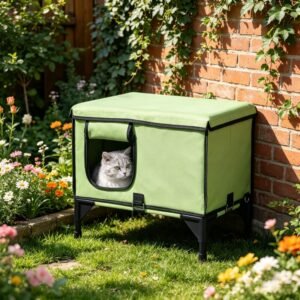 Large Elevated Heated Cat House with Waterproof Pad and Insulated LiningMSRP $124.99Login for wholesale pricing
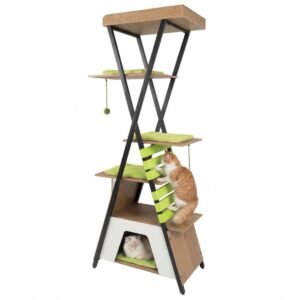 73″ Multi-Level Cat Tree with Condo, Top Perch and Scratching PadMSRP $228.99Login for wholesale pricing
Stock it as a wholesale KIT
Pre-bundled assortments built from this guide’s categories — one PO, one shipment, wholesale pricing.