
Wholesale Cat Food: 2027 Margin Guide | JustForPetStore
Wholesale cat food anchors a profitable cat aisle in 2027: U.S. pet food and treats spending is projected at $69.7 billion, per the American Pet Products Association, and the global cat food market is forecast to grow from $45.67 billion in 2025 to $62.34 billion by 2034, per Verified Market Reports. The catch is channel drift — cat treats still grow in-store while dry food migrates online, per NielsenIQ — so winners stock a curated, differentiated assortment.
How big is the cat food opportunity for independent stores?
Pet food is the largest line in pet retail, and APPA’s numbers frame the opportunity precisely: U.S. pet food and treats totaled $68.3 billion in 2025 actual sales, with $69.7 billion projected for 2026, inside a total pet industry spend of $158 billion projected to reach $165 billion, per the American Pet Products Association. Ninety-five million U.S. households own a pet, and cat households reliably generate the industry’s most repeatable purchase: a food bowl that empties on schedule. Globally, Verified Market Reports sizes cat food at $45.67 billion in 2025, reaching $62.34 billion by 2034 at a 5.0 percent compound annual growth rate, with the U.S. market alone at roughly $6.9 billion — the firm’s overview text cites a higher 7.2 percent growth figure, so treat the snapshot numbers as the conservative read. For a small store, the takeaway is simpler than any forecast: food is a replenishment purchase, and replenishment is the business case for a curated cat food section rather than a token shelf.
Why is cat food different from dog food for a small store?
Cat economics reward focus. A dog owner’s food basket scales with the dog’s body weight; a cat owner buys smaller bags more predictably, which means steadier turns on fewer SKUs. Cats also concentrate the trip: the same visit covers food, litter, and treats, so a well-built cat supplies wall converts one need into three categories. And cat shoppers skew subscription-resistant in a specific way — many want to see and compare texture and formulation before switching, which is exactly the behavior a physical store is built for. NielsenIQ’s retail analysis makes the in-store case directly: among the categories still growing in physical stores, cat treats sit alongside fresh dog food and supplements, because pet parents want to see, smell, or ask about these products before buying. Dry cat food behaves the opposite way, growing online rather than in-store. That split is the merchandising thesis for the whole aisle: lead with what must be bought in person, and curate rather than compete on the rest.
Which cat food formats still sell in-store versus online?
Channel data tells you where to spend your shelf. Total U.S. pet care sales hit $95.1 billion over the past year, growing 5.5 percent, but growth was not evenly distributed: in-store sales declined 1.4 percent while online grew 14.1 percent, and in-store share of the category fell to 52 percent, per NielsenIQ. Nearly 70 percent of customers now shop both channels and account for 87 percent of category dollars, so the goal is not to fight online but to own the trip it cannot serve. Practical translation: carry a tight dry-food lineup for convenience buyers, but expand wet and fresh formats, functional formulas, and treats — the products where texture, dietary questions, and gifting impulse drive in-person choice. A 12-foot cat section that is half rotating treat and wet-food SKUs will outsell a 20-foot wall of duplicated dry bags, because the duplicated bags are the exact shelf footage Amazon already took.
What claims are cat shoppers actually paying for?
Specificity sells; vagueness does not. NielsenIQ’s claim-level data shows products carrying postbiotic claims growing 148 percent year over year, human-grade protein claims up 42 percent, and “freshly cooked” claims on shelf-stable products up 92 percent, while generic “high quality protein” labeling grew just 1 percent. The lesson the research firm draws is blunt: vague health claims no longer convert — specificity does. For a cat aisle, that means the premium shopper is reading labels for named ingredients, functional benefits like hairball or urinary support, and verifiable grade claims, and they will pay the markup when the claim is concrete. When you vet wholesale cat food suppliers, ask for the claim documentation behind the label: AAFCO nutritional adequacy statements, sourcing claims, and any third-party verification. A store that can explain a formula in one sentence sells the premium can at 55 percent margin; a store that cannot sells the value can at 20 percent and wonders why the category underperforms.
How should a pet store price cat food for margin?
Price the aisle as a system, not as a list of products. Dry food is your traffic anchor — price it within a few percent of the big-box shelf, because regulars know the number by heart, and treat it as the cost of the trip. Wet food, single-serve pates, and toppers carry the margin: small-format purchases are comparison-shopped less, and a case-break display lets you hold 45 to 55 points. Treats are the profit engine — margin structures of 50 to 60 percent are common at wholesale multiples of two-and-a-half to three, and treats also attach to every other purchase. Pair the pricing with cat feeding hardware — bowls, placemats, slow feeders — which turns a $3 can into a $30 basket for a new kitten household. The one number to watch is turns: cat food is perishable inventory with a best-by clock, so a SKU that turns monthly at 45 points beats a SKU that turns quarterly at 55.
How much wholesale cat food should a small store buy?
Size the order to turns, not to the catalog. A practical opening buy for a store with an established cat customer base is eight to twelve core SKUs — two dry formulas across price tiers, four to six wet formats, and a treat assortment — with depth on the fastest two SKUs and single-case depth on everything else. The math: if your cat-owning households buy a bag a month, carrying two-month supply per SKU keeps cash working without aging product. This is precisely where buying low-MOQ wholesale suppliers matters: food categories are traditionally case-heavy, and a supplier with low minimums lets you test a premium wet line at one case instead of committing to a pallet. Food has the additional constraint of formulation consistency — cats reject reformulated food famously — so once a SKU works, protect the supply chain behind it and keep a backup supplier qualified before you need one.
Should you stock cat treats as a category of their own?
Treats deserve dedicated square footage, because they are the rare cat category growing in physical stores. Treats serve three distinct missions in a cat aisle: the training and bonding purchase for indoor cats, the impulse add-on at the register, and the gift purchase for a friend’s cat. Different packaging serves each — small trial-size packs at the counter, gift-worthy multipacks on the aisle. Cross-merchandise treats against cat toys to reinforce the enrichment story: a catnip treat plus a wand toy is a boredom solution, not two unrelated products, and enrichment is one of the four demand themes NIQ identifies as pulling wallet share. Treats also de-risk assortment decisions: a new treat SKU at low minimum costs a fraction of a new food SKU to trial, and its sell-through tells you whether the brand’s food formulas deserve a slot.
Should a small pet store private label cat food?
Treats first, food second. Private label cat treats are a realistic step for a store with steady traffic: manufacturing tolerances are simpler, minimums on treats run lower than on complete diets, and margin uplift of 20 points over branded is typical at equivalent wholesale spend. Complete cat food is a heavier commitment — formulation, AAFCO adequacy documentation, and a supplier whose quality controls you can audit — but it is the strongest loyalty lock in the category, because a household feeding your house brand buys it nowhere else. Either way, the discipline is the same as any import decision: verify the manufacturer’s food-safety registrations, request the facility’s compliance documentation, and start with the narrowest defensible line — freeze-dried treats or a single wet formula — before scaling. Stores that jump straight to a full private-label diet line under order volume usually strand cash in slow-moving cases.
What should your 2027 cat category plan look like?
Sequence the year around cat household behavior. First quarter is the buying season: post-holiday budgets reset, new kitten households peak, and your assortment decisions made in Q1 set the year’s turns. Build the plan as four moves: lock dry-food anchors at competitive pricing; expand wet and treat facings where in-store growth lives; place one functional premium bet backed by claim documentation; and set a monthly turns review that replaces the bottom 20 percent of SKUs. Buy from suppliers whose minimums let you adjust depth monthly rather than quarterly. If you want a cat assortment plan built to your shelf space and traffic, or a low-minimum treat and food program quoted for your store, contact the JustForPetStore team for a buying structure sized to your cat household count.
Ready to stock these ideas? Browse wholesale pet KITs →
Shop these pet categories
Wholesale pricing, no minimum order.
Related wholesale collections
Products mentioned here
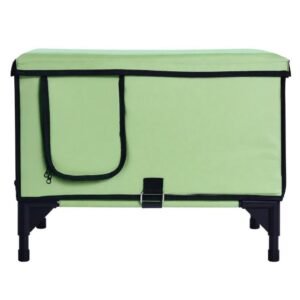 Elevated Heated Outdoor Cat House with 30W Waterproof Heating PadMSRP $128.99Apply for wholesale pricing
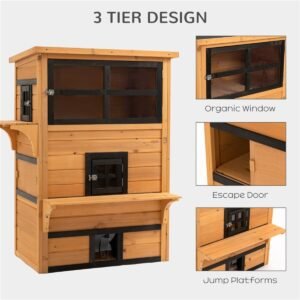 Three-Tier Outdoor Cat Condo with Asphalt Roof and Five Access DoorsMSRP $284.99Apply for wholesale pricing
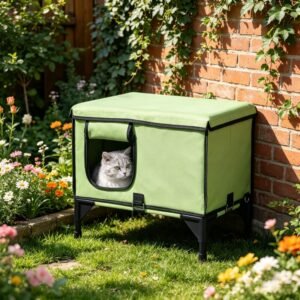 Large Elevated Heated Cat House with Waterproof Pad and Insulated LiningMSRP $124.99Apply for wholesale pricing
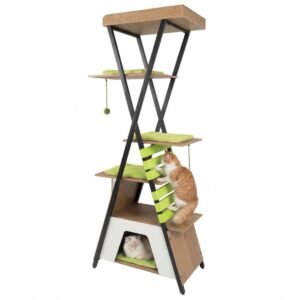 73″ Multi-Level Cat Tree with Condo, Top Perch and Scratching PadMSRP $228.99Apply for wholesale pricing
Stock it as a wholesale KIT
Pre-bundled assortments built from this guide’s categories — one PO, one shipment, wholesale pricing.