

Wholesale Cat Furniture: 2026 Guide | JustForPetStore
Cat furniture is a premium aisle: the global pet furniture market reached $1.7 billion in 2025 and is forecast to reach $2.6 billion by 2033, growing 5.5% a year, and cats are its largest segment at roughly 35%, per Grand View Research. For an independent store, wholesale cat furniture works as a curated three-tier assortment, one strong assembled display, and low-MOQ case packs that keep bulky freight from eating the margin. Here is the stocking logic.
What counts as cat furniture, and how is it different from cat trees?
Draw the boundary first, because your customers will not. Cat trees and scratchers, the carpeted towers and sisal posts that anchor most cat aisles, are their own established category with their own turnover economics. Window perches are a niche attachment category. Cat furniture, as the market research firms define it, is the broader home-goods segment around them: furniture-style condos and towers built to look like cabinetry, wall-mounted climbing systems, designer beds and sofa-style loungers, and multifunctional pieces that double as human furniture.
The distinction matters at the register. A buyer shopping cat trees is solving a scratching problem. A buyer shopping cat furniture is decorating a room that happens to have a cat in it, and that shopper accepts a higher price point, compares fewer alternatives, and measures the purchase against the sofa, not the scratching post. Stocking both is fine; merchandising them as one aisle is what blurs the price anchors and stalls the sale.
How big is the cat furniture market in 2026?
Grand View Research sizes the global pet furniture market at $1.7 billion in 2025, an estimated $1.8 billion in 2026, and a projected $2.6 billion by 2033, a 5.5% compound annual growth rate. North America holds about 40% of revenue, the largest regional share. By product, beds and sofas lead at around 40% of sales. By application, cats are the largest segment at roughly 35%, driven by cat popularity among millennial owners; dogs, though, are forecast to be the fastest-growing application.
The cat household base underneath that is solid. The American Pet Products Association (APPA) counts about 95 million U.S. households owning a pet, with 39% owning cats, and its 2025 National Pet Owners Survey, as cited by Grand View Research, finds 63% of pet-owning households keep two or more pets. Multi-pet homes are the natural multi-unit sale: one perch per cat is how cats prefer to live, and how the basket grows.
Why are cat owners trading up to furniture that matches the house?
The trade-up is a humanization story with receipts. Grand View Research notes that owners in developed markets prioritize pet furniture that complements home decor and are willing to pay premium prices for it, with demand concentrated in orthopedic and temperature-controlled beds, eco-friendly materials, and multifunctional designs. The product pipeline backs that up: PetPals Group showed cat trees and condos made from recycled paper rope and sustainable wood at Global Pet Expo 2024, Tuft + Paw launched modular cat trees in FSC-certified wood in 2025, and IKEA’s 2024 pet collection put 29 home-integrated pet products in front of mass-market shoppers.
Your read on this as a buyer: the aesthetic bar has been reset by home brands, not pet brands. A cat condo that looks like dorm furniture now competes with a bookshelf-style climber from a decor label. Independent stores win this comparison by curating, since mass channels lean on price and big-box floor sets, while you can show one beautiful piece and tell the small-space story better than a pallet display ever will.
What should a three-tier cat furniture assortment look like?
Structure the aisle as entry, step-up, and statement, and buy a deliberate depth for each. The entry tier is the familiar carpet-and-sisal tower and basic cave bed: durable, giftable, and priced for the “let’s try it” buyer. The step-up tier is where the category’s growth actually lives: solid-wood or engineered-wood towers, wall-mounted climbing sets, and sofa-style beds in washable upholstery. The statement tier is one or two pieces only, a designer climber, a cabinet-integrated litter solution, a large multifunctional unit, displayed fully assembled as the anchor that makes the other two tiers look reasonable.
Resist the urge to buy depth in the statement tier. Furniture turns slowly compared with food and toys; the working pattern is one or two statement units on display, deeper cases in entry and step-up, and a supplier or two that can drop-ship the oversized special order straight to the customer. That converts the biggest objection in the category, “it will not fit in my car,” into a shipping option instead of a lost sale.
Which styles sell best in apartments and small homes?
Small-space living is where cat furniture differentiates hardest. Grand View Research highlights the houses segment as a strong growth area, with multifunctional designs such as cat trees that double as bookshelves particularly popular in urban areas where floor space is scarce. Vertical wall systems answer the same constraint: they climb instead of sprawling, and they sell as a modular starter set plus extensions, which turns one purchase into a repeat purchase path.
Weight and height ratings matter more in this segment than anywhere else, so check them before you buy. A wall shelf rated for a 12-pound cat will fail with a 20-pound ragdoll, and a failed mount is a returned unit and a lost household. The apartment shopper is also the design-conscious shopper, so favor finishes that photograph well: wood tones, neutral fabrics, minimal carpeting. These are the pieces customers post, and a tagged wall system in a local apartment is worth more than any paid placement.
How do you display bulky cat furniture in a small store?
You cannot floor-set a furniture category, so pick your single best display moment. One fully assembled statement climber, placed where it is visible from the door, outsells four boxed units, because cats use furniture by climbing it and owners buy by imagining it. If the piece is a floor model a cat can actually test at a store event, better still. Around the display, hang the catalog and a QR code for the full range, and cross-merchandise the fast-turn attach items: replacement sisal, hanging toys from the cat toy range, and the scratcher refills that keep the cat trees and scratchers aisle next door turning.
Boxed inventory lives in the back or on a high shelf, never mid-floor. Keep the assembled piece dusted and priced with the depth options listed beside it, one in stock, three available in two days, so a hesitant buyer knows they can order rather than haul. And rotate the display piece seasonally; a category that looks the same for a year trains regulars to stop looking.
How do you handle shipping and MOQ on bulky goods?
Freight is the quiet margin killer in cat furniture. Dimensional weight pricing means a tower that weighs 40 pounds can ship as if it weighed 90, and damaged corners on particleboard are the category’s most common return. Three sourcing moves blunt this. First, buy flat-pack designs where possible, which cut shipping volume dramatically and let customers assemble at home. Second, order mixed case packs, entry units plus step-up units together, so one landed shipment fills all three tiers. Third, use a low-MOQ wholesale program so the case quantity matches your turn rate rather than the factory’s convenience.
Check the packaging before committing to a line. Double-walled cartons, corner protectors, and individually boxed platforms cost the supplier a little and save you a replacement cycle. If a supplier cannot describe their packaging, order a single sample first and drop it once before you sell it. That sounds crude; it is also the cheapest QA you will ever run on an oversized category.
How often should you reorder cat furniture?
Furniture is a durable-goods category riding a 5.5% growth curve, so plan turns in quarters, not weeks. A realistic cadence for an independent store is a curated assortment reviewed twice a year, in line with the spring and holiday reset cycles when the trade shows, including Global Pet Expo, preview next season’s finishes and formats. Between reviews, reorder only proven units when a tier runs thin, and let the cat supplies aisles around the furniture carry the weekly traffic.
Watch two signals to decide whether a display piece has earned its floor space: attach rate, how often a furniture shopper adds toys or refills, and special-order frequency on the oversized units. A piece that produces neither after a full quarter is a candidate for rotation. The category’s premium pricing means one sale a week can out-earn a shelf of impulse items, but only if the display keeps earning attention.
If you want help building a three-tier cat furniture assortment for your floor plan, send us your square footage and we will propose a case mix at low MOQs.
Frequently asked questions
What is cat furniture versus cat trees? Cat furniture is the broader home-goods segment: furniture-style condos, wall-mounted climbing systems, designer beds and multifunctional pieces that blend with home decor. Cat trees and scratchers are the utilitarian towers and posts that solve scratching and climbing. Shoppers for the two categories have different price anchors and intentions.
How big is the cat furniture market? The global pet furniture market was $1.7 billion in 2025 and is projected to reach $2.6 billion by 2033, a 5.5% CAGR, per Grand View Research. North America holds about 40% of revenue, and cats are the largest application segment at roughly 35%.
What cat furniture sells best in small apartments? Multifunctional pieces such as cat trees that double as bookshelves, and modular wall-mounted climbing systems, are highlighted by Grand View Research as particularly popular in urban areas. Flat-pack construction and honest weight ratings are the make-or-break specs.
How does a small pet store display bulky cat furniture? One fully assembled statement piece visible from the door, plus a catalog and QR code for the extended range. Boxed inventory stays in the back room, and cross-merchandise fast-turn attach items like toys and sisal refills around the display.
What MOQ should a pet store expect on cat furniture? Bulky goods punish over-ordering, so look for mixed case packs and low-MOQ programs that let you fill all three price tiers in one shipment, with drop-shipping for oversized special orders instead of deep stocking.
Sources: Grand View Research, Pet Furniture Market Size, Share, Trends Report, 2026-2033, https://www.grandviewresearch.com/industry-analysis/pet-furniture-market; American Pet Products Association, Industry Trends and Stats, https://americanpetproducts.org/industry-trends-and-stats; Global Pet Expo, https://www.globalpetexpo.org/.
Ready to stock these ideas? Browse wholesale pet KITs →
Shop these pet categories
Wholesale pricing, no minimum order.
Related wholesale collections
Products mentioned here
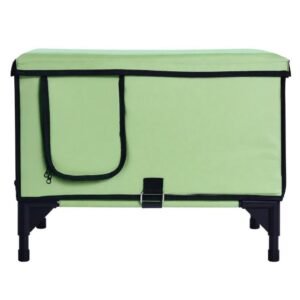 Elevated Heated Outdoor Cat House with 30W Waterproof Heating PadMSRP $128.99Apply for wholesale pricing
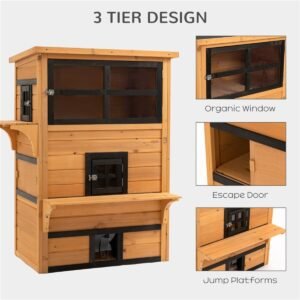 Three-Tier Outdoor Cat Condo with Asphalt Roof and Five Access DoorsMSRP $284.99Apply for wholesale pricing
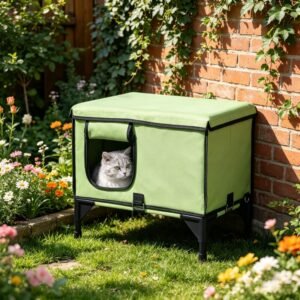 Large Elevated Heated Cat House with Waterproof Pad and Insulated LiningMSRP $124.99Apply for wholesale pricing
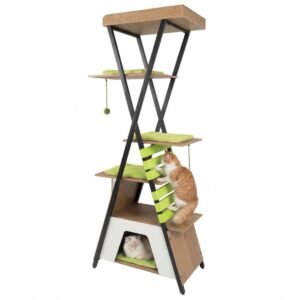 73″ Multi-Level Cat Tree with Condo, Top Perch and Scratching PadMSRP $228.99Apply for wholesale pricing
Stock it as a wholesale KIT
Pre-bundled assortments built from this guide’s categories — one PO, one shipment, wholesale pricing.