

Wholesale Cat Grooming Products to Stock | JustForPetStore
Wholesale cat grooming products, meaning cat-formulated shampoo, waterless foam, grooming wipes, deshedding combs, and nail trimmers, are a repeat-purchase aisle that restocks itself every month. Grand View Research values the global pet grooming products market at $16.5 billion for 2026, and NielsenIQ finds premium cat shampoo sales grew 3.3% while value-tier pet grooming declined. This guide covers what to stock, how to price it, and what MOQ to accept.
What counts as wholesale cat grooming products?
For a stocking decision, the category divides into four shelves. Cleansers include cat shampoo, waterless foam, and grooming wipes. Coat tools include deshedding combs, slicker brushes sized for cats, and grooming gloves. Nail care includes clippers and grinders with cat-appropriate guards. Finishing products include detangling sprays and leave-in coat treatments formulated for cats.
The buyer of this aisle is not usually a professional groomer, who buys from salon suppliers. It is the cat owner managing shedding, hairballs, and nail trimming at home, and that buyer shops on convenience and reassurance rather than on brand loyalty. A store that curates twelve correct items beats a store that lists forty.
Two categories sell alongside this shelf but do not belong inside it. Cat litter is its own replenishment engine with its own price ladder, and full bathing equipment like dryers and tubs belongs to the grooming salon decision rather than the household shelf. Keeping the boundary clean is what lets a small store buy the aisle in a handful of cases.
How big is the cat grooming opportunity in 2026?
The pet grooming products market reached $15.6 billion globally in 2025 and is projected at $16.5 billion for 2026, growing at a 6.0% CAGR to $24.8 billion by 2033, per Grand View Research. North America is the largest region at a 45.1% revenue share, shampoo and conditioner is the largest segment at 54.2% of sales and also the fastest-growing type, and offline retail still holds 74.4% of sales, which matters enormously for a store with shelves.
The premium signal is specific to the shelf you are stocking. NielsenIQ finds premium and super-premium cat shampoo sales grew 3.3% over the past year, premium dog shampoo grew 7.1%, while moderate and value-tier pet grooming sales fell as much as 10.3%. APPA counts 95 million U.S. pet-owning households and projects $165 billion in total 2026 pet spending, with grooming sitting inside an Other Services category that reached $14.3 billion in actual 2025 sales and is projected at $14.9 billion for 2026. Cat owners are a smaller, stickier slice of that market, and their consumable baskets reappear every month.
Read those numbers at shelf level rather than market level. A $16.5 billion global category growing 6% does not reward a store for carrying everything, it rewards a store for owning the premium corner of a shelf where the value tier is shrinking. The growth in this aisle is concentrated in the formats cat owners can use without a bathtub, which is exactly the assortment this guide recommends stocking first.
Which cat grooming categories should a small store carry first?
Wipes first, then waterless foam, then shampoo, then one serious deshedding tool. Wipes are the gateway purchase for a cat owner who will never attempt a bath, they run out fastest, and they sit at an impulse-friendly price point. Waterless foam captures the same owner one step further into the routine, and it converts bath-averse households into monthly buyers.
Deshedding tools carry the highest ticket in the aisle and the slowest repeat, so stock one proven model in depth rather than five competing models. The general grooming-supply conversation, which covers dog clippers and salon equipment, is separate from this list, and so is dog shampoo merchandising, which follows a different price ladder. A cat aisle earns its margin on consumables, with tools as the basket-builder.
Why do cats need different grooming products than dogs?
Cat skin and coat care is a different formulation problem. Cats groom themselves daily and swallow loose hair, so the products sold to cat owners focus on reducing loose coat and supporting that self-grooming rather than replacing it. Shampoos marketed for both species often behave differently on cat coats, and many cat owners specifically look for gentle, low-fragrance, cat-labeled cleansers because a stressed cat makes bathing impractical at home.
That formulation gap is the merchandising opportunity. An aisle stocked with cat-labeled wipes, foam, and shampoo tells the cat owner that this store planned for them, rather than that it shelved its dog overflow on a second label. In practice, that perception decides whether a cat household consolidates its basket here or online.
How do you price a cat grooming aisle?
Build a three-tier ladder per category. Wipes run from a sub-$5 single pack at the register to a $12 to $18 multi-pack on the shelf. Waterless foam and shampoo occupy a $9 to $16 band, with premium and super-premium formulas above that, which is where NielsenIQ’s data says the growth sits. Deshedding tools anchor the top of the aisle from $12 up to $30.
Resist the temptation to stock value-tier grooming at deep discounts. The value segment declined as much as 10.3% per NielsenIQ, while premium grew, so price competition in this aisle competes for the shrinking half of the market. A small store wins on curation and the right premium price point, not on being the cheapest place to buy a generic wipe.
Work the unit economics before setting the ladder. If a case of wipes lands at $2.80 a pack, a $5.99 single at the register and a $13.99 four-pack both clear healthy margin while giving the customer a visible reason to size up. The premium shampoo at $14.99 has to earn its price with a formulation story on the shelf card, because in this aisle the label does the selling when staff are busy.
What MOQ and pack sizes make sense for cat grooming?
Buy consumables by the case in pack sizes that match one month of shelf demand: a case of wipes, a case of waterless foam, and a modest run of shampoo in the two or three scents that actually move. Tools should be bought in single-digit depth per model, since one proven deshedding comb outsells five unproven ones.
Working with a low-MOQ wholesale supplier keeps the aisle fresh without stranding capital, and it lets you test a premium cat shampoo brand at one case before committing to a line. The wrong MOQ structure in this category is the bulk pack bought for a discount that expires on the shelf, because grooming consumables have a shelf life and a seasonality that punish overbuying.
Where should cat grooming products sit in the store?
Adjacency does the selling. Cat grooming belongs next to the cat grooming and care selection and within sight of the cat litter aisle, because the customer cleaning a litter box is the same customer fighting loose coat on the sofa. Wipes near the register capture the add-on sale from any cat household in the store.
The broader cat section should read as a destination rather than a shelf, and grooming is the consumable engine that brings the litter-and-food trip back mid-month. Sign the aisle with a shedding-and-hairball message rather than a grooming message, because cat owners search for the problem they have, not the category name.
Before re-signing anything, set a baseline at your own register. If the litter aisle already anchors the cat household’s trip, count how many of those receipts include a grooming item today, then make that number the bar the new adjacency has to beat within ninety days. Merchandising changes that are not measured quietly revert.
Which cat grooming items turn fastest for independent stores?
Expect wipes, waterless foam, and shampoo to carry the repeat rate, with monthly-to-quarterly repurchase depending on the household. Deshedding combs and gloves turn a few times a year but attach to almost every new cat customer. Nail clippers turn slowly but attach at adoption and again when blades dull.
The seasonal layer matters less here than in apparel, but spring shedding season reliably doubles deshedding interest, and January resolution traffic touches grooming as a new-routine item. A store that carries twelve correct items and reorders the top five monthly will out-turn a store carrying forty items ordered twice a year.
How do you keep cat grooming inventory from going stale?
Rotate by date the way you would food. Mark each case with its arrival month, keep no more than two months of wipes and foam on hand, and run a quarterly zero-based review: if an item did not sell two units a month, it does not earn shelf space next quarter. Premium grooming products lose their premium position when the box looks dusty.
Use the subscription logic on this aisle. A customer who buys wipes every month is a subscription candidate, and scheduled replenishment turns your fastest grooming SKU into your most predictable one. Then match purchasing to that rhythm: buy the top five monthly, test one new item per quarter, and retire anything that stalls two quarters running.
Cat grooming is a consumable category that behaves like food. If you want cat-labeled grooming products on wholesale terms sized for an independent store, contact us about assortment and low-MOQ sourcing.
Ready to stock these ideas? Browse wholesale pet KITs →
Shop these pet categories
Wholesale pricing, no minimum order.
Related wholesale collections
Products mentioned here
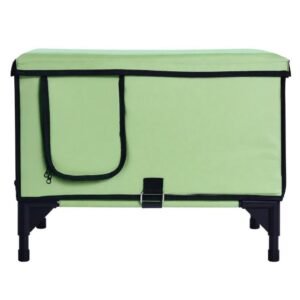 Elevated Heated Outdoor Cat House with 30W Waterproof Heating PadMSRP $128.99Apply for wholesale pricing
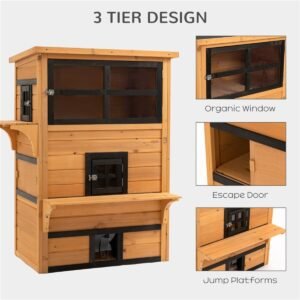 Three-Tier Outdoor Cat Condo with Asphalt Roof and Five Access DoorsMSRP $284.99Apply for wholesale pricing
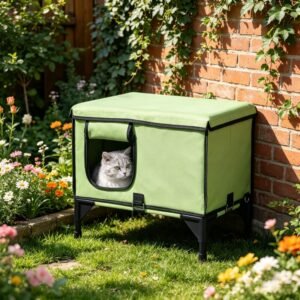 Large Elevated Heated Cat House with Waterproof Pad and Insulated LiningMSRP $124.99Apply for wholesale pricing
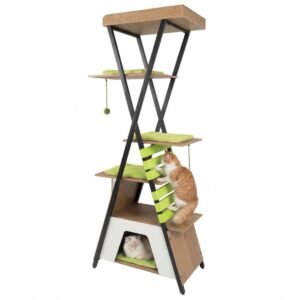 73″ Multi-Level Cat Tree with Condo, Top Perch and Scratching PadMSRP $228.99Apply for wholesale pricing
Stock it as a wholesale KIT
Pre-bundled assortments built from this guide’s categories — one PO, one shipment, wholesale pricing.