
Wholesale Dog Food Toppers: Margin Guide | JustForPetStore
Wholesale dog food toppers are one of the fastest-growing shelves in pet retail: a $7.05 billion global market in 2026 that Mordor Intelligence projects at $10.12 billion by 2031, growing 7.5 percent a year. Toppers are freeze-dried, dehydrated, or liquid additions that shoppers layer over kibble, so they lift average order value without competing with the food you already sell. Independent stores win by stocking formats mass retail underserves.
What are dog food toppers, and why are they selling?
A topper is anything a customer adds to a bowl of base food to raise interest, protein, or perceived freshness: freeze-dried meat chunks, dehydrated blends, gravies, and bone broths. The category works because it changes the meal without replacing it, which fits the way pet owners actually spend. Per Mordor Intelligence, the global dog food topper market grew from $6.56 billion in 2025 to an estimated $7.05 billion in 2026, and North America is its largest market while Asia-Pacific grows fastest. The spending sits on top of a huge base: the American Pet Products Association reports U.S. pet food and treat spending of $68.3 billion for 2025 and projects $69.7 billion for 2026. A topper purchase is a food-budget purchase, made by the same customer who buys your dog food every month — but at a better margin per linear inch than the bag beside it.
Which topper formats belong on an independent store’s shelf?
Dry formats dominate the category: Future Market Insights puts the dry topper share at 82.5 percent of product-type sales in 2026, and within dry, freeze-dried leads both share and growth — Mordor Intelligence tracks the freeze-dried segment as the largest and fastest-growing, at roughly a 12 percent annual clip through 2031. That makes your opening assortment simple: two or three freeze-dried protein toppers first, one dehydrated veggie blend for the digestive-health shopper, and one liquid product — a gravy or bone broth — for senior dogs and picky eaters. Liquid formats grow more slowly because most need refrigeration after opening, which is exactly why a shelf-stable single-serve broth pouch differentiates an independent store from a big-box aisle. Do not open with ten SKUs; open with five that each represent a distinct use occasion.
How is the topper shelf different from the treats aisle?
The occasions are different even when the ingredients overlap. A treat is a reward or a training tool, bought occasionally and finished casually; a topper is a meal enhancement used daily and replenished weekly, which makes it a subscription-shaped product rather than an impulse one. Your dog treats shelf wins on novelty and flavor variety, while the topper shelf wins on routine and trust: ingredient transparency, protein source, and a story the customer can repeat to a spouse. Price sensitivity is lower at the topper shelf because the unit of decision is a small pouch, not a $70 bag of food. Treat the two shelves as related but separate businesses — a customer who buys a freeze-dried treat on Saturday will come back Thursday for the topper version if you make the distinction legible.
What price bands work for toppers in a small store?
Expect two viable bands. Entry single-serve pouches and small trial sizes commonly land in the $8 to $15 range, and they function as the category’s sampling engine; full-size resealable pouches of freeze-dried toppers typically run $20 to $35, with premium and human-grade claims pushing the ceiling higher. The wholesale math is what matters: because toppers are light relative to their price, landed freight costs eat far less margin than on heavy kibble, so a modest markup still produces healthy gross margin dollars per SKU. Future Market Insights pegs U.S. category growth at 4.5 percent annually through 2036 — slower than the global 7.5 percent, which tells you U.S. growth is premiumization and repeat purchase, not new households. Stock the band your shelf traffic can support: trial pouches to recruit, full-size to harvest.
How do you merchandise toppers next to the food aisle?
Place the topper shelf where the kibble decision happens, not in treats. NielsenIQ’s 2026 pet retail analysis shows in-store pet sales down 1.4 percent while online grew 14.1 percent, which means your shelf has one clear advantage left: explanation. A card that says “sprinkle on kibble for picky eaters” converts better than a price tag does, because topper shoppers are problem-solvers — the dog stopped eating, the senior needs appetite help, the owner wants raw-adjacent nutrition without the freezer. Train staff to sell the use case in one sentence, and run a bundle: any full-size dog food bag plus any topper at a small package discount. Put single-serve pouches in a small bowl near the register as a trial-size impulse play. The feeding aisle is where the question is asked; that is where the answer belongs.
Which pack sizes and shelf positions convert best?
Pouches rule the category: Future Market Insights projects pouch packaging at 34 percent of packaging demand in 2026, ahead of tins and boxes, because resealable pouches support portion control and freshness — the two things topper buyers say they want. Stock the structure accordingly: full-size resealable pouches at eye level on the topper bay, a four-to-six unit trial-size run at register, and nothing in a format the customer cannot open one-handed with a leash in the other hand. Rotate protein facings rather than brands — chicken, beef, then a novel protein like rabbit or fish — because topper shoppers repeat-buy a flavor only until the dog loses interest, then they switch within the same brand. Keep one facing depth per SKU modest and reorder weekly; the category rewards freshness dating and punishes dusty pouches.
How do you pick a wholesale topper supplier?
Vet suppliers the same way you vet any pet-food-adjacent vendor, with three extras. First, ask where the freeze-drying happens; manufacturers that freeze-dry in-house control the variable that defines quality, while traders who buy bulk stock cannot tell you the moisture range. Second, check claim discipline: labels that say “human grade” must meet the FDA’s human-food handling rules that AAFCO’s consumer materials describe, so a supplier making that claim should be able to show the compliance chain, and one that cannot should be dropped. Third, negotiate MOQ per flavor, not per brand — you want 48 pouches of chicken and 48 of beef, not 200 of one. A supplier offering low minimums lets you test five formats without financing a pallet. Order samples, feed them to your own dog first, and never list a topper your staff cannot endorse in one honest sentence.
Should private-label toppers be part of your plan?
For a store with a house brand already, or planning one, toppers are the easiest entry point in the food-adjacent aisle — lighter regulatory surface than complete diets, simple ingredient stories, and a freeze-dried co-packer market that has matured around them. The case for private label here is margin and differentiation: a national freeze-dried topper sells at a price the internet can match, while a house topper with your name, your protein story, and your store’s recommendation cannot be shopped on price alone. The case against is shelf-life discipline — you own the dating responsibility — and the minimum order conversation. Work the numbers before committing: a modest opening run under a low-MOQ arrangement lets you test two proteins, and if the attachment rate proves out, you scale into a freezer-free format that big-box aisles still do not copy well. Keep the label honest and the claims modest, and the house topper becomes the highest-margin SKU on the bay.
Do cat toppers deserve shelf space too?
Yes, in a small way, and mostly in formats that solve the picky-cat problem. The APPA counts about 53 million U.S. households with cats, and cat owners already buy toppers for the same reason dog owners do: appetite, hydration, and variety. But cats skew toward liquid and sprinkle formats rather than large freeze-dried chunks, so the cat version of the aisle is narrower — one or two gravy or broth pouches and one sprinkle topper is enough to start, merchandised beside the cat food rather than the dog bay. Watch sell-through for a quarter before expanding. If the cat SKUs move, the same supplier usually makes them, which keeps the freight consolidated and the reorder paperwork light.
How much topper inventory should you start with?
Size the opening order to 60 to 90 days of expected cover, not to supplier volume breaks. The category’s strength is repeat purchase, and a sell-through of roughly two to four units per SKU per week is a realistic first-quarter expectation for a mid-traffic independent store; if five SKUs move three units a week each, a 60-day opening order is under 200 units total. Reorder weekly rather than quarterly, because freeze-dried products carry a shelf life you want to keep far from the register — a pouch with four months left should be a reorder lesson, not a markdown. Track attachment rate: toppers added to a food sale as a share of food transactions. If that number climbs month over month, the shelf is doing its job and deserves a second bay; if not, cut the weakest flavor and try a bundle before cutting the category. Keep the first quarter’s data in a simple weekly log — units sold, units reordered, attachments per food transaction — so the second-quarter order is based on evidence rather than enthusiasm, and revisit the assortment at the 90-day mark with the same discipline you already apply to slow-moving treats.
Ready to stock these ideas? Browse wholesale pet KITs →
Shop these pet categories
Wholesale pricing, no minimum order.
Products mentioned here
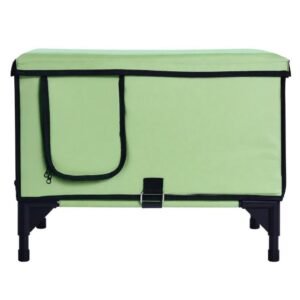 Elevated Heated Outdoor Cat House with 30W Waterproof Heating PadMSRP $128.99Apply for wholesale pricing
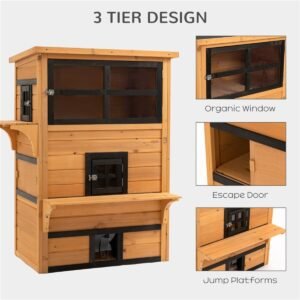 Three-Tier Outdoor Cat Condo with Asphalt Roof and Five Access DoorsMSRP $284.99Apply for wholesale pricing
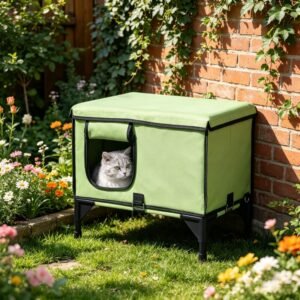 Large Elevated Heated Cat House with Waterproof Pad and Insulated LiningMSRP $124.99Apply for wholesale pricing
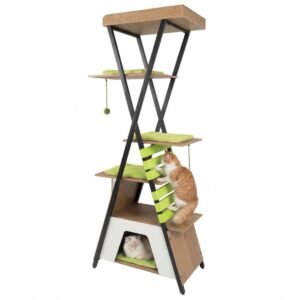 73″ Multi-Level Cat Tree with Condo, Top Perch and Scratching PadMSRP $228.99Apply for wholesale pricing
Stock it as a wholesale KIT
Pre-bundled assortments built from this guide’s categories — one PO, one shipment, wholesale pricing.