
Wholesale Pee Pads: A 2027 Stocking Guide | JustForPetStore
Wholesale pee pads are the cheapest item on your shelf and one of the hardest to make money on, because the product is light, bulky, and bought on price. The category still deserves dedicated space: absorbent hygiene is a repeat purchase driven by puppies, senior dogs, and cat owners managing litter boxes. This guide covers the market data, the six SKUs worth stocking, and the freight math that decides whether the aisle earns or merely fills.
Why do pee pads deserve their own shelf plan?
Because they behave like consumables rather than durables. A customer buys a bed once and a leash twice a year, but a household with a puppy in training or a senior dog with incontinence buys pads every few weeks, and that rhythm is what makes a small store’s cash flow predictable. The category also pulls in shoppers who are not browsing. Someone whose dog just had surgery is not comparing brands for twenty minutes; they need absorbency today, and they will pay a store premium for immediate availability. That combination, high frequency plus low browsing, is exactly the profile that rewards a dedicated facing instead of a bottom-shelf afterthought. The counterargument is margin. Pads carry a thin percentage compared with toys or apparel, and a poorly chosen pack size can tie up cash for months. Both things are true at once, which is why the aisle needs a plan rather than a purchase order.
How big is the absorbent hygiene category?
The overall pet market is still growing, but slowly. The American Pet Products Association reports total U.S. pet spending of $158 billion in 2025 and projects $165 billion for 2026, with the supplies, live animals, and OTC medicine segment moving from $34.4 billion to $35.6 billion. Ownership is broad: 95 million U.S. households own a pet. Within that flat-ish supplies number, the diaper side of the aisle is expanding faster than the shelf average. Fortune Business Insights values the global pet diaper market at $401.53 million in 2025, $438.77 million in 2026, and $892.03 million by 2034, a 9.27 percent compound annual growth rate. The same report puts North America at 42.2 percent of global revenue, disposable products at roughly 65 percent, small sizes at 58 percent, dogs at 76 percent of demand, and offline retail at 54 percent. That last figure is the one worth taping to the shelf, and the channel data explains why. NielsenIQ’s 2026 pet retail analysis puts total U.S. pet care at $95.1 billion, up 5.5 percent, while in-store sales slipped 1.4 percent and online rose 14.1 percent. The categories losing ground in store are the ones a shopper can compare on a screen; absorbency is bought when the need is urgent.
Which pee pad SKUs should a small store stock first?
Start with six, not sixteen, and let the first reorder tell you where to go deeper. The workable opening set is a small 22 by 22 inch pad in a 50 count for puppies and cats, the same size in a 100 count for value shoppers, a large 28 by 34 inch pad in a 40 or 50 count for medium and large dogs, a heavy-duty overnight pad in a smaller pack for senior dogs, a washable pad for the customer who has already bought three cases and done the math, and one diaper or belly band SKU sized to your most common breed. That mix covers training, incontinence, travel, and post-surgical recovery without duplicating shelf space. Two variables matter more than brand. Pack count drives the price the customer sees, and absorbency grams per square meter drives whether they come back. A store that stocks three counts of the same pad is usually better off than one stocking three brands of the same count.
How does freight change the math on wholesale pee pads?
Badly, because pads are the textbook dimensional weight product. A case of 100-count pads is light relative to the cube it occupies, so carriers bill on volume rather than actual weight, and ocean freight charges for the space, not the kilos. That single fact explains why a container-direct price looks unbeatable per unit at the factory and turns ordinary by the time it reaches your back room. Do the arithmetic before you commit: take the landed cost per pad, add your receiving and shelf labour, and compare it with what the pack realistically sells for in your market. If the landed cost leaves less than a third of the retail price as gross margin, the SKU will not survive a single markdown. The practical answer for independent stores is to buy pads in cartons from domestic stock rather than by the container. A low-MOQ wholesale program that ships 40 units lets you test the aisle without freight risk, and that is a far better use of cash than 6,000 pads and a storage problem.
Do dog diapers and belly bands belong in the same aisle?
Yes, and separating them is one of the quiet mistakes in pet retail. They solve the same customer problem at a different price point, and they sell to different moments: pads for the floor, diapers for the dog, belly bands for the male dog marking indoors, washable wraps for the owner who is tired of buying disposables. A shopper who walks in for pads and finds a belly band next to them often buys both, which raises the basket on a category where the pad alone barely covers the freight. The diaper side also carries the higher ticket. The disposable segment holds roughly 65 percent of the market by value while washable products take about 35 percent, and the washable share is growing among owners who are managing a long-term condition rather than a two-week recovery. Stock the two or three sizes that match your local dog population, and keep one washable option visible so the trade-up conversation has a product behind it.
How many units should you reorder at a time?
Work backwards from sell-through, not from the case pack. Take the number of packs you sold in the last eight weeks, divide by eight, and multiply by the weeks between order and delivery, then add a safety week for a slow shipment. A store selling four packs a week with a three-week replenishment cycle needs about 16 packs in the pipeline, so a 24-pack order gives one week of cover without turning into dead stock. Pads are a poor place to hold inventory because they take up more cubic feet per dollar than almost anything else in the store, and cubic feet is what you run out of first. Review the number at every reorder rather than setting it once. Puppy season and the weeks after the holidays push pads up, while late summer and the weeks before a store anniversary tend to flatten. The care and hygiene shelf as a whole usually moves with the same rhythm, so a single review covers several SKUs at once.
What goes wrong with private label pee pads?
Two failures, and both are predictable. The first is absorbency drift: a factory that hits the specification on the sample can slip below it on production runs when resin prices move, and the customer discovers it on the third pad rather than the first. The second is packaging that arrives damaged, because a compressed bale of pads with a thin poly bag and no inner support does not survive a parcel network. Fix the first with a written specification that names the absorbency, the backsheet, the adhesive strips, and the packing compression, plus a pre-shipment check on a random carton rather than the top one. Fix the second by asking for the master carton dimensions and weight before you approve artwork, then testing one carton through the same channel your customers use. Private label works well at low volume for pads, because the product is generic and the buyer is loyal to the store rather than to a national brand, but only when the specification is documented rather than assumed.
Where should the aisle sit in the store?
Near the litter and cleaning products, not in the toy zone. Pads are bought in a hurry by someone with a specific problem, and that customer walks a straight line from the door to the product, so the shelf needs to be visible from the entrance and reachable without a detour. Put the 100 counts at eye level and the bulky cases on the bottom, because the value shopper already knows what she wants while the first-time buyer needs the small pack at hand height. Keep a single facing of training aids next to the pads, since house training is the reason most first-time buyers arrive. Stores that treat pads as an emergency purchase rather than a planned one lose the sale to the grocery store two blocks away that keeps them in the cleaning aisle, and that loss is permanent because the customer never learns the store carries them at all.
When is the best time of year to buy pee pads?
Late winter and early spring, ahead of the puppy season that follows the holidays. Puppies bought in December become house-training customers in January and February, and the training and enrichment shelf follows the same curve. Ordering in December to arrive in January keeps you in stock without competing for space during the gift season, and it lets you buy before the freight surcharges that cluster around Chinese New Year. If you buy domestically, the timing is simpler: place the order two to three weeks before you expect the January lift and hold one extra case of the 100 count. The rest of the year, let the reorder rhythm do the work and resist the temptation to stock deep on a price break. Pads store well but they store expensively, and cash tied up in a pallet of them is cash that cannot go into the categories where margin actually lives. Send us your current shelf mix and we will map the six SKUs against what you already carry.
Sources: American Pet Products Association industry trends and stats; NielsenIQ pet retail analysis (2026); Fortune Business Insights pet diapers market report (updated October 2026).
Ready to stock these ideas? Browse wholesale pet KITs →
Shop these pet categories
Wholesale pricing, no minimum order.
Related wholesale collections
Products mentioned here
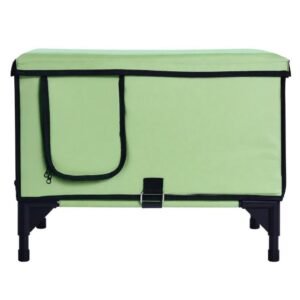 Elevated Heated Outdoor Cat House with 30W Waterproof Heating PadMSRP $128.99Apply for wholesale pricing
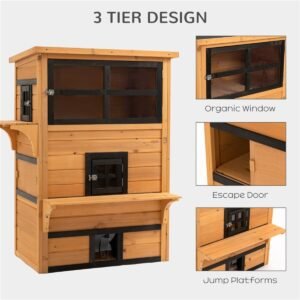 Three-Tier Outdoor Cat Condo with Asphalt Roof and Five Access DoorsMSRP $284.99Apply for wholesale pricing
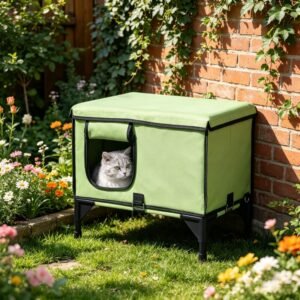 Large Elevated Heated Cat House with Waterproof Pad and Insulated LiningMSRP $124.99Apply for wholesale pricing
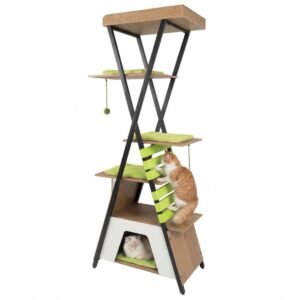 73″ Multi-Level Cat Tree with Condo, Top Perch and Scratching PadMSRP $228.99Apply for wholesale pricing
Stock it as a wholesale KIT
Pre-bundled assortments built from this guide’s categories — one PO, one shipment, wholesale pricing.