

Wholesale Pet Gates: Sizing and Margin | JustForPetStore
Wholesale pet gates are a small, unglamorous category that quietly carries a store through puppy season. The buying rule is simple: stock three doorway sizes, two heights, and one panel pen, because a gate that does not fit the customer’s opening is a lost sale that no discount fixes. Everything else, from bar spacing to landed cost, follows from getting fit right first.
What types of pet gates and playpens sell in a small store?
Five formats cover almost every customer who walks in. Pressure-mounted walk-through gates are the volume item, because they need no tools and renters will buy them. Hardware-mounted gates are the step up, screwed into a door frame, and they are the only sensible choice at the top of a staircase. Freestanding configurable gates, the accordion type, solve awkward openings and hallway pinches. Exercise pens, sold in panels, serve puppy litters, foster homes, and travel. And decorative or wooden gates exist mainly for customers who care how the hallway looks. A sixth format, the retractable mesh gate, is the one to stock cautiously, because the cheap versions fail at the latch and returns eat the margin. Most independent stores do well with the first four and a small test quantity of the fifth.
How do you size a gate for the doorways customers actually have?
Start with interior width, not with the product. Most residential doorways in the U.S. measure roughly 28 to 32 inches inside the frame, which is why pressure gates usually ship for openings from about 28 to 38 inches, often with an extension kit for wider openings. Measure the opening, not the door, and measure at the floor as well as at the middle, because older homes are rarely square. Height is the second decision: about 24 inches for a small dog or a cat, 30 inches for a medium dog, and 36 inches or taller for a jumper. Bar spacing around two inches keeps a small pet from squeezing through the gap. A store that keeps a tape measure on the gate display and a one-line width chart taped to the shelf converts a confusing purchase into a two-minute one.
Why do exercise pens outsell fixed gates in apartment neighborhoods?
Because an apartment customer needs a movable boundary, not a permanent one. A renter will not drill a hardware-mounted gate into a door frame, and often has one hallway that has to serve as both a pet zone and a walkway. Panels fold flat, store behind a sofa, and go to the car for a weekend trip. The same logic applies to foster households, which need to separate a new dog for a week and then take the pen down entirely. The data supports treating containment as a live category rather than a legacy one: NielsenIQ’s 2026 pet retail analysis shows in-store sales down 1.4% while online grew 14.1%, with accessories among the categories migrating online. Gates sit in the small group that resists that move, because fit is physical and shoppers want to test the latch before they buy.
How many SKUs should a gate and pen range carry?
Six to eight is a working range for a store under 3,000 square feet, and nine is the ceiling before the display becomes a wall of boxes nobody can compare. A practical starting set is one pressure gate at 24 inches and one at 30 inches, plus an extension kit for each, one hardware-mounted gate, one freestanding configurable gate, and one exercise pen in a six or eight panel count. If the store serves a lot of small dogs and cats, add a tall-barrier version for the escape artists. The mistake is stocking five brands of the same 30-inch pressure gate and no extension kits, which is how a store ends up turning away the customer with a 40-inch opening, the one who was ready to spend more.
What does a low-MOQ gate order actually cost to land?
More than the unit price suggests, because gates are bulky and light, which is the worst combination in freight. A carton that protects a 30-inch gate is mostly air, so dimensional weight, not actual weight, drives the freight quote. Expect the landed cost of a gate to run meaningfully above the FOB price once you add freight, duties, and the damage rate on a product with metal bars and plastic latches. That last item is the one small buyers forget: a gate returned because a latch arrived cracked costs the full retail margin plus handling, so a supplier who ships in a properly engineered carton is worth a higher unit price. Ask for the carton dimensions and the master carton count before you compare quotes, and ask what the damage rate has been on the last three shipments. The discount on a poorly packed container is not a discount.
Which products should sit next to the gate display?
The adjacency is the whole point of stocking gates at all. Put dog crates and kennels nearby, because a customer buying a gate is usually solving a containment problem and half of them will realize a crate is the better answer for overnight. Add training and enrichment items, since a gate is a management tool and the customer standing in front of it is actively working on behavior. Add dog toys that survive a confined dog, and cleaning supplies from the hygiene set, because accidents in a pen are the most common follow-up problem. A gate display with no chew toy beside it is a display that generates a second trip, and the second trip is where the online retailer wins.
What safety questions should you ask a gate supplier?
Four, and the answers separate a stocking brand from a return generator. First, is the test report for this exact model rather than the category? A report that covers a different SKU tells you nothing about the latch on the one you are buying. Second, what is the bar spacing, and is it consistent at the top of the gate where a small pet will test it? Third, how is the latch secured, and can it be opened by a dog jumping against it, which is the failure customers report most often? Fourth, what does the finish contain, and does the supplier have documentation for it, since a gate is a product a puppy will chew. On the store side, keep your claims literal. Do not describe a gate as escape-proof or chew-proof, because both claims invite a complaint you cannot win. Say what the gate is tested to hold and let the customer decide.
How do you display bulky containment products in a small store?
Set one gate up, assembled, at floor level with the latch facing the aisle, and let customers open and close it. That single demo does more selling than any shelf talker, because the purchase decision on a gate is a confidence decision about the latch. Keep the boxed stock underneath in size order, cheapest to tallest, with the width range printed on the shelf edge. Hang a tape measure on a short chain so nobody has to ask. Photograph the assembled gate with a caption of the opening it fits, and post it to the store’s local listing, because the shopper searching for a gate tonight is often deciding between driving over and ordering. If floor space is tight, the demo gate can live on the end of the crate aisle where the customer is already standing.
What margin should you expect on gates and playpens?
Gross margin in the high thirties to mid forties is realistic for a small store buying at low MOQ, and the ceiling is set by the freight rather than the supplier’s price list. Stores that buy a full container of one SKU can reach the low fifties, but they also carry the inventory risk on a slow-moving size. A store buying 40 to 80 units across a small range should plan on 38 to 44 percent and treat anything below 35 percent as a signal that freight or damage is eating the category. The strategic value is not the margin itself: a gate purchase is a containment purchase, and the customer who buys one is a new puppy household with twelve months of food, treats, and toys ahead of them. Price the gate to be competitive and let the follow-on basket carry the profit. If you are testing the category, a low-MOQ wholesale order keeps the experiment small enough to learn from.
How do gates fit the spring puppy season?
They front-run it. Puppy purchases cluster in late winter and spring, and the household buying a puppy usually buys containment in the first two weeks, before the first bag of food is finished. That means the stock has to be on the floor in late January, not ordered in March when the demand is visible. Industry sizing supports planning ahead rather than reacting: the American Pet Products Association projects U.S. pet spending of $165 billion in 2026 against $158 billion in 2025, with supplies, live animals and OTC medicine rising from $34.4 billion to $35.6 billion, and Grand View Research sizes the global pet care market at $190.5 billion for 2026, growing 5.9% a year to $283.7 billion by 2033. None of that growth arrives on its own; it arrives in a household that has just acquired an animal and needs a boundary by Saturday. Order in December, set the display in January, and let the season come to a stocked shelf.
Sources: NielsenIQ, “Paws for Thought: Why Your Pet Aisle Is Bleeding Cash to the Internet” (August 27, 2026); American Pet Products Association, industry trends and stats; Grand View Research, Pet Care Market report.
Ready to stock these ideas? Browse wholesale pet KITs →
Shop these pet categories
Wholesale pricing, no minimum order.
Related wholesale collections
Products mentioned here
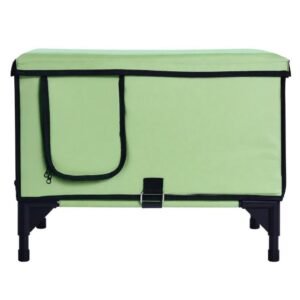 Elevated Heated Outdoor Cat House with 30W Waterproof Heating PadMSRP $128.99Apply for wholesale pricing
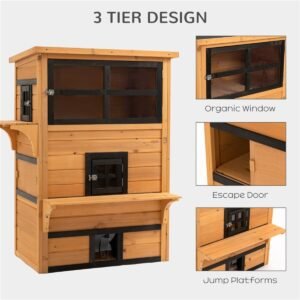 Three-Tier Outdoor Cat Condo with Asphalt Roof and Five Access DoorsMSRP $284.99Apply for wholesale pricing
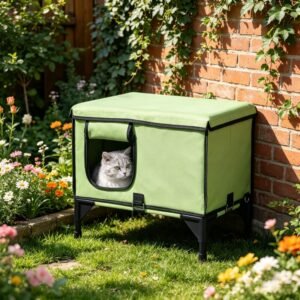 Large Elevated Heated Cat House with Waterproof Pad and Insulated LiningMSRP $124.99Apply for wholesale pricing
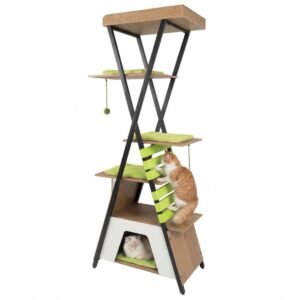 73″ Multi-Level Cat Tree with Condo, Top Perch and Scratching PadMSRP $228.99Apply for wholesale pricing
Stock it as a wholesale KIT
Pre-bundled assortments built from this guide’s categories — one PO, one shipment, wholesale pricing.