

Wholesale Pet Grooming Wipes: Margin Guide | JustForPetStore
Wholesale pet grooming wipes are the cheapest way for an independent pet store to add a repeating consumable without adding fixture space. The global wipes category reaches about $105.11 million in 2026 and grows at 8.21 percent a year, while the wider grooming products market sits at $16.5 billion. Stock four formats, price between $7.99 and $12.99, and protect the shelf with claims you can legally print.
What is the pet grooming wipes market worth in 2026?
Small, growing, and badly served by mass retail, which is exactly the profile a small store should want. Research and Markets puts the global pet grooming wipes market at $105.11 million in 2026, growing at a compound annual rate of 8.21 percent to $163.54 million by 2032, in a September 2026 report built by 360iResearch. That is a rounding error against the broader category: Grand View Research values the global pet grooming products market at $16.5 billion in 2026, rising from $15.6 billion in 2025 to $24.8 billion by 2033 at 6.0 percent, with shampoo and conditioner alone holding 54.2 percent of revenue. The useful reading is not that wipes are big. It is that wipes grow faster than the category around them while occupying a fraction of the shelf, and that 74.4 percent of grooming products still sell offline, per Grand View Research, which keeps the category in physical stores rather than pure-play e-commerce.
Why do wipes sell when shampoo sits?
Because they solve a different problem on a different schedule. Shampoo is a bath decision, made every four to eight weeks, often displaced by a grooming appointment the store already sold. Wipes are a between-baths decision, made weekly by owners who will not bathe a cat at all, will not bathe a senior dog in winter, and will not wrestle a puppy into a tub after a muddy walk. That frequency gap is why the convenience formats keep absorbing occasions the bath never had. It also explains why grooming is where premiumization is most visible right now: health and beauty care is the fastest-growing department across the store at 9.2 percent, with premium and super-premium dog shampoo up 7.1 percent and cat shampoo up 3.3 percent while moderate and value tiers fall by as much as 10.3 percent, per NielsenIQ. Wipes sit at the low-ticket end of that same trade-up behavior, and a customer who buys a $12 pack of paw wipes is a customer who will consider a $24 shampoo instead of a $9 one.
Which wipe formats should a small store stock first?
Four, in this order, because each answers a distinct question at the shelf. Wipes are also a different shelf from the shampoo, brush, and tool sets covered in most grooming guides: they are a consumable that repeats monthly rather than a durable bought once, so the stocking logic is turns and refills, not breadth of assortment. Paw and pad wipes come first: they sell in winter when salt and ice melt are on the street, and in summer when pavement is hot, so they carry two seasons from one facing. Ear wipes come second, because groomers and veterinarians recommend them routinely and the purchase is need-driven rather than impulse. Coat and deodorizing wipes come third and do the volume work, since they are the format a multi-pet household buys on repeat. Eye and facial wipes come fourth as a small, high-margin add-on for flat-faced breeds, which is a growing slice of the dog population in most U.S. markets. Hold dental wipes as a fifth only if you already sell dog dental chews and can explain the difference at the counter; otherwise the shelf gets vague and vague shelves do not repeat.
What does a case actually cost, and what should it retail for?
Run the arithmetic before the purchase order, using your own quotes, because landed cost moves with packaging and count. Take a case of 12 tubs at 80 wipes, landed at $3.10 per tub, which is $37.20 a case. At a $8.99 retail you collect $107.88 and keep $70.68 of gross margin, a 65.5 percent margin on the case. At $11.99 for a 100-count tub you keep proportionally more per unit but sell fewer units, so the count you choose is a pricing decision, not a packaging decision. The number that decides whether the shelf earns its space is gross margin per linear foot per week. A four-foot section holding six SKUs at six facings each, turning three units per SKU per week, moves 108 units a week; at $5.89 average margin that is $636 a week from four feet, which beats most treat shelves in the same store. A shelf that turns one unit per SKU per week earns a third of that, and that is what a badly chosen six-SKU set looks like.
How many SKUs can one shelf hold before it gets confusing?
Fewer than vendors will suggest. Six is the practical ceiling for a four-foot set in a store under 4,000 square feet: two paw, one ear, two coat or deodorizing, one eye or facial. Vendors push depth because their minimums reward it, and a store that accepts eight SKUs across one brand ends up with three winners and five dust collectors. Build the set around use case, not brand: a shopper looking for muddy-paw relief should see two credible options side by side, not five variations of the same fragrance. Where a single brand dominates the category, a second label earns its place only if it is cheaper by at least 20 percent or fills a format gap such as a larger count or an unscented version. Anything else is shelf rent paid to a supplier.
Which label claims are safe to print?
This is where private label gets expensive, and the rule is simpler than most suppliers admit. A wipe that claims to clean, freshen, or remove dirt is a cleaning product. A wipe that claims to kill bacteria, sanitize, disinfect, or control germs is making a pesticidal claim, which under the Federal Insecticide, Fungicide, and Rodenticide Act requires an EPA registration number on the label and a registered establishment behind it. The Environmental Protection Agency enforces that line, and it is not a labeling technicality: selling an unregistered pesticide is a violation whether you manufactured it or imported it. For a store building a house brand, the safer and faster route is a cleaning claim with an honest ingredient story, plus the species and life-stage guidance that customers actually need. Avoid veterinary-sounding language entirely. A wipe that “treats infections” or “cures itching” is a drug claim, and no private-label wipe needs that risk.
How do you merchandise wipes for repeat purchase?
Put them where the problem happens, not where the category lives. The strongest position in most stores is not the grooming aisle but the checkout queue and the entry zone on wet days, because the buying trigger is the walk, not the bath. Second, cross-merchandise against the trigger: paw wipes next to dog care and hygiene items and leash hooks, coat wipes next to cat grooming care brushes, ear wipes beside dog grooming tools. Third, sell the refill, not just the tub: a store that offers a larger refill pack at a lower unit price converts a one-time trial into a monthly habit, and the customer who buys refills stops comparing price at the shelf. Fourth, put a count on the pack face, because “80 wipes” versus “40 wipes” is the comparison shoppers actually make, and a store brand that hides the count loses that comparison to a national brand that prints it.
What MOQ and private-label terms make sense for a small store?
Start with stock packaging and a low minimum, not a custom print run. A private-label wipe program needs a film print plate, a tub or pouch specification, a formula choice, and a documented claim review, and each of those has a minimum that only pays back at volume most single stores never reach. The pragmatic sequence is: test four stock SKUs for one quarter, keep the two that turn, then approach a manufacturer about a house brand on those two formats only. Ask three questions before any deposit: what is the minimum order quantity per SKU, what is the lead time from approval to ship, and who holds the registration if a pesticidal claim is ever wanted. Suppliers who cannot answer the third question clearly are not the right partner for a store brand. Buying through a low-MOQ wholesale program keeps the test affordable while you learn which format your customers actually rebuy.
What mistakes empty the wipes shelf?
Five, and each costs a season. Buying depth before breadth, which locks capital into one format the neighborhood does not need. Stocking only scented versions, which loses the allergy-conscious customer who reads the label. Choosing counts so small that the unit price looks expensive beside a mass-market tub. Printing claims the formula cannot support, which is the fastest way to turn a private label into a liability. And hiding the shelf in the grooming aisle behind shampoos, where only customers already shopping for a bath will ever find it. The category is growing at 8.21 percent a year, but that growth lands on stores that treat wipes as a trigger-driven impulse item instead of a grooming accessory.
Where should a store start?
Start with the trigger, then the math. Walk your own store on a rainy Saturday, note where customers pause with muddy paws and where they queue, and put two wipes SKUs in each of those spots for four weeks. Measure units per week by location, not by store total, because the difference between the entry zone and the grooming aisle is usually larger than the difference between brands. Then rebuild the set around what moved, add the refill format, and only after two quarters of clean turns consider a house label. Pet care in the U.S. reached $95.1 billion over the past year, and supplies are the part of that total a small store can actually influence week to week. If you want a starting assortment sized to a four-foot set, contact the JustForPetStore team with your store size and we will build the opening order around it.
Ready to stock these ideas? Browse wholesale pet KITs →
Shop these pet categories
Wholesale pricing, no minimum order.
Products mentioned here
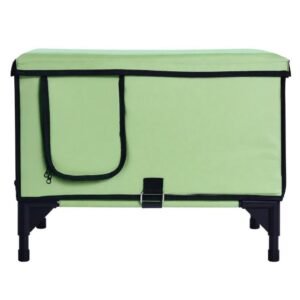 Elevated Heated Outdoor Cat House with 30W Waterproof Heating PadMSRP $128.99Apply for wholesale pricing
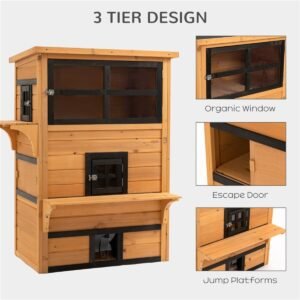 Three-Tier Outdoor Cat Condo with Asphalt Roof and Five Access DoorsMSRP $284.99Apply for wholesale pricing
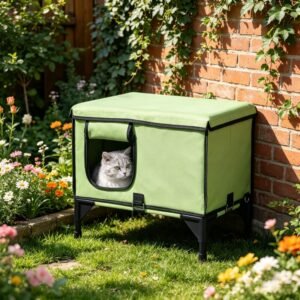 Large Elevated Heated Cat House with Waterproof Pad and Insulated LiningMSRP $124.99Apply for wholesale pricing
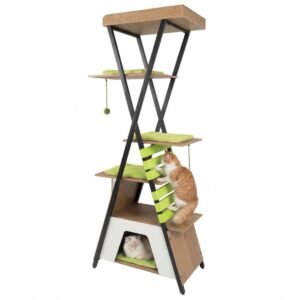 73″ Multi-Level Cat Tree with Condo, Top Perch and Scratching PadMSRP $228.99Apply for wholesale pricing
Stock it as a wholesale KIT
Pre-bundled assortments built from this guide’s categories — one PO, one shipment, wholesale pricing.