

Wholesale Pet Training Products: A Guide
Wholesale pet training products are a narrow, high-turn category that most small stores overstock and under-merchandise. The winning assortment is short: a clicker, a treat pouch, a long line, a mat or pen, and a reward the owner will actually use twice a day. Everything else is optional. Buy deep on the five that move, keep the rest to one facing, and let the reward item do the selling.
What actually sells in the pet training category?
Rewards outsell tools, and tools outsell literature. A customer who comes in for a puppy does not arrive wanting a training philosophy; they arrive wanting the thing that stops the chewing tonight. That is usually a reward, a mat, or a pen, in that order.
The commercially interesting part is repeat purchase. A clicker sells once per dog. A treat pouch sells once per dog. A bag of training rewards sells every three to six weeks for the first year, which is why the reward shelf carries the category’s economics even though it looks like it belongs to food.
Tools then attach to the reward. A treat pouch only makes sense if the owner is carrying rewards, and a long line only makes sense if the dog already responds indoors. Sequence the shelf the way the training actually progresses, and the basket builds itself in the right order.
Why is training gear a different buy from puppy supplies?
Because one is a lifestyle purchase and the other is a behavior purchase. Puppy supplies are bought once, in a panic, in the first week. Training products are bought repeatedly, on purpose, over the first year, and they are replaced when they wear out or when the dog outgrows them.
That difference changes what you stock. A puppy setup needs breadth: crate, bed, bowls, pads, chew. A training shelf needs depth in a few items because the customer comes back for the same SKU, and a store that is out of the small treat pouch loses the sale to the internet rather than to a competitor down the street.
It also changes the season. Puppy purchases cluster around adoption waves, while training purchases follow the dog’s development, which means a store in a market with year-round adoption sees a steady line rather than a spike.
Which training SKUs turn fastest for a small store?
Five items carry most of the volume. A clicker with a wrist strap, because it is the cheapest way to teach timing and it is an impulse add at the register. A treat pouch that clips to a belt, because pockets full of kibble end the session early. A six-foot lead plus a fifteen or twenty-foot long line, because recall cannot be taught on a short leash.
Then the containment items: an exercise pen and a training mat, which solve the two problems owners actually complain about, which are “the dog follows me everywhere” and “the dog will not settle.” Both are bulky, both are margin-friendly, and both are the reason a customer chooses a store over a website with two-day shipping.
The reward itself is the fifth. Stock two textures, not six. A soft training reward for fast repetition and a crunchy one for duration, in a size small enough that the dog does not fill up before the session ends.
How big is the pet training products market?
Verified Market Reports sizes the global pet training products market at about $3.25 billion in 2025 and projects $5.12 billion by 2034, a compound annual growth rate of 5.4 percent across 2026 to 2034, in its seventh-edition report published in May 2026.
Treat the number as direction, not gospel. The same report’s regional figures do not reconcile with its global total, which is normal for syndicated research and a good reason to use the growth rate rather than the absolute value when you plan an open-to-buy.
The larger context is steadier. The American Pet Products Association puts total U.S. pet spending at $158 billion for 2025 and $165 billion projected for 2026, with the supplies, live animals and over-the-counter medicine bucket moving from $34.4 billion to $35.6 billion. Training sits inside that bucket, competing for the same shelf as toys and grooming.
What MOQ should you expect on training products?
Low ones, for most of this list. Clickers, pouches, leads, mats, and pens are all mature molded or sewn goods, and factories will usually run them in cartons rather than pallets. A first order in the low hundreds of units per SKU is realistic, and splitting one order across three colors of pouch is often possible at no extra cost.
The exception is anything with printed branding. Once you put your logo on a pouch or a mat, you move from stock to production, and the minimum climbs with the setup: artwork, screens or plates, and a run that justifies the machine time. That is where a private label program stops being cheap.
Which is the argument for buying stock first. Prove the SKU sells in your market, then invest in branding the version you know turns, and let low-MOQ wholesale programs carry the test rather than a container deposit.
How should you price training products for margin?
Price the tool to be an easy yes and the reward to be the profit. The clicker and the pouch are traffic items; a customer comparing you to a marketplace will check those, so a sharp price on them buys credibility for the rest of the shelf.
Then build a visible ladder. Entry tier at the register, core tier at eye level, and a premium tier that is genuinely better rather than merely bigger. The ladder does the selling: a customer who sees three pouches chooses between them rather than deciding whether to buy one.
Watch the unit economics on bulky goods. A pen or a large mat consumes shelf and back-room space, so its margin per square foot matters more than its margin per unit, and a 45 percent markup on a slow-turning pen can be worse than a 35 percent markup on a pouch you reorder monthly.
Why do training treats outsell training tools?
Because the reward is consumed and the tool is not. A pouch lasts years; a bag of soft training rewards lasts a fortnight in an active household. The consumable carries the repeat visit, and repeat visits are where a small store makes its money.
There is a merchandising signal in the broader data too. NIQ’s 2026 pet retail analysis puts total U.S. pet care at $95.1 billion, growing 5.5 percent, with in-store sales down 1.4 percent while online grew 14.1 percent. Inside that shift, treat-dispensing toys rose 15 percent and electronic toys rose 27 percent, which is demand for engagement rather than for equipment.
That is the whole thesis of this category in one line: owners are buying interaction, and the reward is the cheapest form of it. A store that treats training as a food category with a few tools attached will outsell one that treats it as an equipment aisle.
What should you leave out of the training aisle?
Aversive equipment, for one. Shock collars and prong collars sell, but they carry return risk, complaint risk, and a reputational cost that is hard to price, and the same report notes that European regulators tightened standards for electronic training devices in 2024. A store positioning itself as the place to ask a training question does not want that argument at the counter.
Long tails of literature, for another. Books and card decks look like credibility and behave like dead stock: low unit price, low velocity, and a shelf that never turns. Keep one title you can actually recommend and skip the rest.
Also cut the duplicates. Three clickers at three price points is a decision; one clicker at one price is a sale. The same logic applies to pouches, where color is a variation rather than a SKU, and to leads, where length is the only variable that matters to the buyer.
How do you build a training bundle that sells itself?
Bundle to the problem, not to the product. “New puppy, first month” is a bundle of pads, a pen, a reward, and a pouch. “Recall in the park” is a long line, a high-value reward, and a treat pouch. “Settle at home” is a mat, a chew, and a puzzle feeder.
Two bundles are enough for a small store. More than that and the staff cannot explain them, and a bundle the staff cannot explain is a discount with extra steps.
Price the bundle below the sum of the parts by a visible amount, and keep the components on the shelf as singles so the customer can trade in and out. Then measure which bundle the staff actually recommends; that is your real bestseller, and it is usually not the one on the planogram you designed.
If the training shelf is where you want to grow next quarter, start with the enrichment and training range, attach the treat line, and use puzzle and interactive toys to lift the average basket. Containment items such as pens and crates belong in the same conversation, because a customer buying a pen is usually buying a training plan with it.
Sources: Verified Market Reports, Pet Training Products Market (7th edition, May 2026); American Pet Products Association, Industry Trends and Stats; NielsenIQ, Paws for Thought (August 2026).
Ready to stock these ideas? Browse wholesale pet KITs →
Shop these pet categories
Wholesale pricing, no minimum order.
Related wholesale collections
Products mentioned here
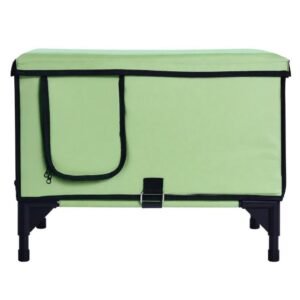 Elevated Heated Outdoor Cat House with 30W Waterproof Heating PadMSRP $128.99Login for wholesale pricing
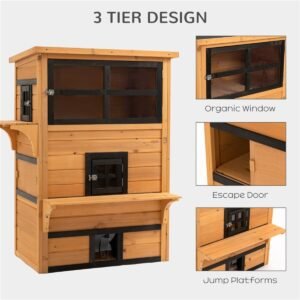 Three-Tier Outdoor Cat Condo with Asphalt Roof and Five Access DoorsMSRP $284.99Login for wholesale pricing
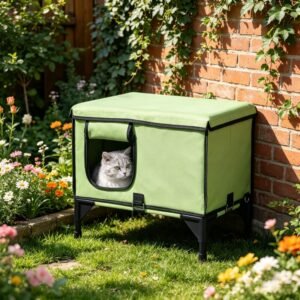 Large Elevated Heated Cat House with Waterproof Pad and Insulated LiningMSRP $124.99Login for wholesale pricing
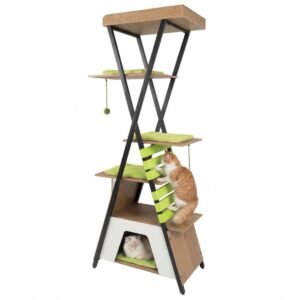 73″ Multi-Level Cat Tree with Condo, Top Perch and Scratching PadMSRP $228.99Login for wholesale pricing
Stock it as a wholesale KIT
Pre-bundled assortments built from this guide’s categories — one PO, one shipment, wholesale pricing.