

Local SEO for Pet Stores: 2026 Playbook | JustForPetStore
Local SEO for pet stores is the cheapest way to win the customer already typing “pet store near me.” Google’s business profile data says a complete listing is 2.7 times more likely to be seen as reputable and 70 percent more likely to attract location visits, and BrightLocal’s 2026 research puts the average small business at 1,009 profile searches a month, most from people who have never heard of your store.
Why does local SEO decide whether customers find your pet store?
Local search is where the purchase decision happens, not where it starts. Google’s research on local intent, widely cited in the 2026 local search benchmarks, finds that 46 percent of all searches carry local intent and that 76 percent of people who do a nearby search on a phone visit a physical location within 24 hours, with 28 percent of local searches ending in a purchase. For a neighborhood pet store, that is the whole funnel compressed into one screen.
The competitive opening is that most independents have not done the work. BrightLocal’s Local Consumer Review Survey 2026 reports that only about 35 percent of small businesses have a Google Business Profile at all. When a store two miles away has an unclaimed, unverified, half-empty listing and yours is complete, you win the same search without spending a dollar.
That matters more in 2026 than it did three years ago because the category has shifted toward the phone. NielsenIQ’s 2026 Pet Care outlook reports total pet care sales of $95.1 billion, growing 5.5 percent, but in-store sales declined 1.4 percent while online grew 14.1 percent. The American Pet Products Association puts U.S. pet spending at $158 billion in 2025 and projects $165 billion in 2026, while noting that 22 percent of owners spent less on their pets last year. Shoppers are still buying; they are just deciding where before they leave the house. For the in-store half of that equation, see our pet store foot traffic playbook.
What does a complete Google Business Profile require in 2026?
Completeness is the single highest-return task on this list, and it costs nothing. Google’s Business Profile documentation and internal studies cited across 2026 benchmarks report that fully completed profiles earn seven times more clicks than incomplete ones, are 2.7 times more likely to be viewed as reputable, drive 70 percent more location visits, and lift purchase consideration by around 50 percent. Every one of those gains comes from filling in fields you already have.
Work through the profile in this order. Set the primary category to “Pet Store,” then add every secondary category that is genuinely true of your business: pet supply store, pet groomer, animal feed store, pet adoption service if you host events. Category selection is the field most stores get wrong, and adding correct secondary categories expands the range of queries you can appear for by roughly 17 percent, according to the 2026 local visibility studies.
Next, write the description to the 750-character limit using the words customers actually search: the brands you carry, the services you run, the species you specialize in. BrightLocal’s profile research finds descriptions over 750 characters earn about 2.5 times more impressions than profiles with no description. Verify the address on the map pin, publish special hours for every holiday, and add attributes like wheelchair-accessible entrance and in-store pickup.
Finally, load the profile with real photography: the exterior from the street, the aisle ends, staff at the counter, a harness being fitted, the nail-trim station. Google’s data shows listings with photos receive 42 percent more direction requests and 35 percent more website clicks. Photos are also the asset that makes every other field credible.
Which local ranking factors actually move the map pack?
You cannot change proximity, so spend your effort on what you control. Whitespark’s 2026 local ranking factors research breaks the weights down roughly as follows: Google Business Profile signals around 32 to 36 percent, on-page signals about 19 percent, review signals about 16 percent, link signals about 15 percent, behavioral signals about 8 percent, citation signals about 7 percent, and personalization about 3 percent. Two thirds of the weight sits in the profile, your website, and your reviews.
Reviews are the piece most small stores neglect. BrightLocal’s 2026 survey finds 47 percent of consumers will not use a business with fewer than 20 reviews, 74 percent only care about reviews written in the last three months, and 31 percent will only consider businesses rated 4.5 stars or higher. Star rating also changes click-through: profiles at 4.5 stars draw the highest click rate in the 2026 BrightLocal and ReviewTrackers data, above even a perfect 5.0, which shoppers increasingly suspect.
On-page signals mean your own website. Give every service its own page with the city name in the title and body text, keep your name, address, and phone number identical everywhere they appear online, and make sure the site loads fast on a phone. Local links still punch above their weight: the local newspaper write-up, the chamber of commerce listing, and the rescue you sponsor are all signals that a national chain cannot replicate at your address. For other low-cost visibility plays, see our pet store marketing ideas guide.
How many reviews does a small pet store need, and how do you get them?
Aim for 40 reviews at 4.5 stars or better, and then focus on recency rather than total. Because three quarters of shoppers only weigh recent reviews, a store with 40 reviews and two new ones a week outperforms a store with 300 reviews and none since spring. Velocity is the ranking signal; the total is the trust signal.
Ask at the moment the store earned it. The best three windows are right after a staff member solves a real problem (a harness that finally fits, a food the cat actually ate), at pickup for an online order, and 48 hours after a first purchase by text or email. Put a QR code at the register that opens your review link directly, and mention it out loud. A scripted “if that worked for Biscuit, would you mind telling Google?” converts far better than a sign nobody reads.
Then respond to every review within 24 hours, including the angry ones. BrightLocal and ReviewTrackers data show that 45 percent of consumers are more likely to visit a business that responds professionally to negative reviews, and that only about a third of businesses reply at all. Owning the mistake publicly is cheap marketing. If your team needs the conversation framework, our pet store customer service guide covers it in detail.
What should a pet store post on its profile each week?
Treat the profile like a storefront window that changes weekly. Google Business Profile posts appear directly in the listing and expire, so the cadence matters more than any single post. One post a week is enough: this week’s arrival, a seasonal endcap, an event, or a service reminder.
Seasonality is where independents beat the algorithm. Shoppers search for Halloween pet gear in early October, for coat and boot sizing in November, and for gift items in December, and BrightLocal’s 2026 data notes that consumers increasingly discover businesses through short video on YouTube, Instagram, and TikTok as well as search. Shoot a 20-second vertical clip of the seasonal display and post it to the profile and to social on the same day. The same footage costs nothing to reuse.
Keep the product list on the profile current with the items you actually want to sell. A listing that shows seasonal toys, treats, and grooming as product entries gives Google more entities to match against category searches, and gives the shopper a reason to tap “call” instead of scrolling to the chain store.
How do you track local SEO without an agency retainer?
Open the Performance report inside your Google Business Profile once a month and write down six numbers: total searches, the split between discovery and direct searches, website clicks, direction requests, phone calls, and the number of reviews with your average rating. That is your entire dashboard, and it takes twenty minutes.
Read discovery searches first. BrightLocal’s 2026 profile research finds roughly 84 percent of views come from discovery searches for a category or product rather than your business name, so a rising discovery count means you are reaching people who did not already know you. Flat direct searches with rising discovery is the healthiest pattern a small store can produce.
Set one quarterly target per number. A realistic first quarter for a single-location store: move searches from 800 to 1,000 a month, raise the rating from 4.2 to 4.5, add 15 reviews, and cut the share of unanswered reviews to zero. Then stop optimizing and go stand on the floor. Local search gets the customer through the door; what happens next is inventory, pricing, and service. When you are ready to restock what is actually selling, browse the wholesale pet supplies catalog or talk to our team about low-minimum orders for independents.
Frequently Asked Questions about Local SEO for Pet Stores
How long does local SEO take to work for a pet store?
Profile changes show up in days, not months. Completing categories, hours, and photos can move your listing within two weeks. Review volume and map pack position take one to three months of consistent asking, because recency and velocity drive the ranking signal rather than a single burst of reviews.
Do I need a website if I have a Google Business Profile?
Yes. On-page signals account for roughly 19 percent of local ranking weight in Whitespark’s 2026 research, and the profile can only point to pages that exist. One page per service, with your city in the title, is enough for a single-location store.
What is a good number of Google reviews for a small pet store?
Forty or more at 4.5 stars is a solid target, but recency matters more. BrightLocal’s 2026 survey finds 74 percent of consumers only consider reviews from the last three months, so two new reviews a week beats a large total that stopped growing.
Should I pay for local SEO software?
Not at first. The Google Business Profile dashboard reports searches, calls, clicks, and direction requests for free, and the highest-impact tasks (categories, photos, hours, review replies) require no software. Add a paid tool only when you are managing more than one location.
Ready to stock these ideas? Browse wholesale pet KITs →
Shop these pet categories
Wholesale pricing, no minimum order.
Products mentioned here
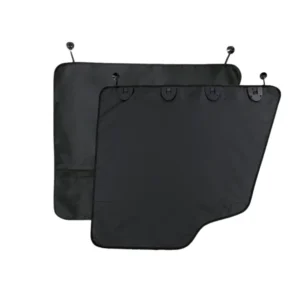 2 Pack Scratch-Proof Durable Oxford Car Door Cover for Dogs | Wholesale Dog Car Door ProtectorsMSRP $26.09Login for wholesale pricing
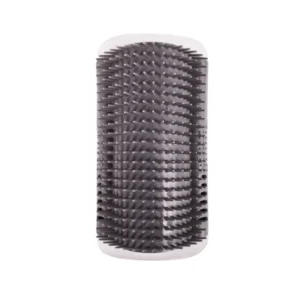 Cat Wall Corner Self Groomer Brush – Easy Install Massage & Soft Comb Scratcher (Grey, Blue)MSRP $1.98Login for wholesale pricing
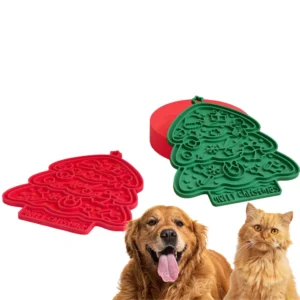 Christmas Tree-Shaped Slowly Non-Slip Silicone Pet Lick Mat | Wholesale Dog Lick MatsMSRP $10.99Login for wholesale pricing
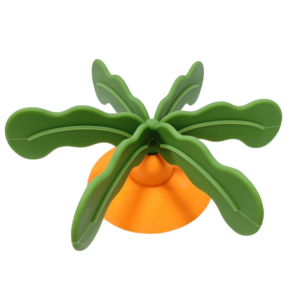 Dog Slow Feeder Palm Tree Silicone Food Divider with Suction 2 Colors Assorted | Wholesale Slow Feeder Dog BowlsMSRP $9.99 – $11.99Login for wholesale pricing