
Small Pet Supplies: Niche Growth to Stock | JustForPetStore
Small pet supplies are one of the fastest-growing and least-crowded corners of independent pet retail. While dog and cat shelves are dominated by big-box chains, the American Pet Products Association (APPA) reports that bird, reptile, and freshwater-fish ownership all grew year over year — up 25%, 20%, and 17% respectively. Gen Z and Millennials are driving the shift and spending more on gifts and premium habitats. Here is what to stock and how these shoppers buy.
Why are small pet supplies growing in 2026?
The growth in small pets is real, broad, and generational. In its 2026 State of the Industry report, the American Pet Products Association (APPA) called out that growth has expanded beyond dogs and cats into smaller species, with bird ownership up 25% year over year, reptile ownership up 20%, and freshwater-fish ownership up 17%. APPA attributes much of this to the Gen X “empty nest” effect — households whose kids have left home are adding a second or third pet, and smaller species fit smaller spaces.
But the youngest shoppers are the bigger story. According to APPA’s Bird, Small Animal & Horse report, Gen Z now represents 22% of bird owners (up 22% from 2023) and 34% of small-animal owners (up 17% from 2023). In the fish and reptile world, APPA’s Fish & Reptile report shows Gen Z has climbed to 33% of reptile owners, a 27% jump from 2023. Millennials still lead in several of these categories, but the trend line is clear: younger owners are entering these niches fast.
The scale is meaningful, too. APPA counts six million U.S. households with birds, six million with small animals, and two million with horses, plus ten million with freshwater fish, six million with reptiles, and two million with saltwater fish. Those are not fringe niches — combined, they rival the dog-and-cat universe in breadth, yet far fewer retailers compete for them. For an independent store that cannot win a price war against the big box on dog food, that is the point: small pets are where assortment, advice, and trust still beat scale.
That matters for independent stores because these categories are far less saturated than dog and cat. Big-box chains carry the basics, but the assortment depth — species-specific habitats, enrichment, substrates, and health supplies — is where a knowledgeable indie can win. As APPA president Pete Scott put it, these categories are “creating fresh opportunities for the pet care industry.”
Which small pet categories should indie stores stock first?
Not all small pets are created equal, and the APPA data points to three clear priorities.
Start with small animals — rabbits, guinea pigs, and hamsters. APPA reports six million U.S. households own small animals, with rabbits the most popular at 37% of owners (up 37% since 2018), guinea pigs at 23%, and hamsters at 18% (though hamster ownership has declined 25% since 2018, so weight your buy toward rabbit and guinea pig supplies). Small-animal owners skew in-person: 55% buy food in-store and 52% buy treats in-store, and 40% shop at pet superstores for food and pellets. That physical-shopping preference is good news for brick-and-mortar.
Add birds for a high-engagement, high-margin niche. Parakeets remain the most popular bird at 28% of owners, and cockatiel ownership jumped 58% from 2023. Critically, bird stores are growing as a trusted channel — 25% of owners now rely on bird stores for care information (up 47% since 2018), and 21% acquire their birds there (up 62% over six years). If you become the local bird expert, you become the local bird destination.
Then layer in reptiles and fish as the premium tier. APPA’s Fish & Reptile report counts ten million freshwater-fish households, six million reptile households, and two million saltwater-fish households. Turtles and tortoises top the reptile list at 43%, while snake ownership is rebounding at 22% (up 22% from 2023). Reptile owners spend more on habitats and enrichment — 64% buy gifts for their pets, averaging $34.20 per gift, up from $24.10 in 2023. Fish owners are upgrading too: 77% now keep two or more fish, and saltwater keepers are moving to larger, higher-end tanks.
Within each category, lead with the consumables your customers must rebuy — food, bedding, and substrate — because those drive repeat visits and steady cash flow. Habitats and hardware are the higher-ticket items that anchor the sale, but they are bought once; bedding and food are bought monthly. A customer who buys a rabbit hutch from you should leave with a plan to return every few weeks for litter and hay.
The data also points to where the margin is hiding. Reptile owners who buy gifts spend $34.20 a visit, and saltwater keepers are trading up to larger, higher-end tanks — categories where a knowledgeable independent store can sell solutions, not just products. When you bundle the habitat, the heating, and the substrate into one easy setup, you raise the average ticket while doing the customer a genuine favor.
How do small pet owners shop — online or in-store?
The answer is both, but the in-store piece is stronger here than in dog and cat. APPA’s data shows small-animal owners prefer to buy food (55%) and treats (52%) in person, and they lean on pet superstores for acquisition and supplies. Bird owners increasingly turn to specialty bird stores for both products and advice. Reptile and fish keepers buy habitats, lighting, and substrates that are bulky, technical, and best explained in person.
What this means for your store: these shoppers want expertise, not just inventory. They will buy a rabbit hutch, a UVB light, or a substrate that they can see, feel, and ask about. That is precisely the experience an independent store can offer that a marketplace listing cannot. Stock the depth, train a staffer to answer habitat and diet questions, and you convert a one-time buyer into a recurring customer who returns for bedding, food, and enrichment every month.
That trust-based buying is a durable advantage. Unlike a bag of kibble, a reptile habitat, a UVB bulb, or a substrate carries real consequences if chosen wrong, so owners want a person who can explain it. Train one team member to own the small-pet section — someone who can talk through cage sizing, temperature, and diet — and you become the store customers recommend when a friend gets their first bearded dragon or cockatiel. Those referrals compound, because small-pet owners tend to cluster in the same local groups, forums, and hobby circles.
The gift economy shows how deep the engagement runs. APPA reports that 76% of bird owners buy gifts for their pets, spending an average of about $40 per gift (up 42% from 2023), while 87% of small-animal owners do the same at roughly $34 per gift (up 31%). Reptile owners are close behind, with 64% buying gifts and averaging $34.20, up from $24.10 in 2023. These shoppers do not treat a hamster or a parakeet as a decoration — they treat it as family, and they spend accordingly.
What should you watch when sourcing small pet supplies?
Three things matter when you buy small pet supplies for resale.
First, compliance and safety. Species-specific products — especially habitats, heating elements, and substrates — carry safety standards, and some materials or species are regulated. Work with suppliers who can document material safety and labeling, and avoid anything with vague or unverified claims. This is the same discipline behind vetting a pet product supplier before you commit to a case pack.
Second, breadth over depth at first. Because each species has its own diet, habitat, and enrichment needs, you cannot stock everything deep. Start with a shallow but complete assortment across small animals, birds, reptiles, and fish, then deepen the two categories that move fastest in your market. Use a low-minimum supplier so you can test before you scale.
Third, price against value. Gen Z and Millennial small-pet owners are price-aware but still spend on their pets. APPA’s gift data — 76% of bird owners and 87% of small-animal owners buy gifts, spending about $40 and $34 per gift respectively — shows these shoppers will pay for quality when the value is clear. Position premium habitats and enrichment next to the basics and explain the difference.
Finally, watch your margins, because niche does not automatically mean profitable. Small-pet habitats and substrates are bulky to ship, which can erode margin if you buy deep from a high-minimum supplier. Buy through a low-minimum wholesale channel so you can keep the assortment broad without over-committing cash, and look for private-label or exclusive items — a house-brand bedding or an exclusive treat line gives you margin that a price-comparable national brand cannot. The stores that win in small pets are the ones that treat it as a category to build, not a side shelf to fill.
When you get the assortment right, small pet supplies become a genuine differentiator. They are the categories your customers cannot easily find at the big box, and they build loyalty that dog-and-cat products alone rarely do. For a broader look at what is moving across the category, see our roundups of the best-selling pet supplies of 2026 and the trending pet products for 2026. To start stocking the niche, browse our wholesale pet toys and bowls and feeders ranges and build out your small-pet section.
Ready to stock these ideas? Browse wholesale pet KITs →
Shop these pet categories
Wholesale pricing, no minimum order.
Related wholesale collections
Products mentioned here
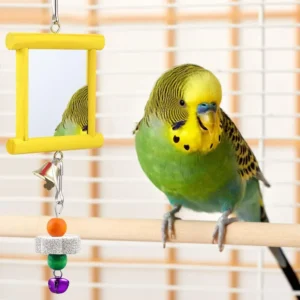 4-Pack Acrylic Parrot Toys with Mirror & Beak Grinding Accessories – Colorful Bird Cage Toys for Parrots and CockatielsMSRP $5.89Login for wholesale pricing
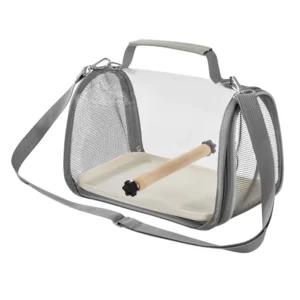 Foldable Plastic Bird Travel Carrier with Perch and Tray – Portable Cage for Parrots & Small BirdsMSRP $9.89Login for wholesale pricing
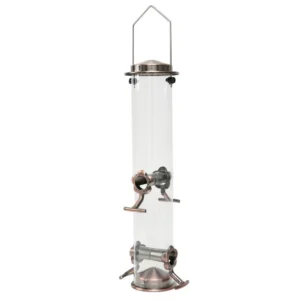 Hanging Metal Bird Feeder – Durable Food & Water Bowl for Small Birds & ParrotsMSRP $17.99Login for wholesale pricing
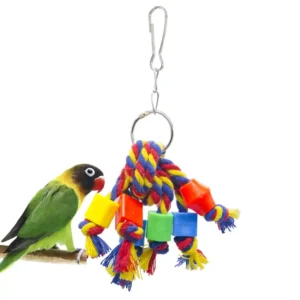 Mini Flying Trapeze Bird Toy for Small Pet Birds – Swing & Hanging Play Toy for Parakeets, Cockatiels, and LovebirdsMSRP $3.28Login for wholesale pricing