Buy Wholesale Pet Supplies Direct: 2026 | JustForPetStore
You can buy wholesale pet supplies direct from a Chinese or Vietnamese manufacturer in 2026 at landed costs typically 40 to 60% below local wholesale, per Epic Sourcing’s 2026 buyer guide, but only if the supplier passes business-license verification, sample testing, and audit. This guide walks an indie pet store owner through MOQs by category, realistic lead times, the documents you must demand, and the red flags that mean you should walk away.
Why are indie pet stores buying wholesale pet supplies direct in 2026?
Three forces are pushing independent pet stores toward direct-from-manufacturer sourcing in 2026. The first is margin pressure: per APPA’s 2026 State of the Industry report, 22% of U.S. pet owners spent less on their pets in 2025, a 10-point jump from 2024, and that compression has flowed back to wholesale pricing. The second is container freight: 2026 sea freight from Shanghai to Los Angeles ran near $4,565 per FEU in June, nearly double the rate from February, which makes every importer’s middleman more expensive. The third is tooling: most Chinese pet product factories in the Yangtze River Delta now accept MOQs as low as 100 to 300 units for white-label work.
For an indie store, the math is straightforward. A $4 wholesale bag of dog treats bought through a U.S. distributor might cost $1.50 to $2 landed from a verified Chinese factory with the right paperwork, including freight, duty, and last-mile. The savings compound across the shelf: a 1,000-SKU store carrying 200 direct-imported items saves several thousand dollars a year at modest reorder volume, and several times that at scale. For a primer on the related vendor-vetting work, see our how to vet a pet product supplier guide and our pet product supplier audit checklist.
What does a realistic MOQ look like for pet products in 2026?
MOQs vary dramatically by category and by the type of customization. PetProcure’s 2026 benchmark report puts the realistic ranges for verified Chinese factories as follows: soft goods like pet beds, carriers, and apparel run 300 to 500 units per SKU with a 30 to 40 day production lead time and no separate tooling fee. Injection plastic items like bowls, litter boxes, and non-electronic feeders run 500 to 1,000 units per SKU, with $800 to $4,000 in tooling and a 35 to 45 day lead time. Smart electronics like Wi-Fi feeders, cameras, and GPS trackers run 500 to 1,000 units per SKU with $5,000 to $15,000 in tooling and a 45 to 60 day lead time. Private label of an existing SKU with the buyer’s logo and packaging runs as low as 100 to 300 units per SKU with a 20 to 30 day lead time.
Accio’s 2026 China sourcing guide adds a finer-grain layer for low-volume customization. Laser engraving for metal pet tags or stainless steel bowls can run as low as 1 to 10 units. Custom woven labels for harnesses and beds run about 200 units minimum. Custom packaging runs about 500 units. These lower thresholds are the reason a one-store owner can finally justify direct sourcing in 2026: the MOQ is no longer the obstacle it was even three years ago.
White label versus private label is a related decision. White label means you take an existing factory product, add your branding, and sell it as your own. Private label means you work with a factory to develop a product to your specifications. For most indie pet stores, white label is the right starting move because it is faster, lower risk, and requires minimal upfront investment. For stores ready to invest in product development, private label is the long-term play. For the wholesale entry point, see our wholesale pet supplies program.
What is the typical lead time for a direct-from-manufacturer order in 2026?
A healthy sample-to-PO workflow for direct sourcing looks like this. Inquiry to capability deck and MOQ or tooling sheet within 24 hours. Spec alignment in 1 to 3 days. Sample invoice and courier delivery from in-stock items in 2 days, custom samples in 7 to 14 days. Sample evaluation and revision in 3 to 7 days. Production order confirmation with a 30% deposit in 1 to 3 days. Production of 25 to 60 days depending on category. Sea freight of 25 to 35 days from China or Vietnam to the U.S. West Coast. Customs clearance and last-mile delivery of 5 to 10 days. Total from first inquiry to U.S. warehouse for a first-time order is roughly 90 to 120 days.
The big variables are tooling (which adds 15 to 30 days upfront), Chinese New Year in late January or early February (when most factories shut down for two to three weeks), and National Day in early October. A realistic production calendar places bulk production in March through May and August through October. Lead times that ignore these calendars are a red flag.
Sea freight is the biggest line item in the calendar. Reuters and Drewry’s World Container Index for June 2026 showed Shanghai to Los Angeles at $4,565 per FEU and Shanghai to New York at $5,505 per FEU, both up sharply from February 2026. For a one-store owner who is buying less than a full container, LCL (less-than-container load) consolidation is the right shipping mode. LCL rates run roughly $50 to $120 per cubic meter for the China-to-U.S.-West-Coast lane in 2026, with surcharges for fuel, port handling, and customs documentation.
What documents should you demand from a pet product manufacturer?
Five documents are non-negotiable, and a supplier who cannot produce all five on demand is a supplier you should not pay a deposit to.
The first is the Chinese business license (营业执照), verifiable on the National Enterprise Credit Information Publicity System (gsxt.gov.cn). The license tells you the legal name, registered capital, business scope, and operating status.
The second is the third-party test report for materials used in products that contact animals. For plush and hard toys, that means ASTM F963 or EN 71 reports covering small parts, lead, and phthalate levels. For bowls and feeders, that means an FDA food-contact statement or test report. For harnesses and leashes, that means a tensile-strength test. For electronics, that means a CE, FCC, or RoHS report. For pet treats, that means an HACCP or ISO 22000 statement and ideally an AAFCO nutritional adequacy statement on the finished label.
The third is the factory audit report. BSCI, Sedex SMETA 4-pillar, ISO 9001, and ISO 14001 are the common audits. An audit from the last 12 months is acceptable for a first order, and the audit should be shareable under NDA. For more on the audit framework, see the U.S. International Trade Commission’s HTS database for the exact tariff classification of every product category you intend to import.
The fourth is trade references. Ask for at least two U.S. or EU buyers the factory has supplied, and contact them. A factory that has been in business for five years and cannot name two trade references is either very new or very thin on repeat customers.
The fifth is a sample. Always order samples before placing a production order. For pet treats, have samples tested by an accredited lab in your destination market. For other products, run a stress test: does the leash hold 50 kg, is the bowl really 304 stainless? For pet food, treats, and supplements, the U.S. Food and Drug Administration requires foreign facilities to register, and many product categories require prior notice of importation. For the U.S. import compliance side of the equation, see our import pet products to the US guide.
How much can indie stores actually save by going direct in 2026?
A worked example, based on Epic Sourcing’s 2026 buyer guide and 2026 LCL freight benchmarks: 1,000 dog leads at £2.50 each FOB Guangzhou. Add LCL sea freight to a U.S. West Coast port at $350, marine insurance at 0.5% of CIF ($14), U.S. import duty at 3.7% of CIF for pet leads under HTS 4201 (about $106), and customs broker plus port handling plus last-mile delivery at $270. Total landed cost for 1,000 leads is about $3,490, or $3.49 per lead. Net of recoverable import VAT where applicable, that lands closer to $3.10 per lead. The same product through a U.S. pet distributor in 2026 typically runs $5.50 to $7.00 per unit at wholesale, so the direct-sourcing saving is roughly 40% to 50% on a lead-only basis, and closer to 50% to 60% once you factor out the distributor’s marketing co-op, broken-pallet fees, and minimum-order surcharges.
The savings on plush toys, beds, and apparel are larger in absolute terms because the U.S. wholesale markup on those categories tends to be higher. The savings on treats and consumables are smaller because freight and duty are a larger share of landed cost.
The savings math breaks at two points. The first is volume: if your reorder is under 300 units per SKU, the per-unit savings may not justify the time cost of managing a direct relationship. The second is complexity: products with electronics, batteries, or active pharmaceutical ingredients carry compliance burdens that often wipe out the savings on a small order. For the categories where direct sourcing clearly pays off for a one-store owner, the winners are soft goods (beds, carriers, collars, leashes, harnesses), injection plastic (bowls, litter boxes, slow feeders), and white-label chews and toys with simple claims.
What red flags should make you walk away from a manufacturer?
A factory that refuses to share its BSCI or SMETA report under NDA is hiding something. A supplier whose “certification” is a test report for a similar SKU, not the one you are buying, is misleading you. A supplier that says “we can do any MOQ” is usually a trading company, not a factory, and the price will reflect the extra layer.
Other red flags to walk away from. Lead times that do not account for Chinese New Year or National Day. A freight quote that locks for more than 30 days (sea freight moves weekly, and a locked quote is a way for the factory to capture a favorable rate at your expense). WhatsApp as the primary contact without a verifiable business address. A request for 100% payment upfront on a first order. Payment terms of 30% deposit and 70% against bill of lading copy are the baseline.
If you are not sure, ask the factory to send a small paid trial order (1,000 to 2,000 units) before committing to a full production run. A factory that will not do a trial is a factory you do not want. For the broader sourcing conversation, our team is reachable through the contact page with specific questions about categories and supplier shortlisting.
Frequently Asked Questions about Buying Wholesale Pet Supplies Direct in 2026
What is a realistic MOQ for a custom pet product in 2026?
Soft goods like beds, carriers, and apparel run 300 to 500 units per SKU; injection plastic bowls and litter boxes run 500 to 1,000; smart electronics run 500 to 1,000. White label on an existing factory SKU with the buyer’s logo and packaging runs as low as 100 to 300 units, and laser engraving on metal tags or stainless bowls can run as low as 1 to 10 units.
How long does a direct-from-manufacturer order take?
Plan on 90 to 120 days from first inquiry to U.S. warehouse for a first order. Sample lead times are 2 to 14 days, production is 25 to 60 days depending on category, sea freight is 25 to 35 days from China or Vietnam to the U.S. West Coast, and customs clearance plus last-mile delivery is 5 to 10 days. Subsequent reorders run 60 to 90 days because the tooling and sample steps are done.
How much can an indie store save by sourcing direct?
A typical landed cost on 1,000 dog leads from a Chinese factory in 2026 is roughly $3.10 to $3.50 per unit. The same product through a U.S. pet distributor typically runs $5.50 to $7.00 per unit at wholesale, so the direct-sourcing saving is roughly 40% to 60% on the units you can realistically import.
What documents should I require from a Chinese pet product factory?
Five documents are non-negotiable: the Chinese business license (verifiable on gsxt.gov.cn), third-party test reports covering the materials in products that contact animals, a recent factory audit (BSCI, Sedex SMETA, ISO 9001, or ISO 14001), at least two trade references, and a paid sample tested in your destination market before production begins.
Ready to stock these ideas? Browse wholesale pet KITs →
Shop these pet categories
Wholesale pricing, no minimum order.
Related wholesale collections
Products mentioned here
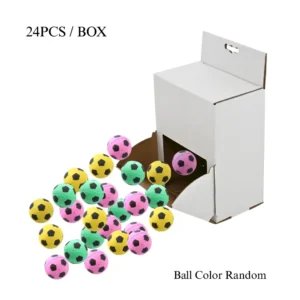 24-Pack Cat Toy Balls – Soft Latex Foam Soccer Ball Toys for Cats, Interactive Chase & Self-Play, Wholesale Pet SuppliesMSRP $8.89Login for wholesale pricing
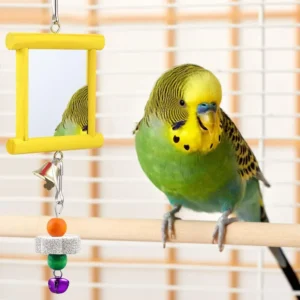 4-Pack Acrylic Parrot Toys with Mirror & Beak Grinding Accessories – Colorful Bird Cage Toys for Parrots and CockatielsMSRP $5.89Login for wholesale pricing
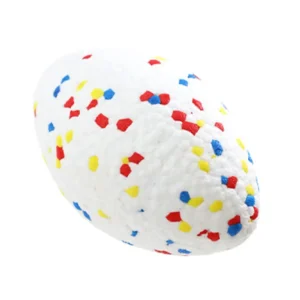 5 Inch Durable Rugby Floating Dog Ball – Chew & Fetch Water Toy for DogsMSRP $4.29Login for wholesale pricing
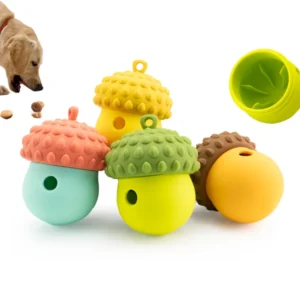 Berry-Shaped Silicone Dog Treat Dispensing Slow Feeder Toy – Durable Chew & Interactive Training Ball(MOQ 24)MSRP $3.56Login for wholesale pricing